
Melting Targets
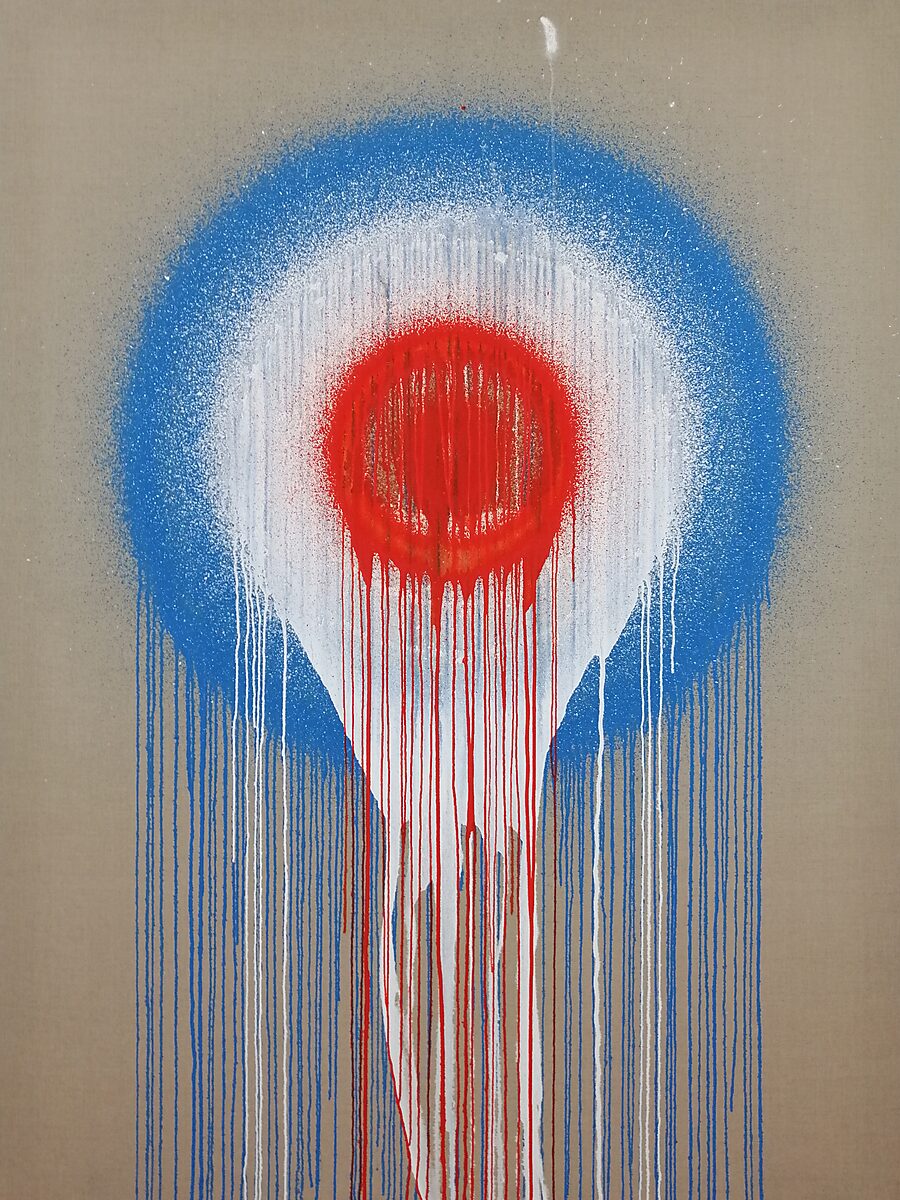
The series Melting Targets is a long-term exploration of change, time, and intention. Each work begins with a simple process: coloured ice melts on canvas. What follows is a play between control and surrender — between purposeful action and the randomness of physical processes.
Conceptually, the series revolves around the setting of goals — and how those goals may disappear or shift over time. Humans continuously set goals, strive towards them, and leave traces in the process, regardless of whether the goal is achieved. This idea gains an additional layer in connection to climate goals: despite global efforts, the polar caps and glaciers continue to melt relentlessly.
Transformations
MT.4 Paintings
2026 - MT.4.10. Oil Dumb (in motion)




-
Stretching a canvas bearing traces of transformation that had been lying on the studio floor.
-
Applying the word “Oliedom” as the base and starting point of the canvas.
-
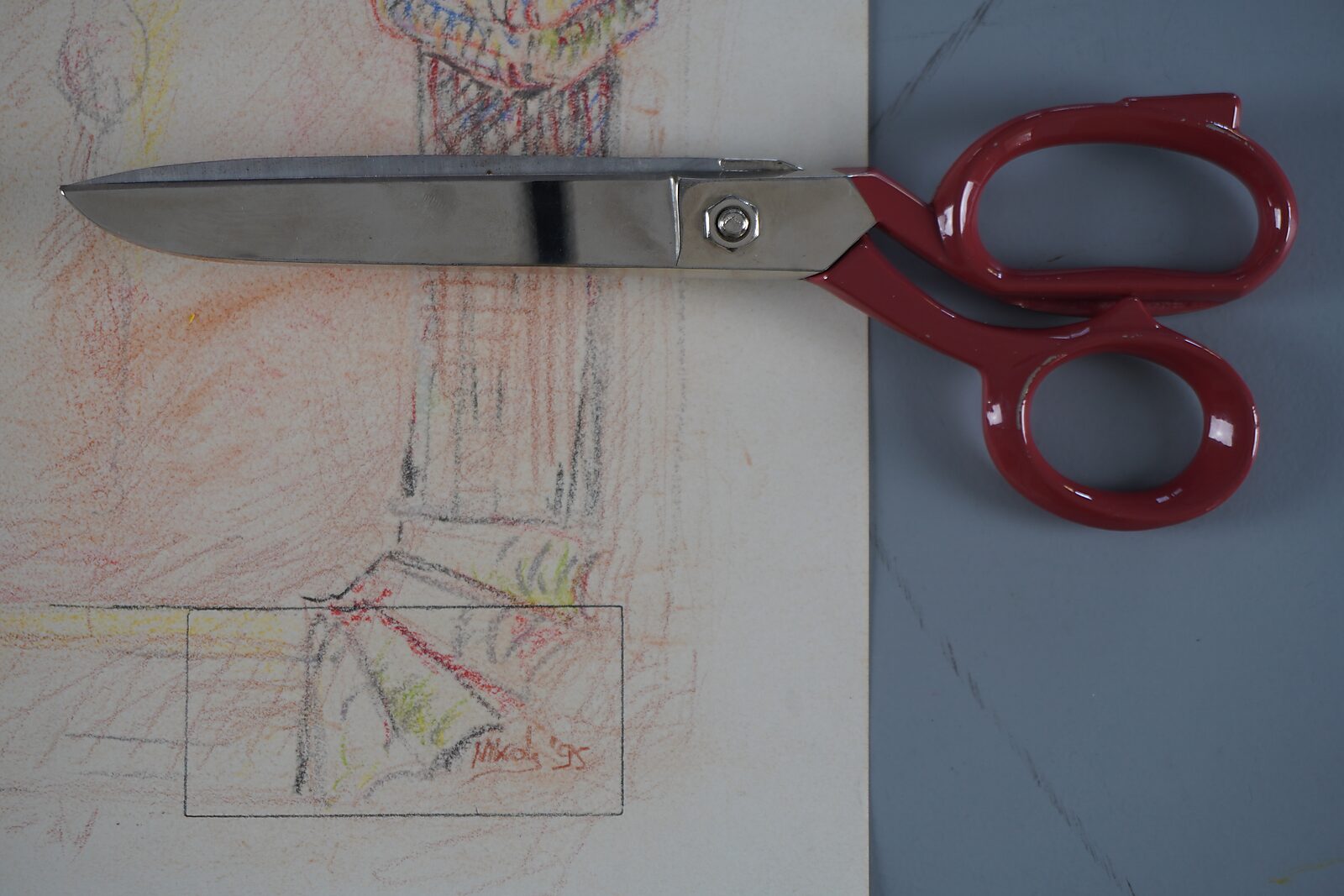
Cutting out the signatures from the drawings “Overdruk” and “Buismans” from the series 'Older Drawings.'
-
Emergence of two 'Naming-Value Butterflies' (process not yet completed).
-
Definitively attaching the drawings “Overdruk” and “Buismans” onto the canvas.
-
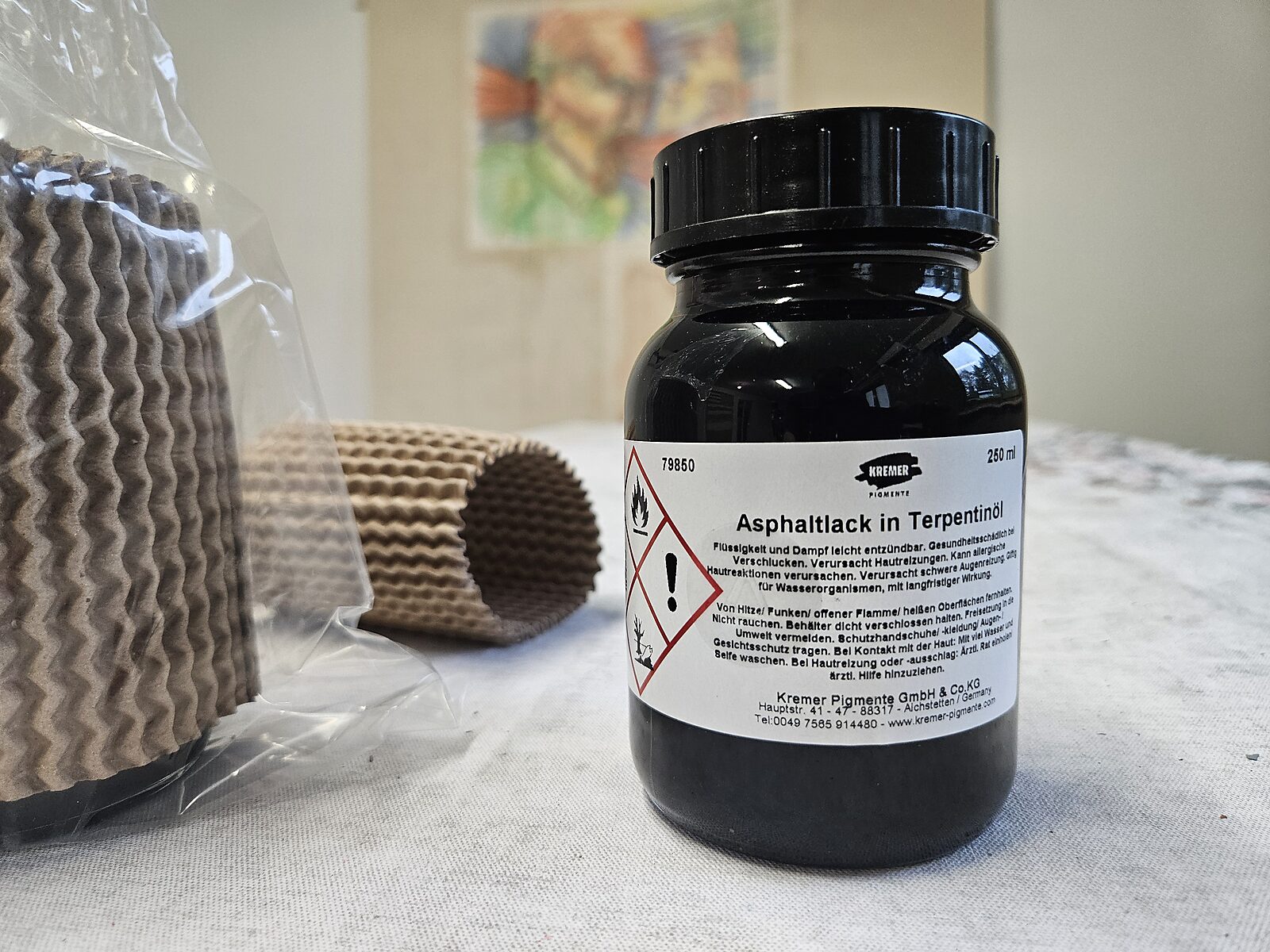
Further working on both sides with asphalt varnish.
2026 - MT.4.9. Mass (in motion)




-
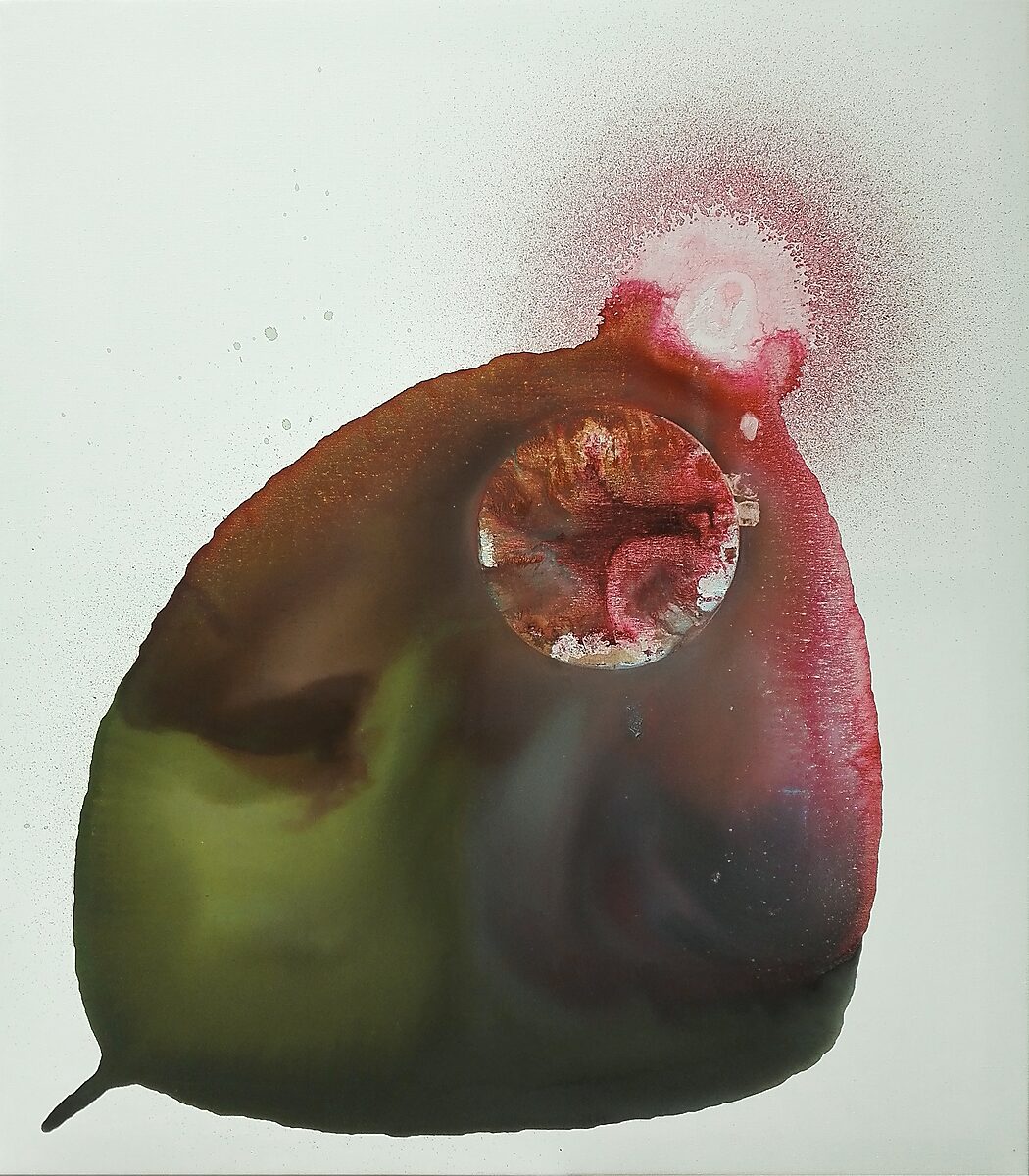
2025: One of the first canvases of this project: MT.2 (2018) was reduced to a square format.
-
Dripping a grey sphere onto the canvas.
-
Adding a yellow-orange color and thick, downward blue lines.
-
Experimenting with various setups in the studio.
-
2026: Stretching the work to continue working on the other side.



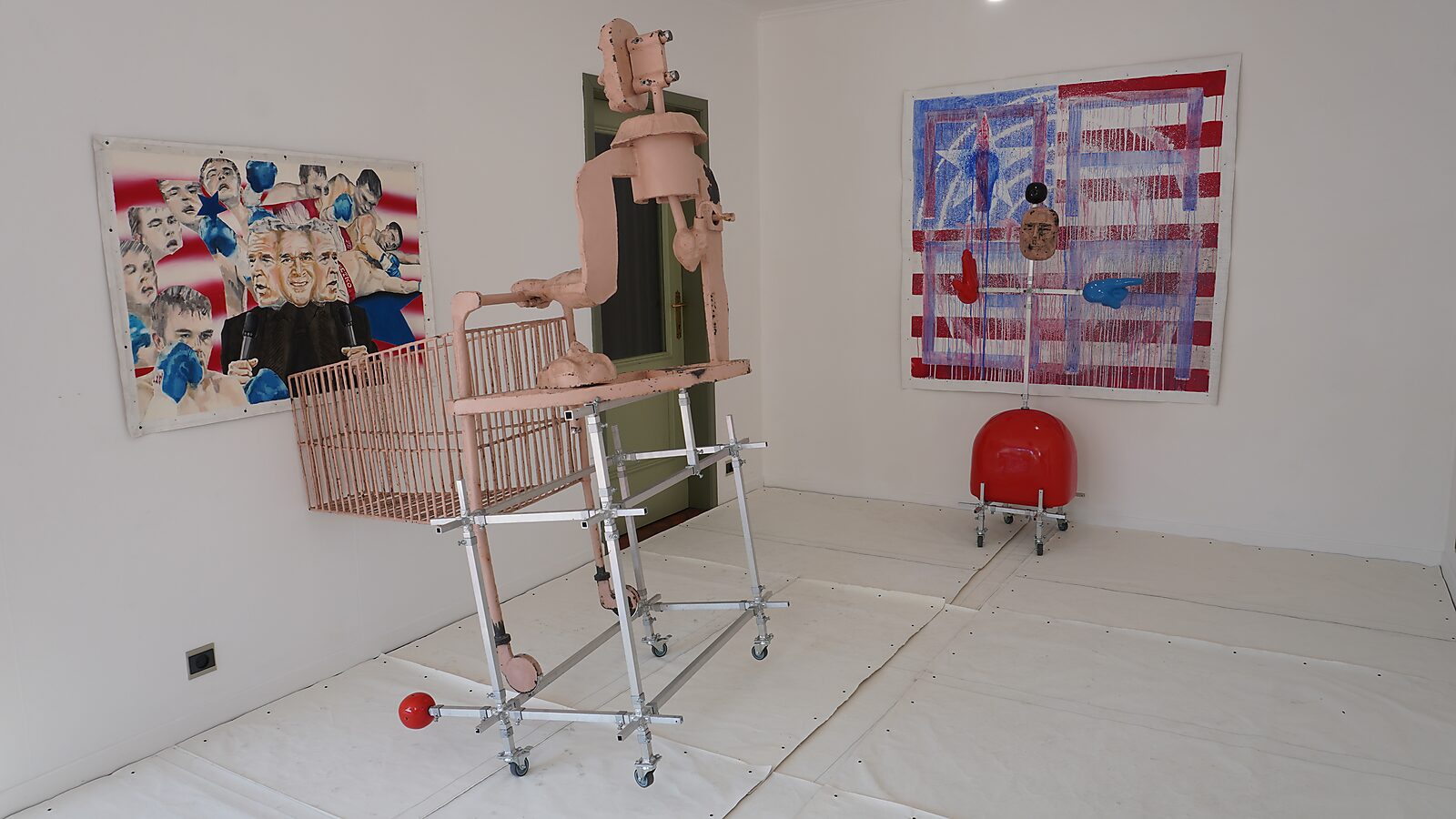
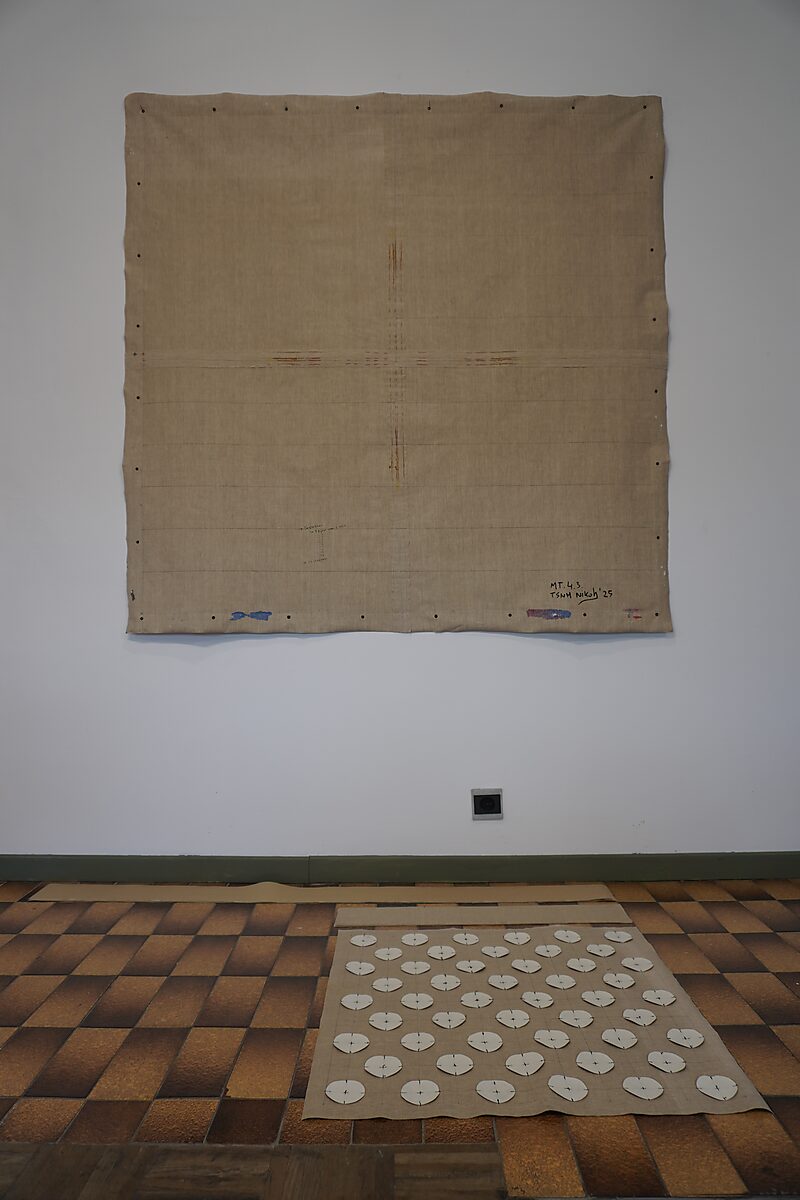
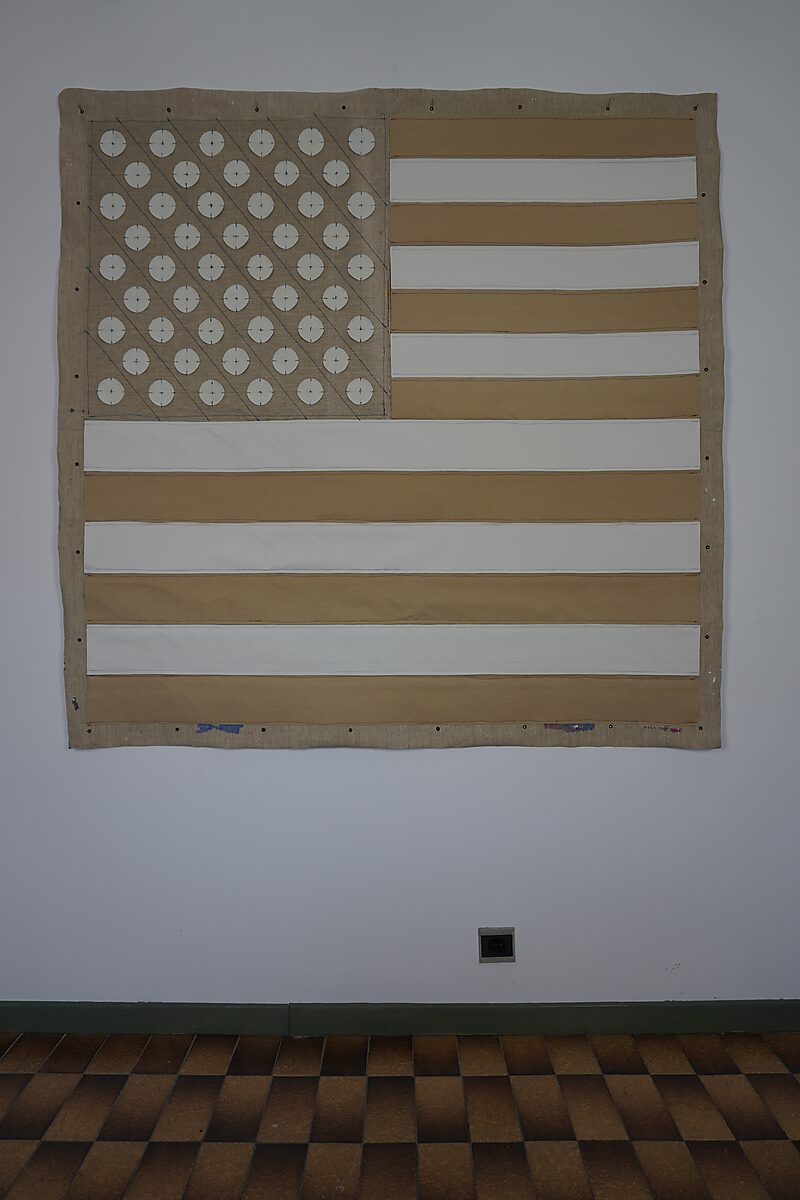


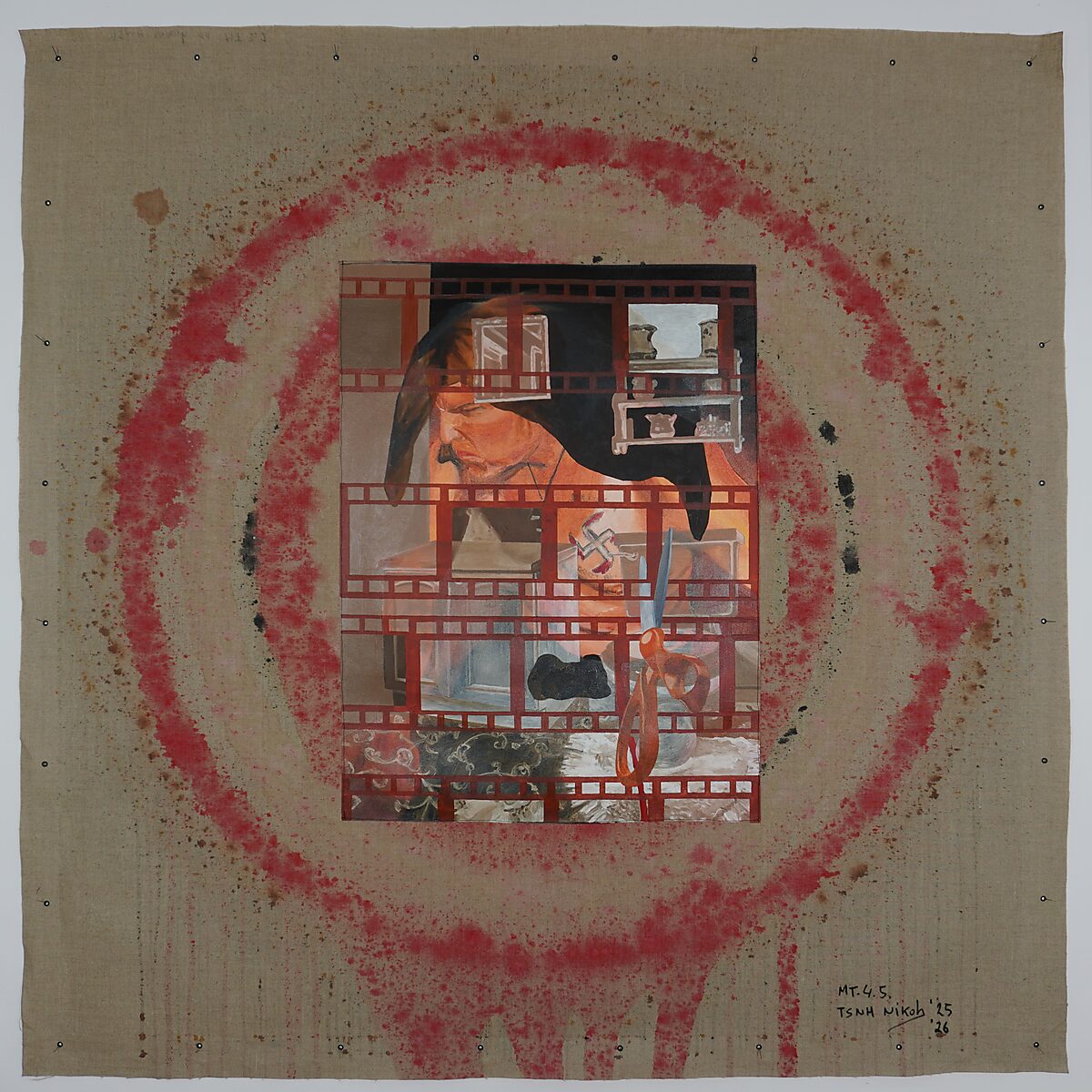
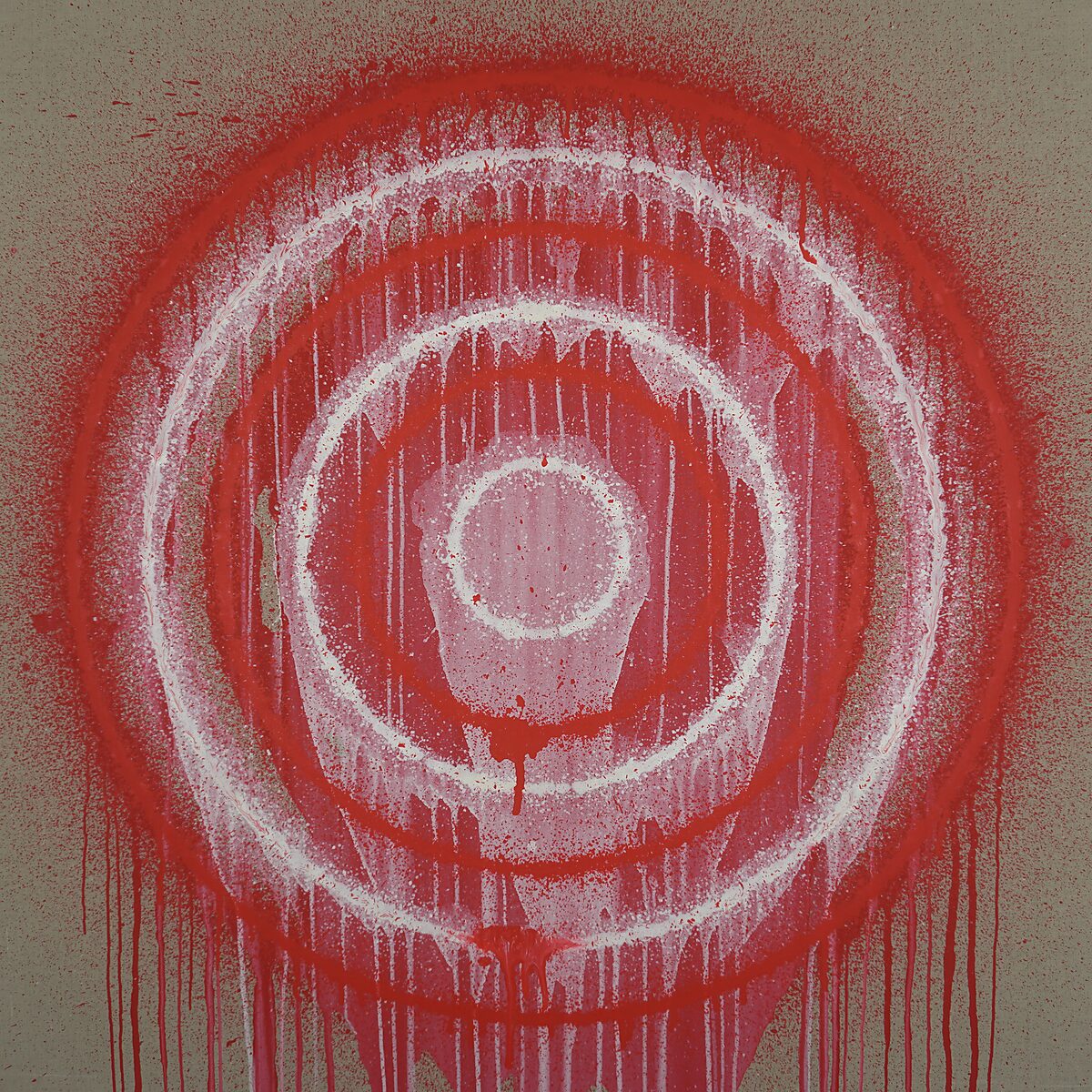
2026 - MT.4.5. The Scissors



-
Transformation of the canvas MT.3.2 into a sewing pattern for a “brownshirt” during the exhibition Transformatiestudio nr. 1 in 2024.
-
2025: Sewing the work Cutting History (2003) onto the back.
2026 - MT.4.8. Scoring with Goals

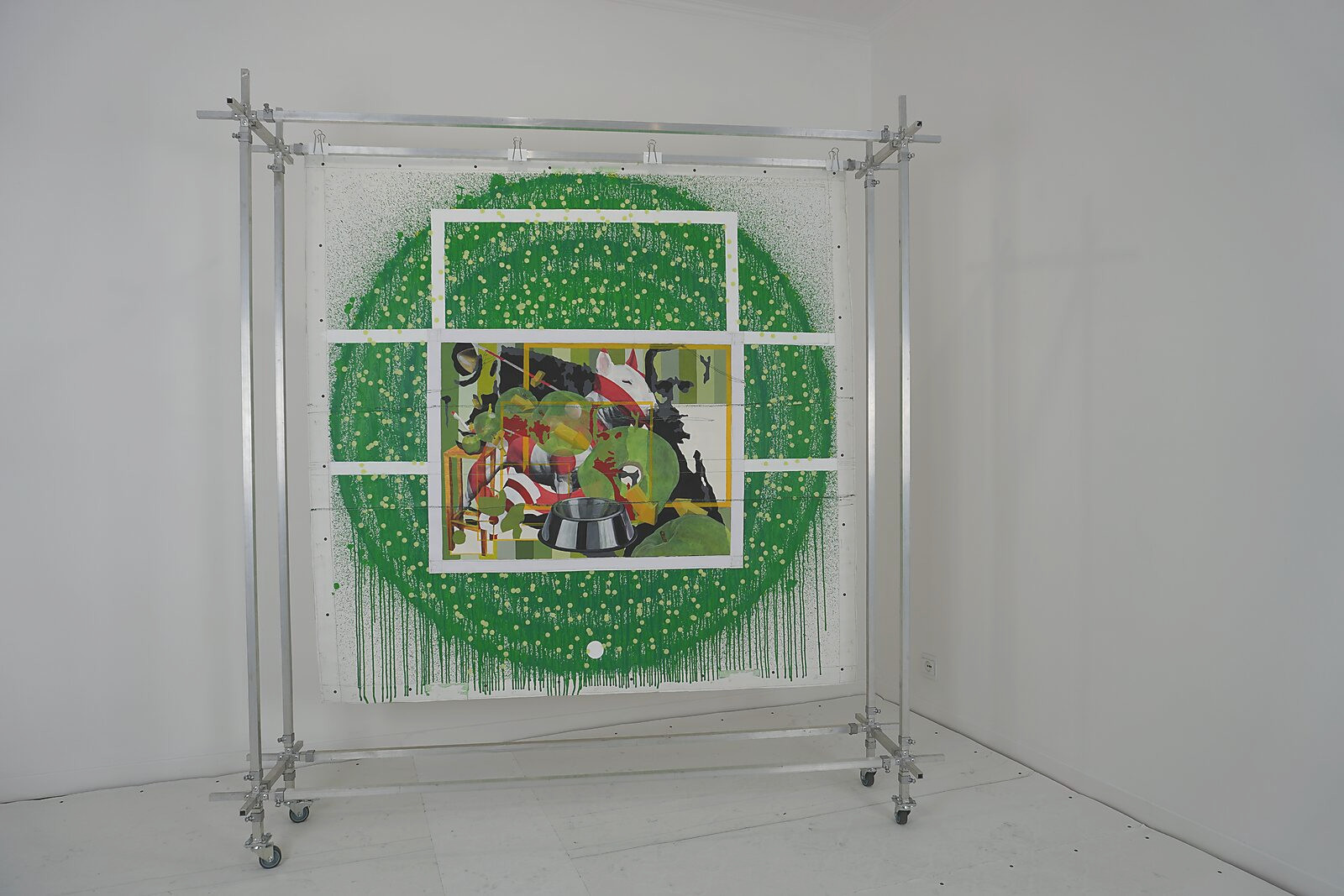
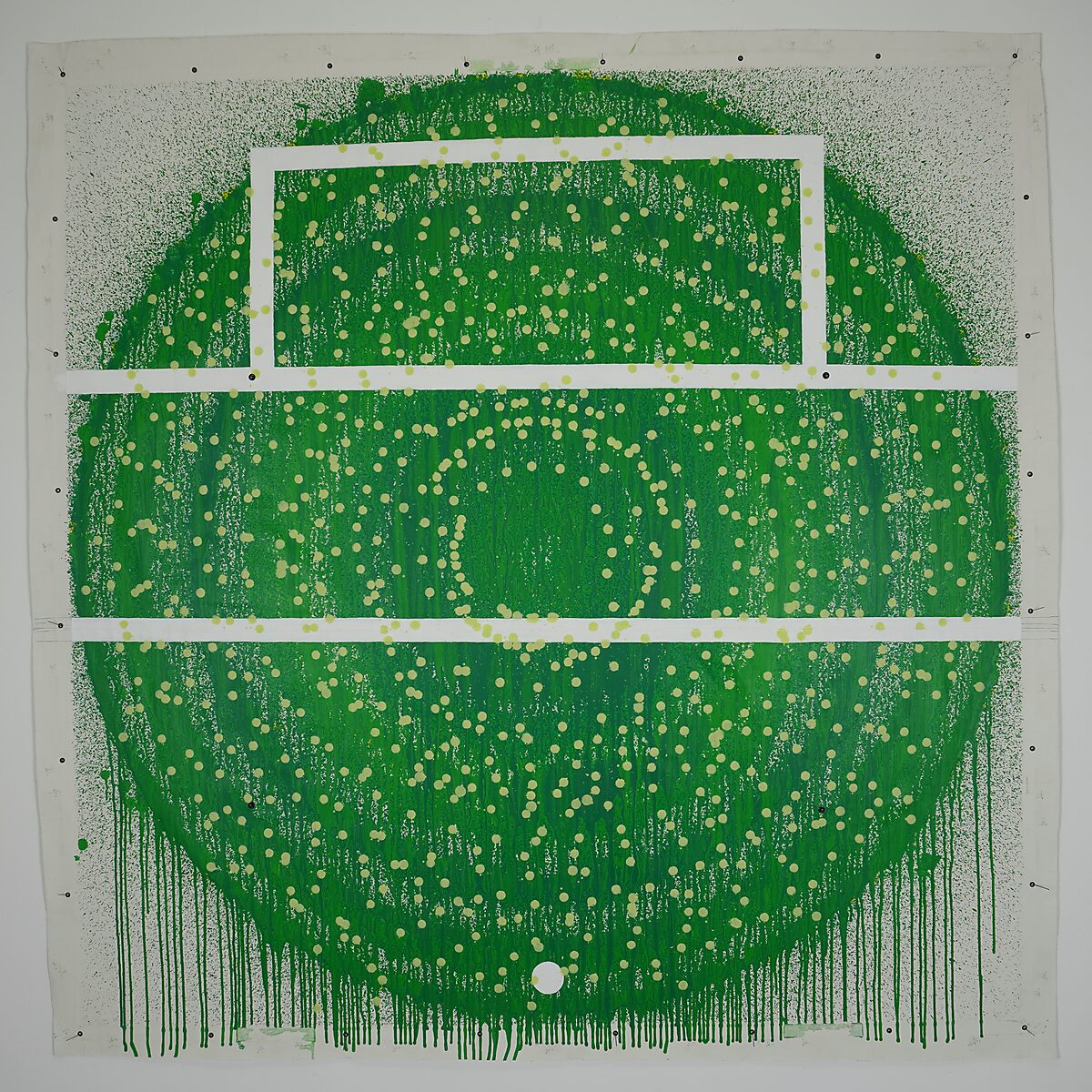
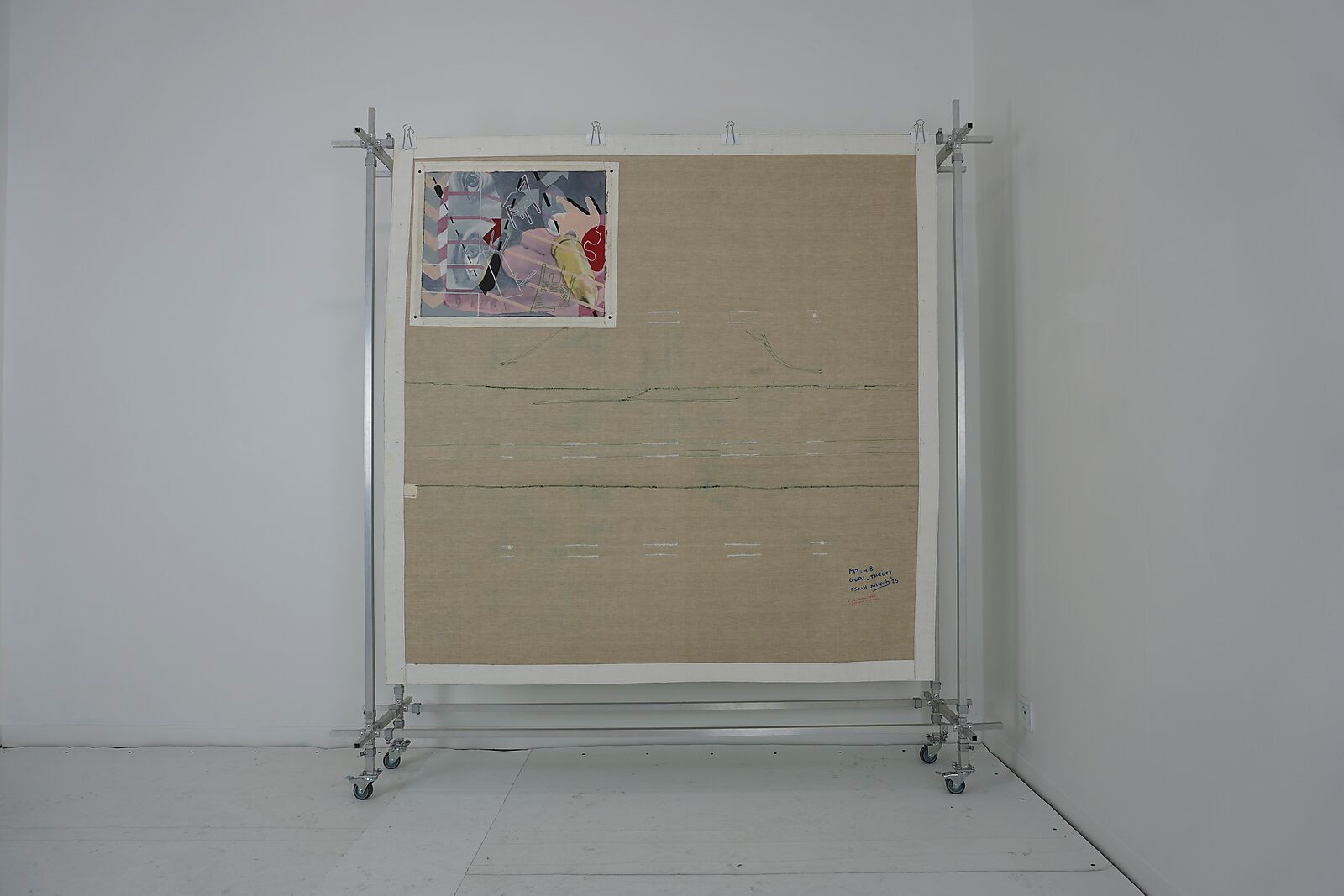

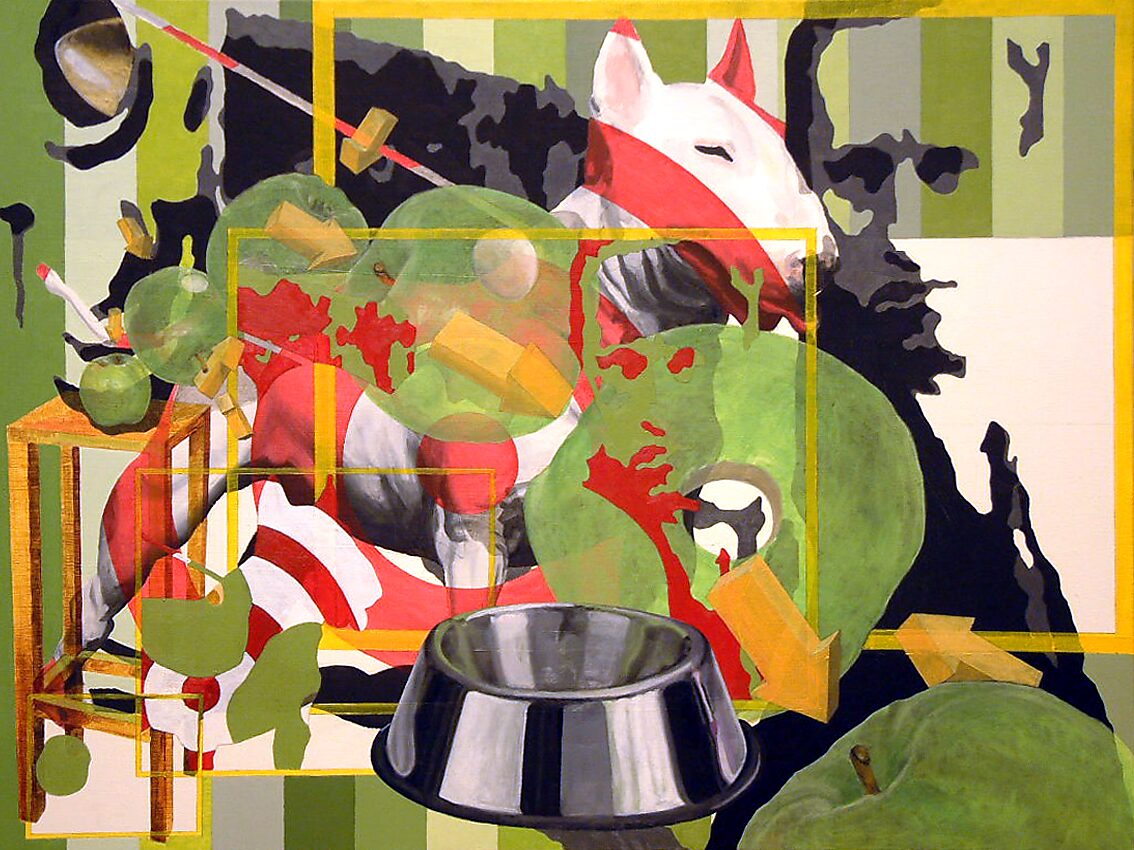
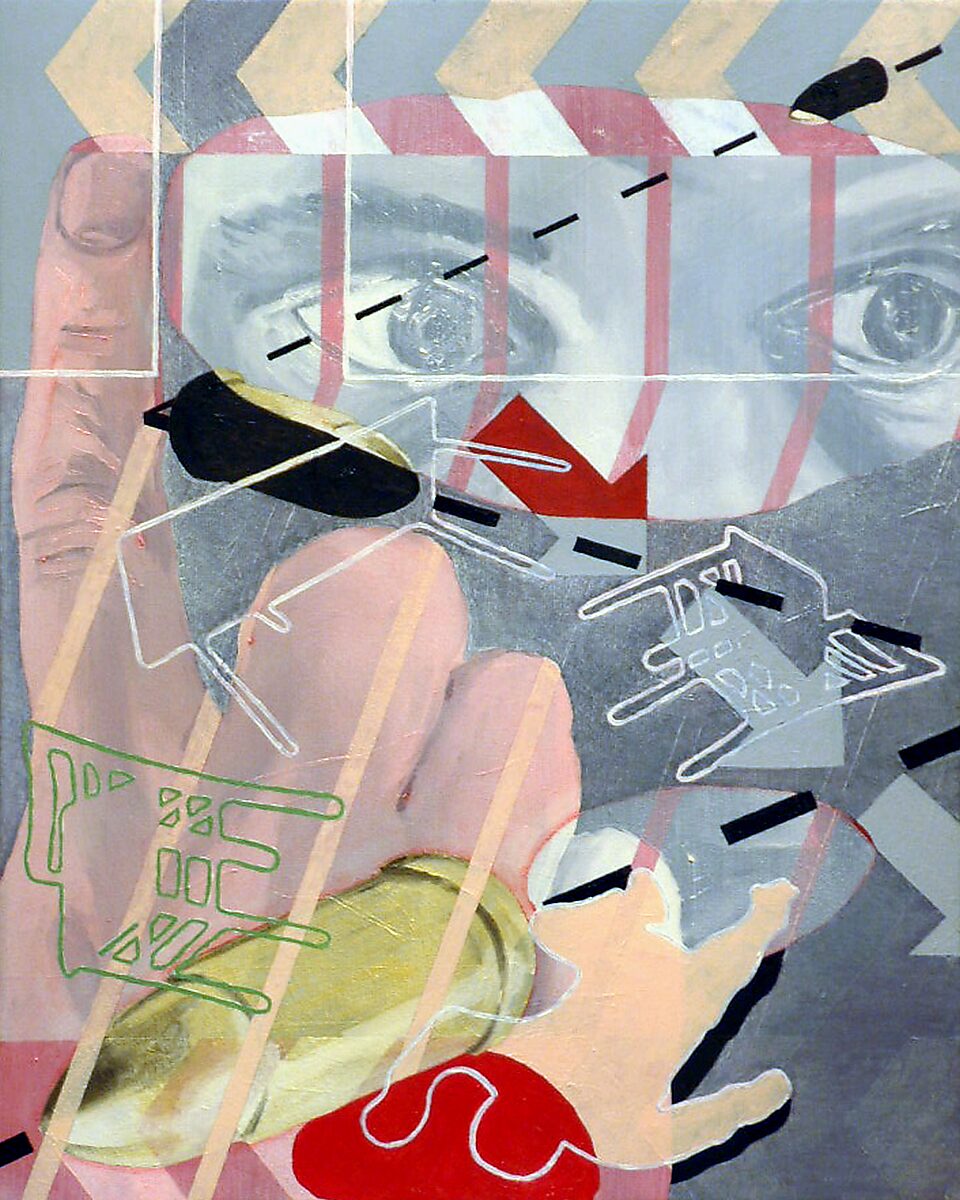


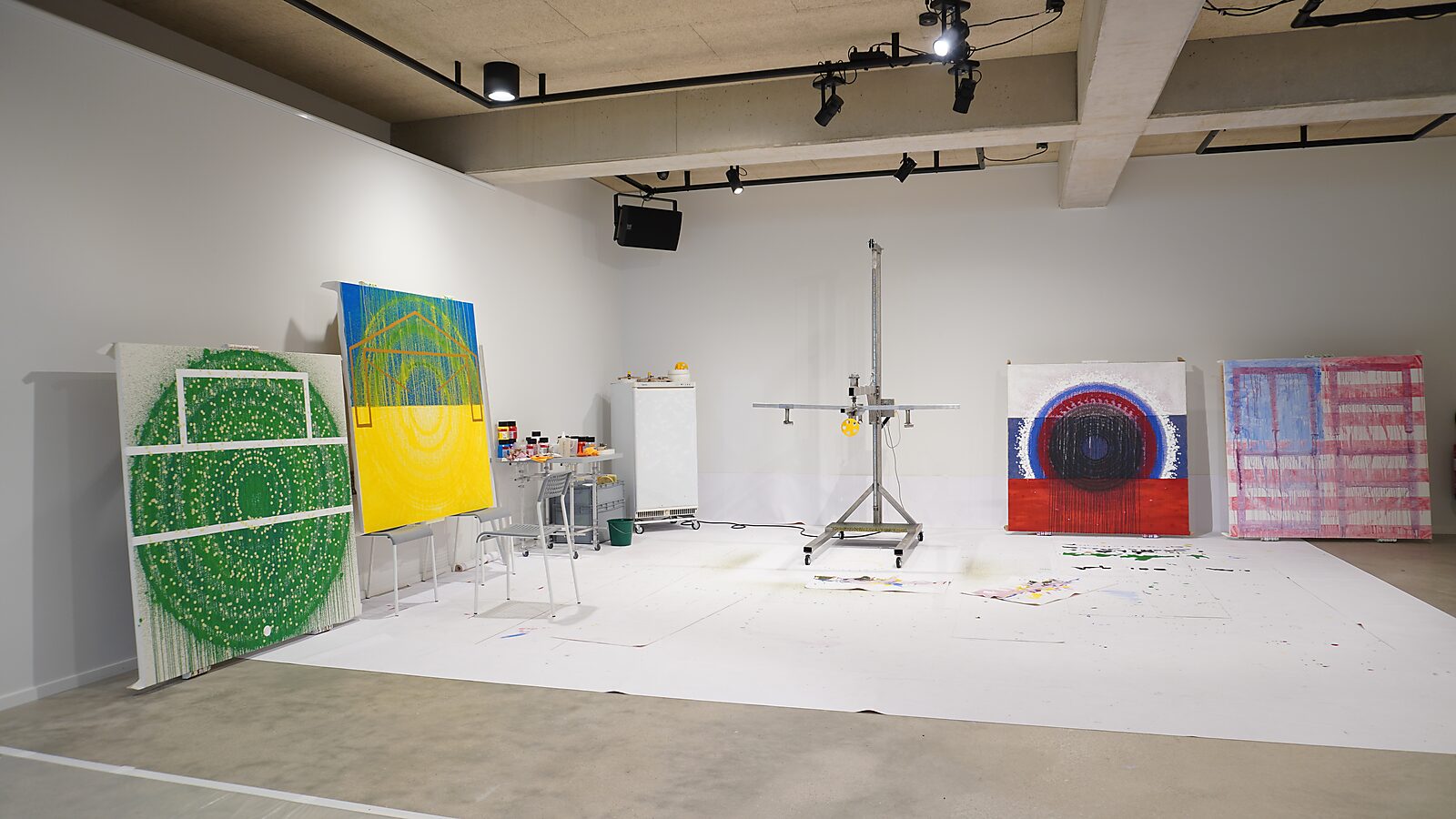
- Originating in 2024 during the exhibition Transformatiestudio nr. 1 on a square canvas of 150 × 150 cm.
- Applying a base layer with drips of melting ice paint in green and white.
- Painting the lines of a football field as an initial image of demarcation and play.
- Sewing the canvases Shooting Apples for Dogfoot (2004) and Warning Bullet (2003) onto the front and back.
- Lines from Warning Bullet were compositionally enlarged.
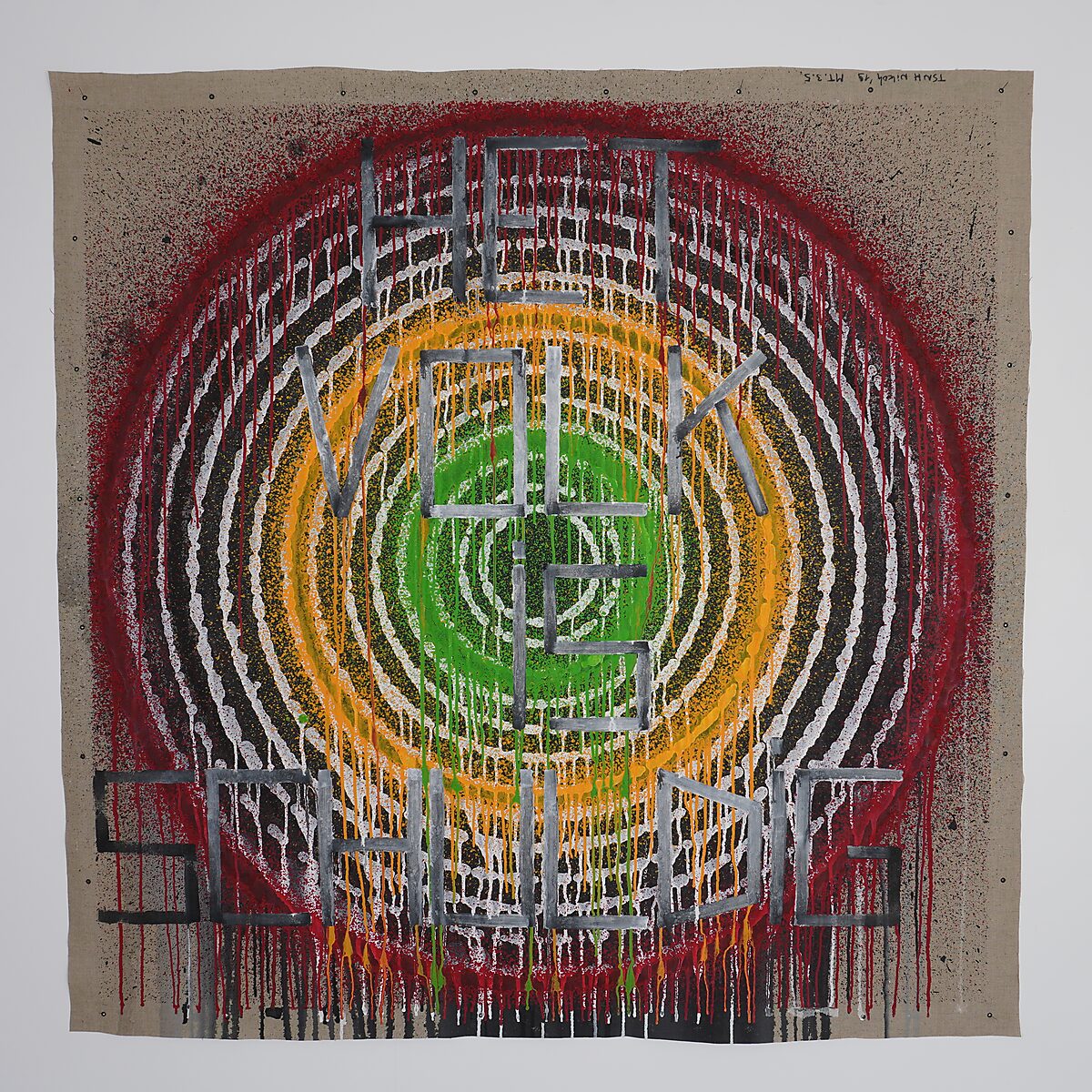


2025 - MT.4.2 White Flag Over a Russian Landscape
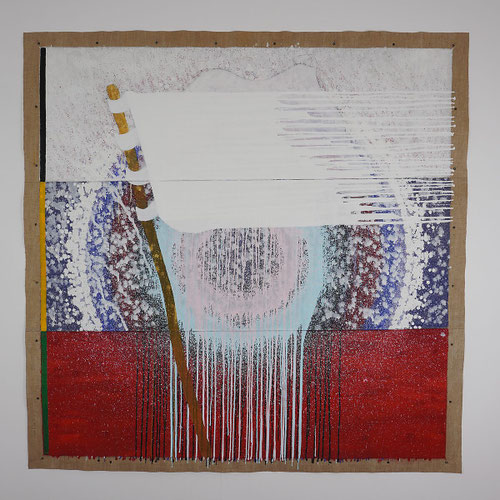
- A canvas I started during the exhibition Transformatiestudio No. 1 in 2024. (150 × 150 cm)
- 2025: addition of the flag and extra colors.
2025 - MT.4.4. The people follow
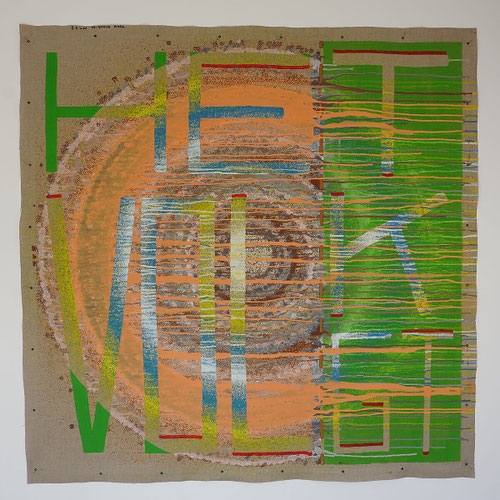
- 2025: Started a blank canvas. (150 × 150 cm) with the words 'Het volk volgt' (The people follow).
2025 - MT.4.7. Resurrection of Ukraine
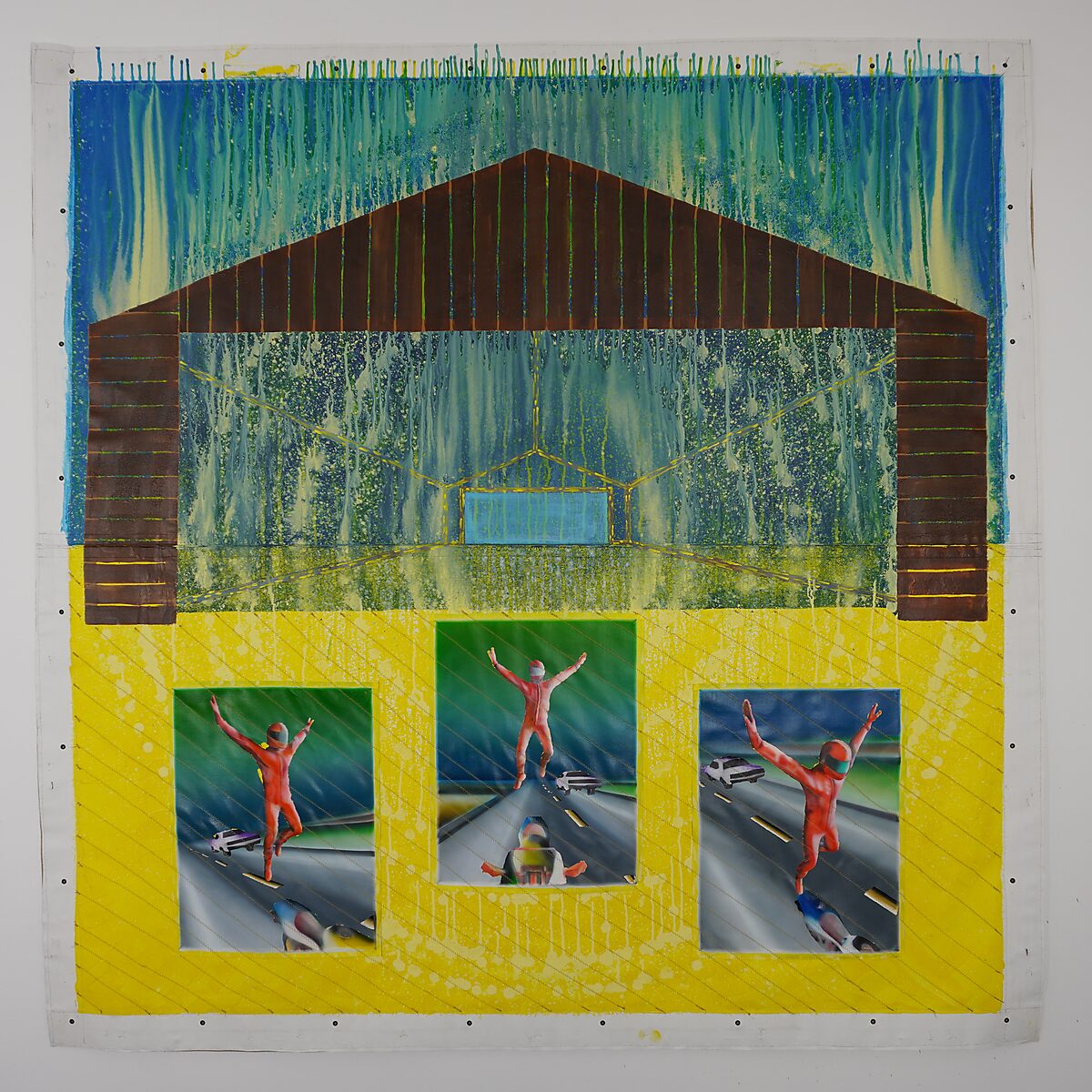

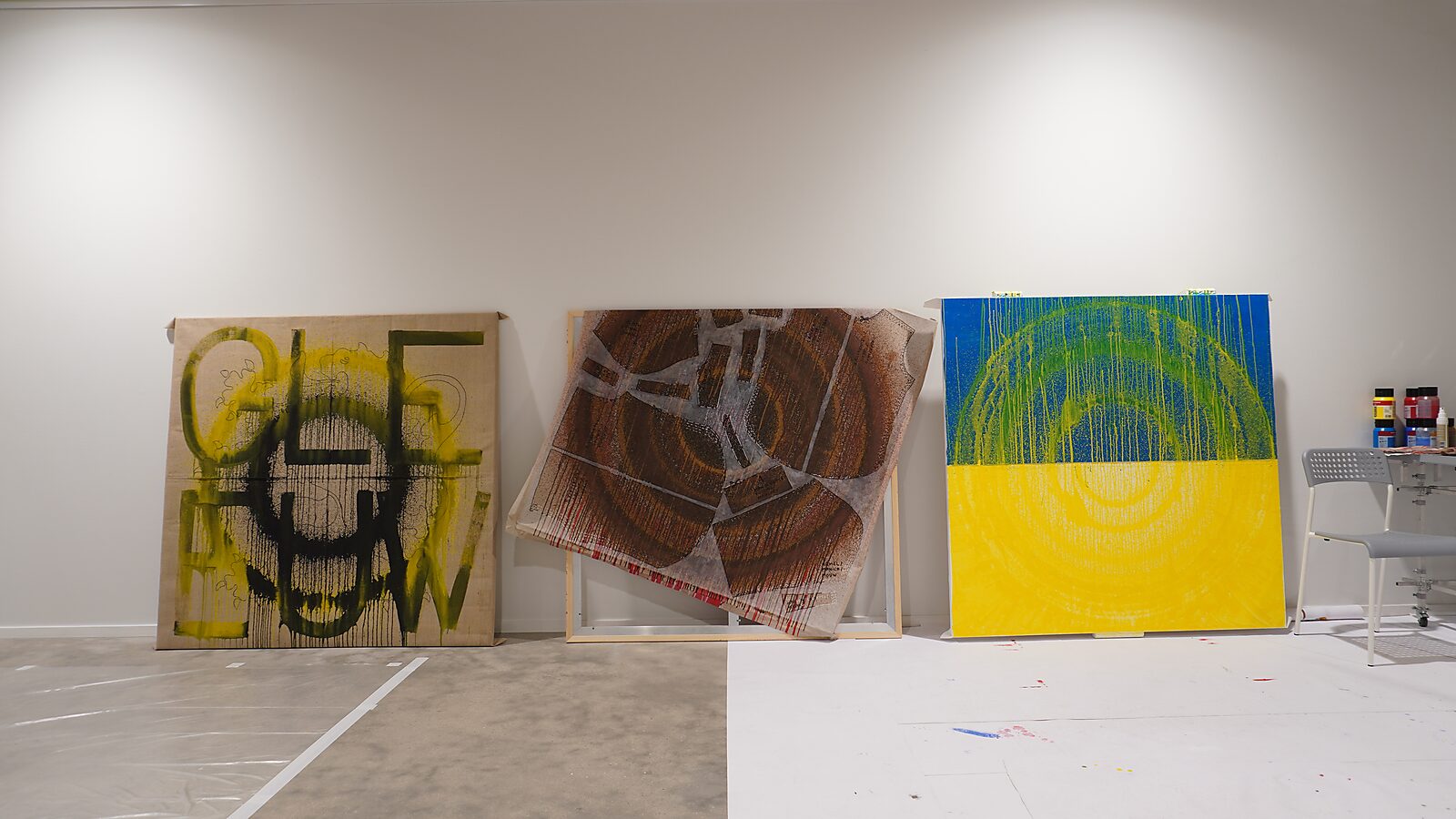
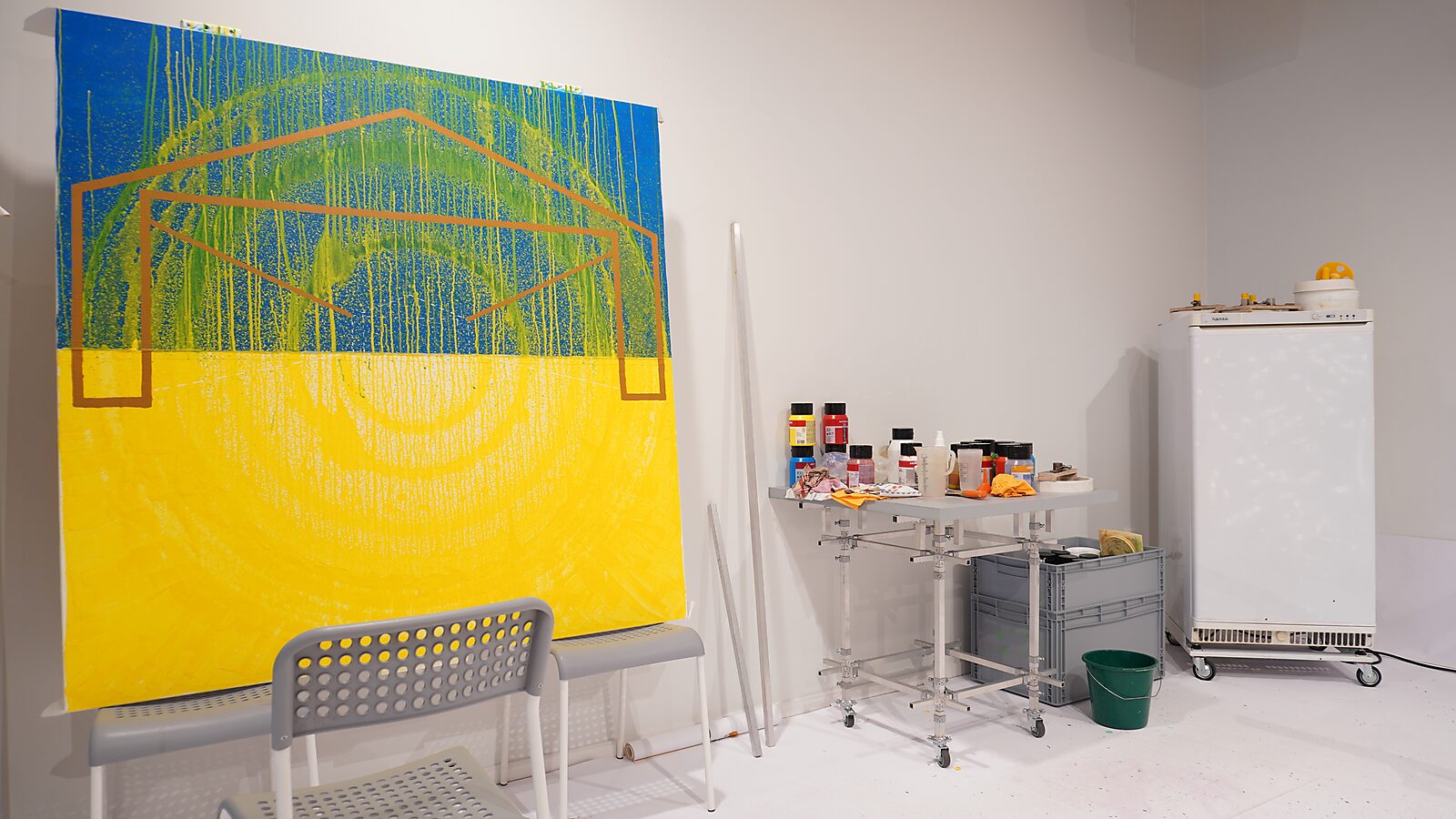
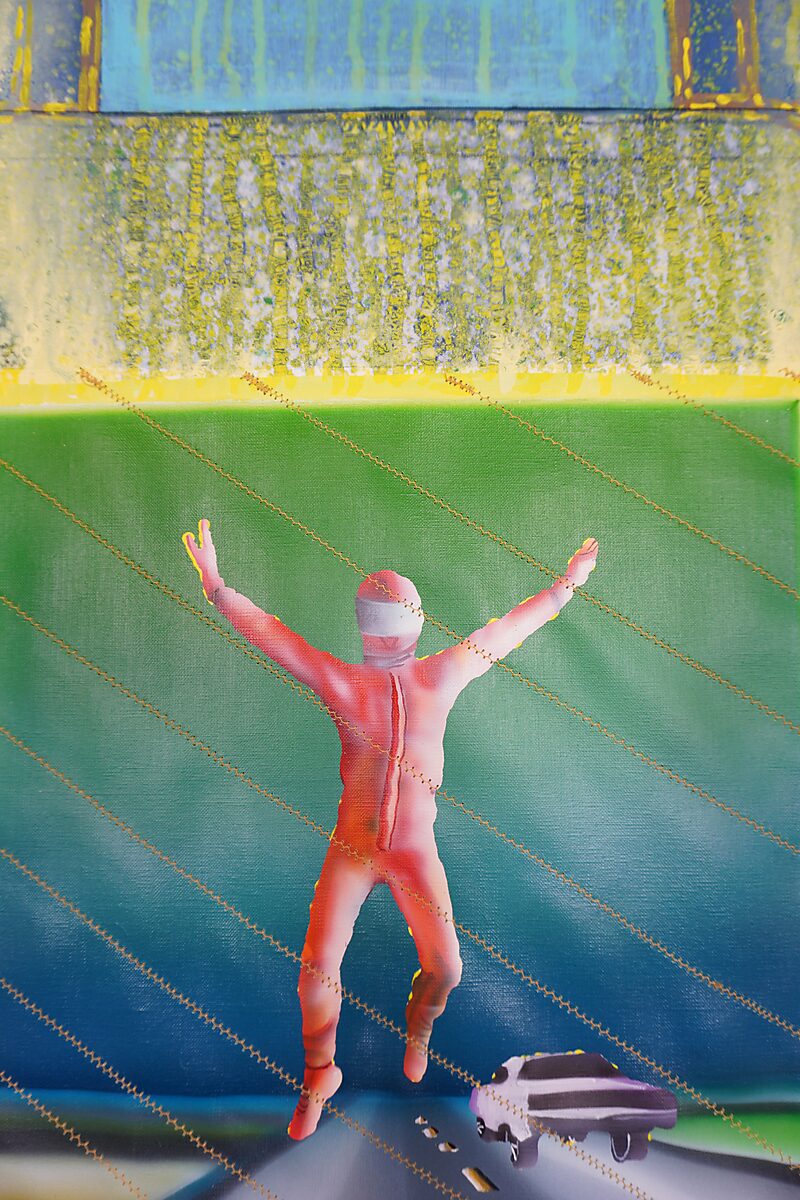


- A canvas I began during the exhibition Transformatiestudio No. 1 in 2024. (150 × 150 cm)
- I used the colors of the Ukrainian flag. I let the drips run upward to create an upward movement.
- Later, three canvases from the Racer Malevich project were sewn onto this canvas.
2025 - MT.4.6. Gleeuw
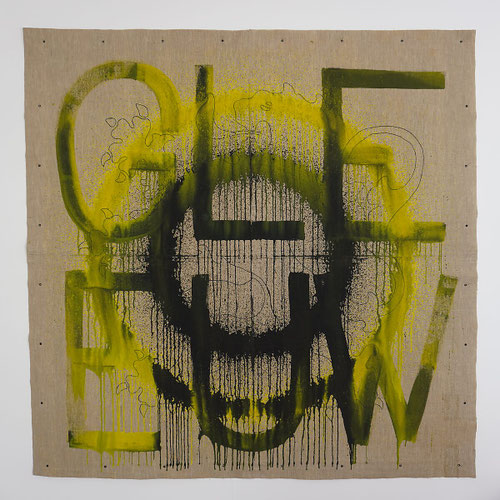
- GLEEUW: a portmanteau of the words 'geeuw' (yawn) en 'leeuw' (lion).
- A canvas I started during the exhibition Transformatiestudio No. 1 in 2024. (150 × 150 cm)
2025 – Continuation of the project Intra Muros

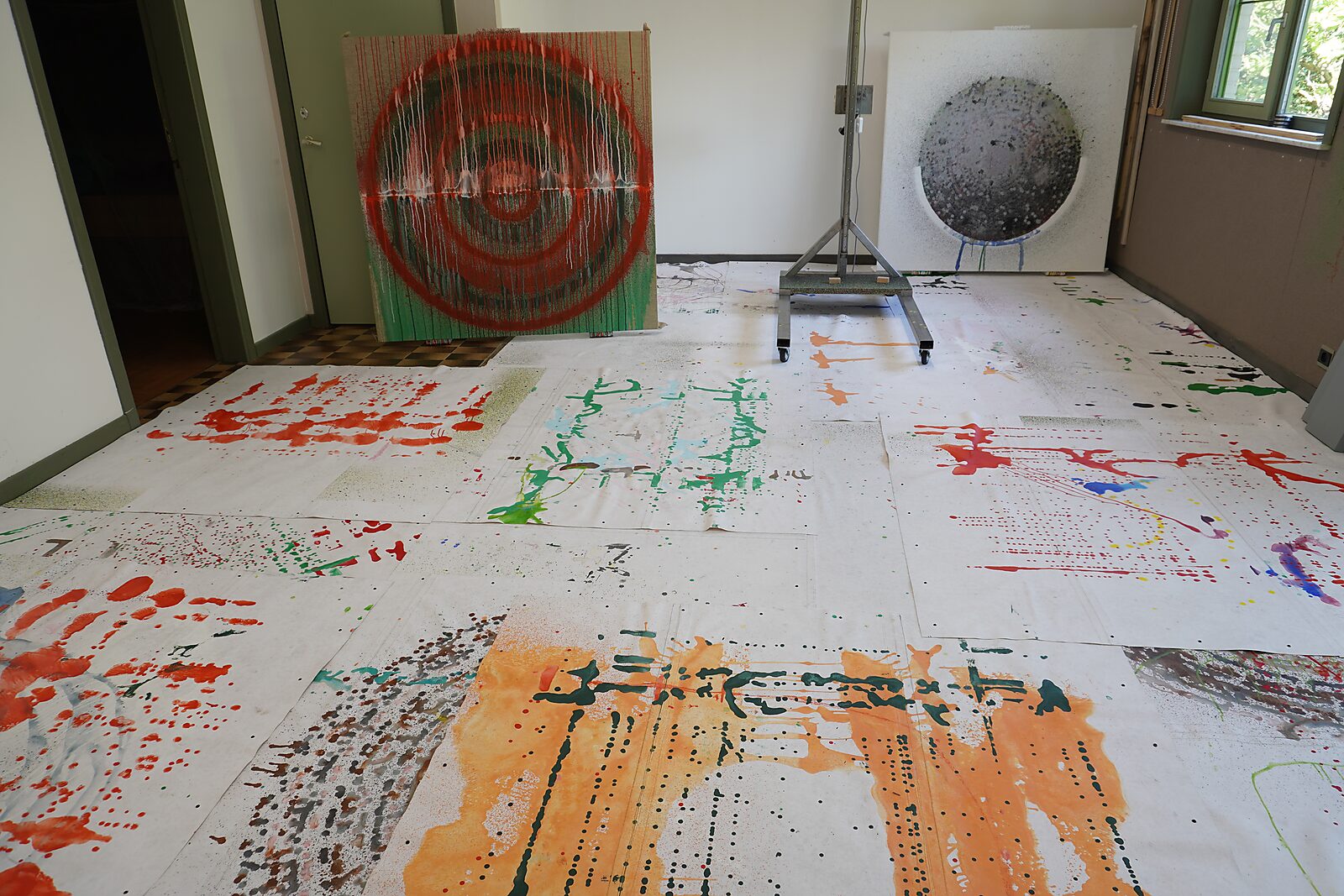
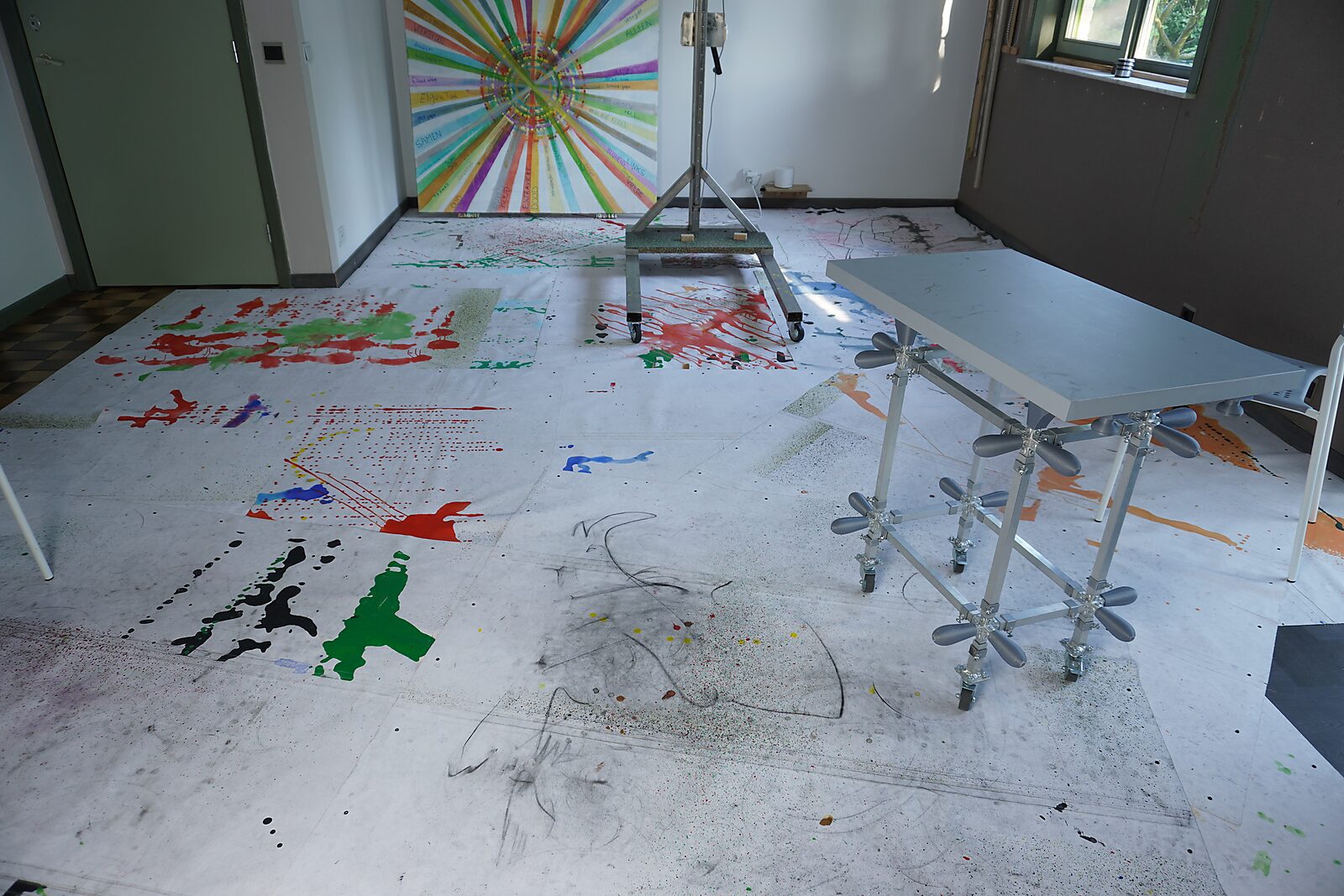


2025 - Traces of Transformation
During the first live setup at CCDA Lommel, I placed strips of canvas on the floor — which led me to the idea of Traces of
Transformation.
I prepared a series of 150 × 150 cm canvases with eyelets and spread them across my studio to collect traces from various activities and
materials.
Each canvas exists as a work in progress, without a fixed goal.
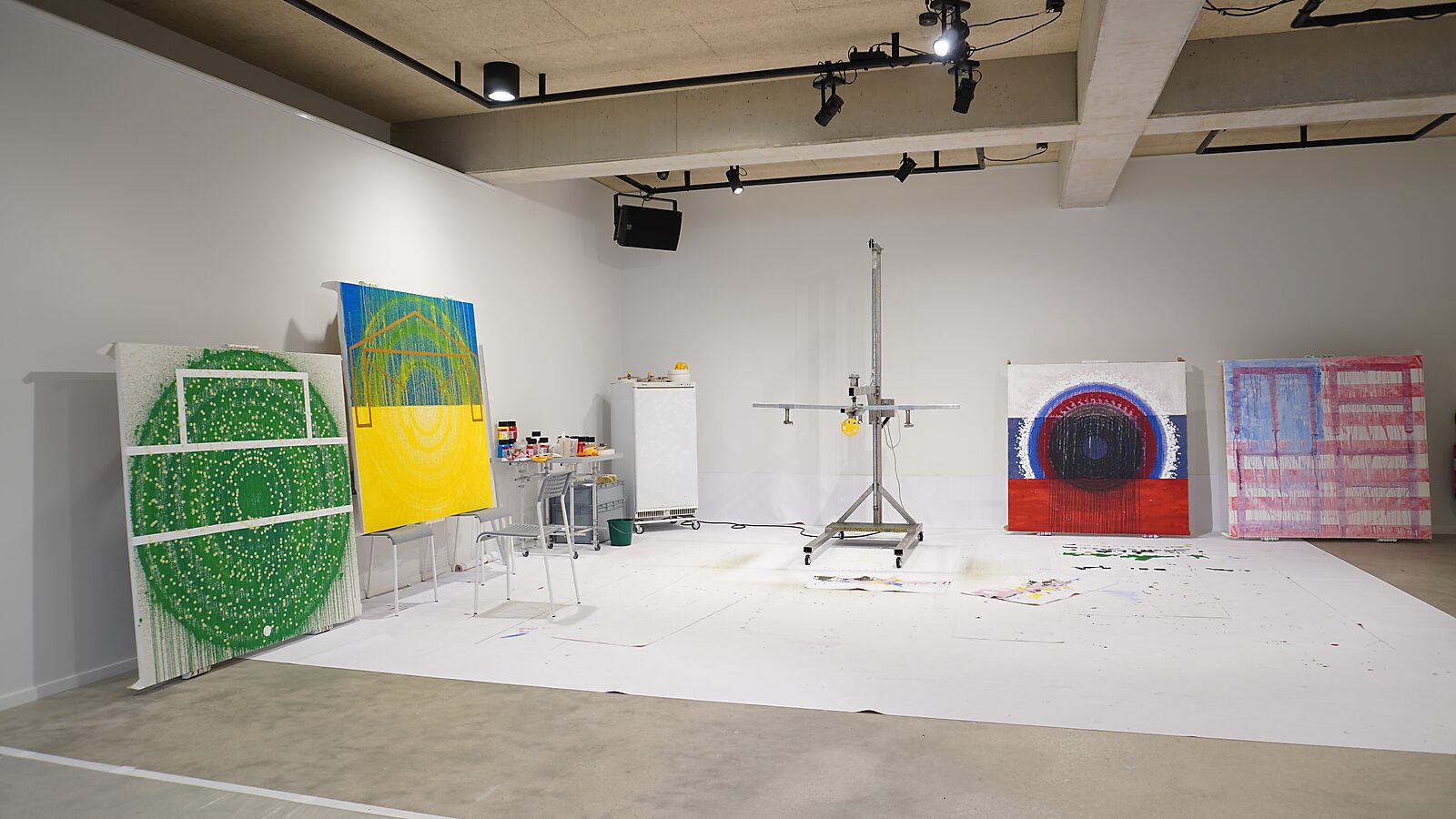
2024 - First live setup
During my solo exhibition Transformation Studio no. 1: Warm or Cold at CCDA Lommel, the installation was presented live
for the first time.
A working area was created within the exhibition space where, throughout the duration of the show, I melted ice targets and continued working on
canvases.
Strips of canvas were laid on the floor to capture the flow of melted paint.





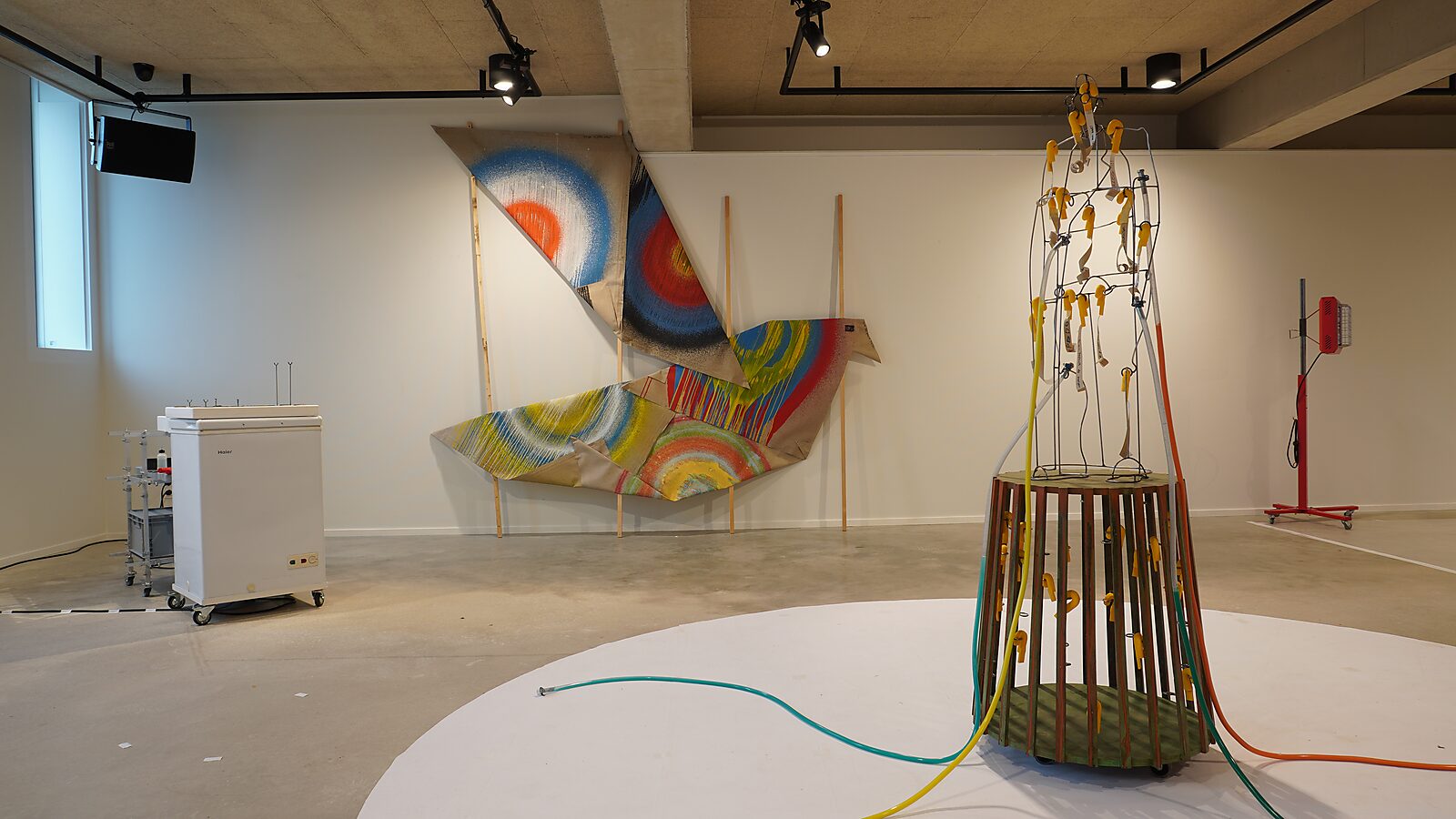
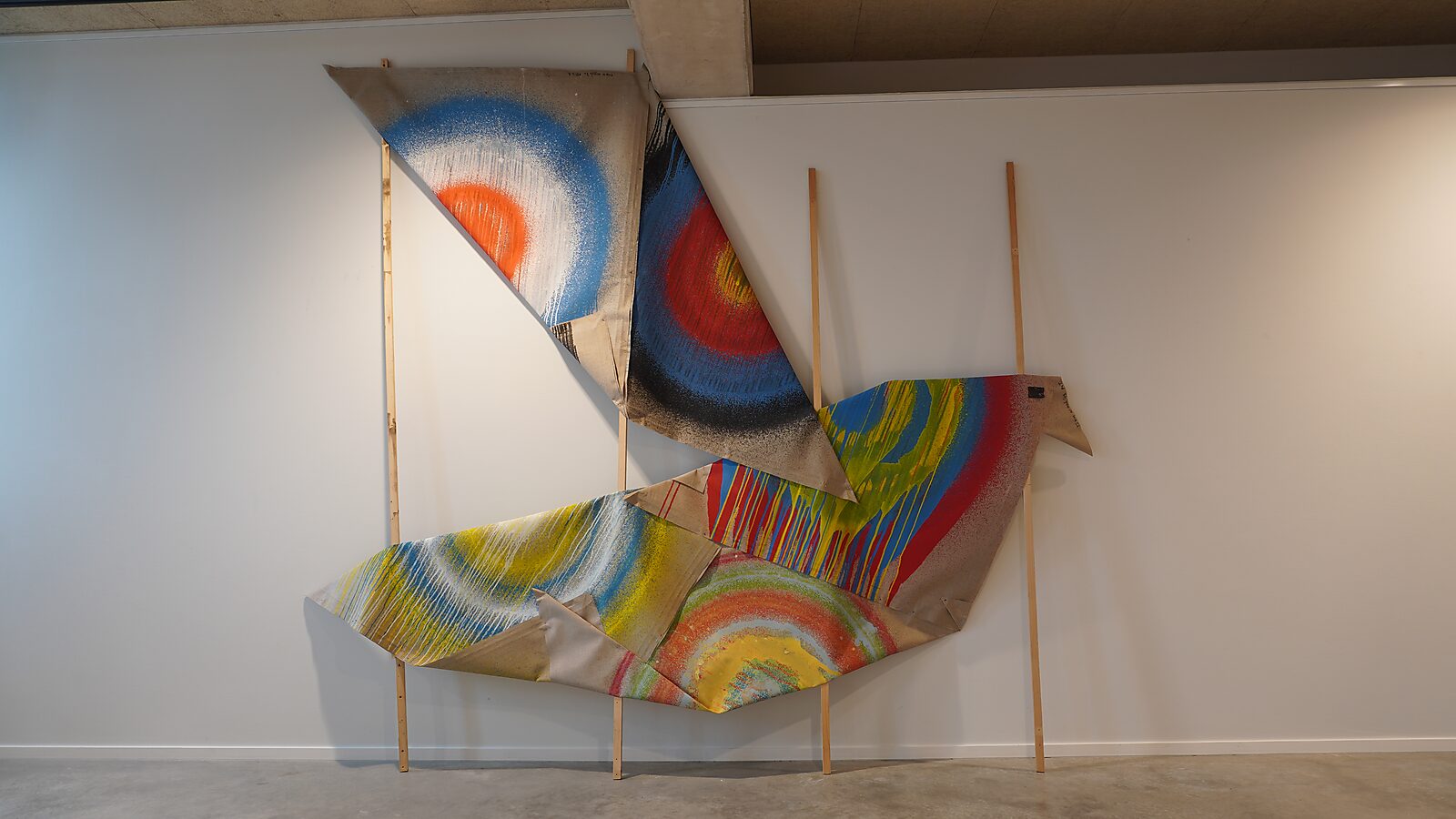
Transformation: from Melting Targets canvases to bird form
During Transformation Studio no. 1: Warm or Cold, I temporarily folded five canvases into the shape of a bird.



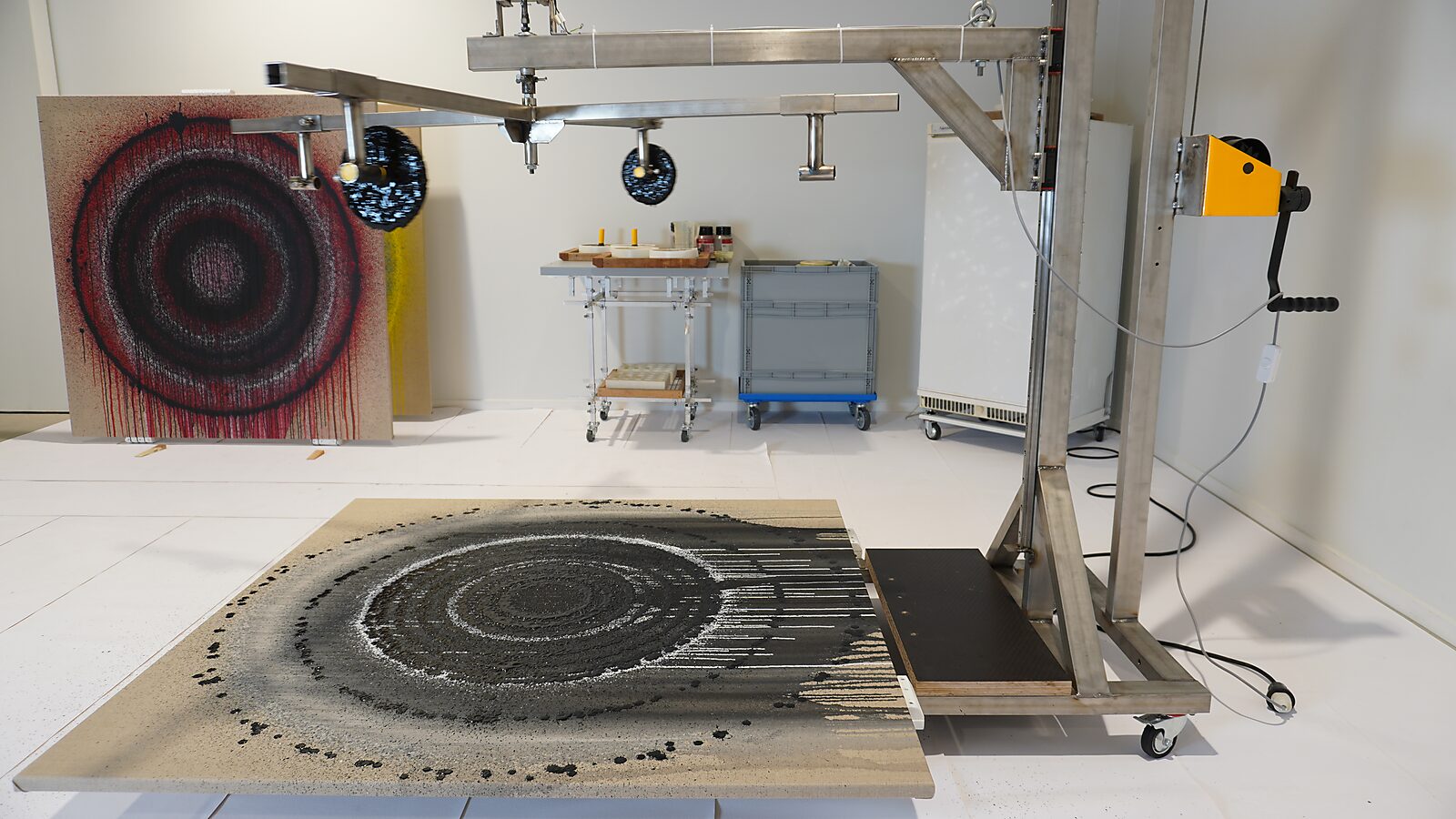
2024 – Melting Targets no. 4
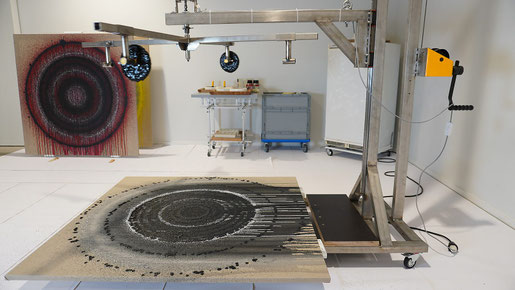
Melting Targets no. 4 further refines installation no. 3.
Mounted on wheels, this version is easily movable and allows both the height of the ice discs and the diameter of the circles to be adjusted.
The stainless-steel moulds used to freeze the ice discs were replaced with 3D-printed holders made of yellow ABS material. This makes the installation more flexible and opens new possibilities to explore the dialogue between structure, chance, and time.
2023 - Adjusting the format of the canvases
The canvases from Melting Targets no. 3 were later resized. Originally measuring 170 × 140 cm, I decided to make them
square to reinforce the visual effect of the target. The new format became 140 × 140 cm when stretched.
After each process is completed, the canvases are removed from their aluminium frames. Eyelets along the outer edge allow the works to be suspended freely.






2019 _ 2020 – Melting Targets no. 3
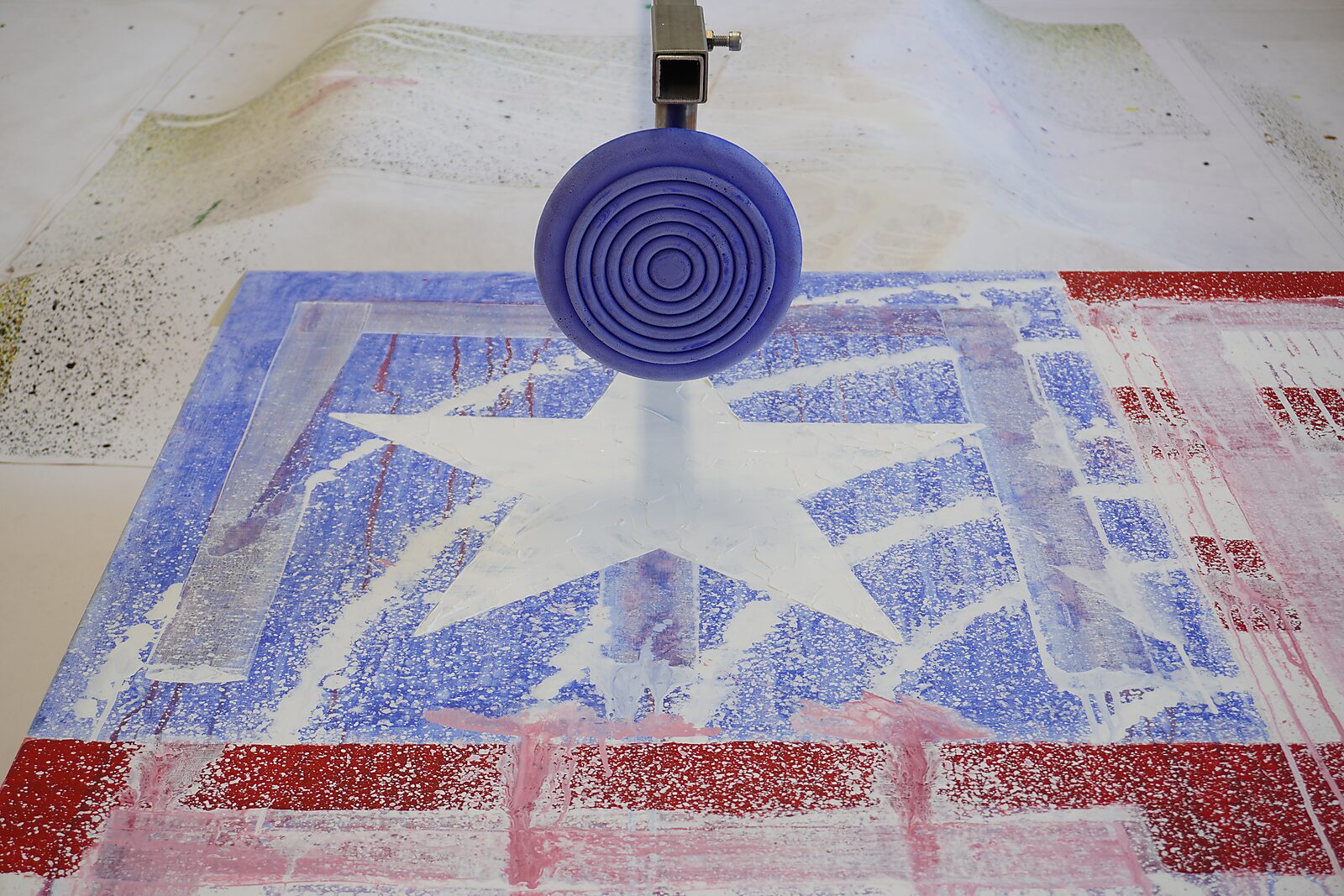
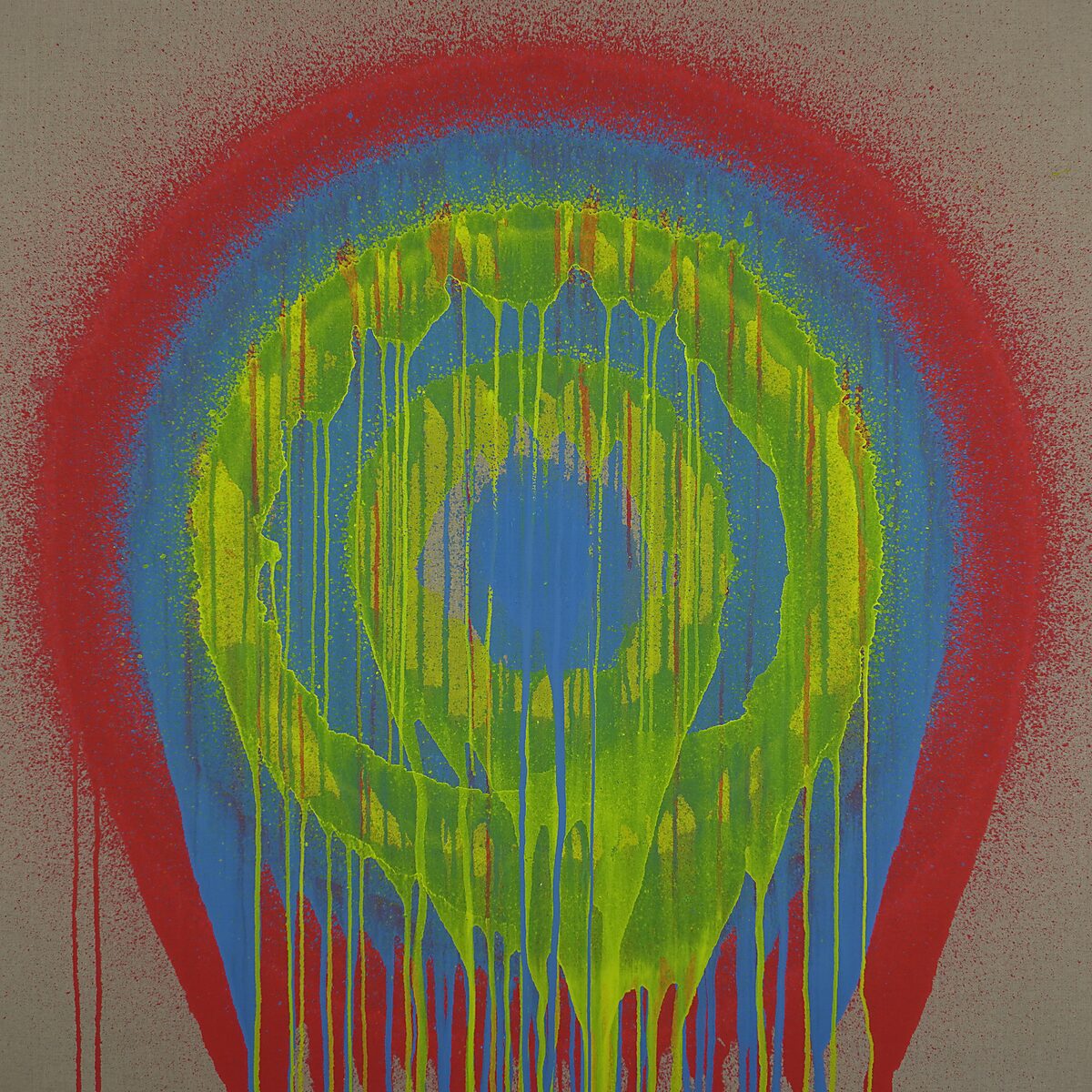
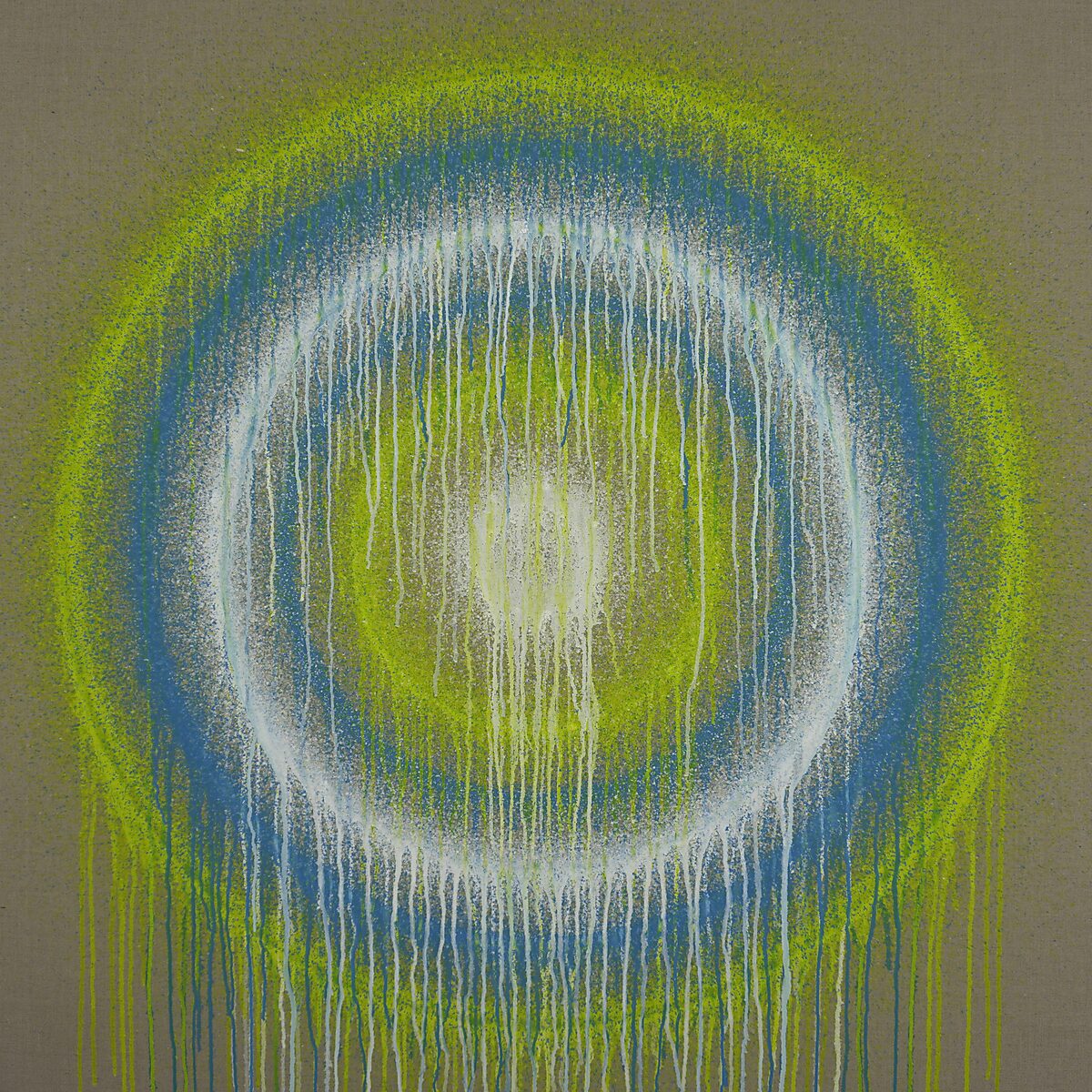
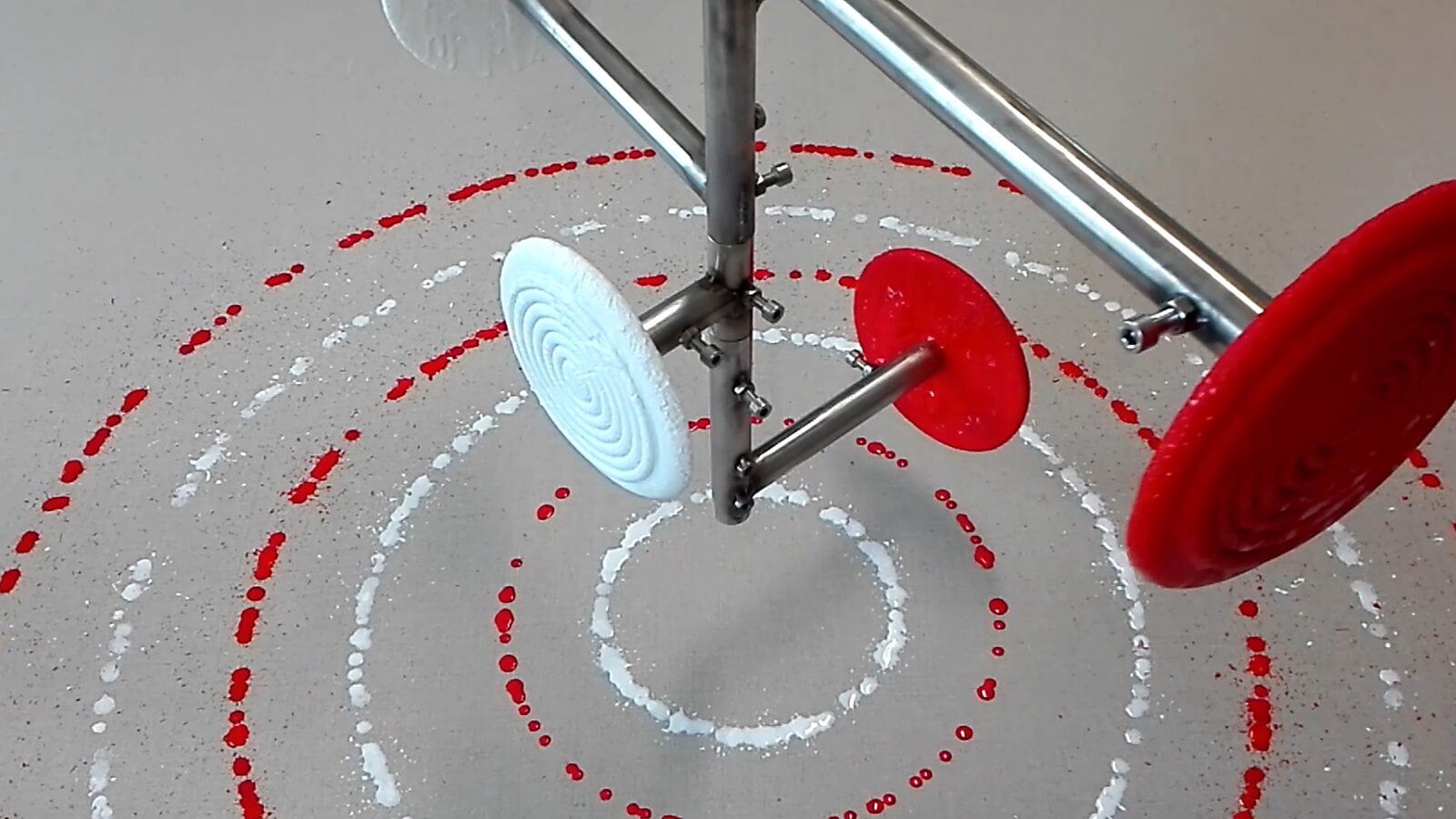
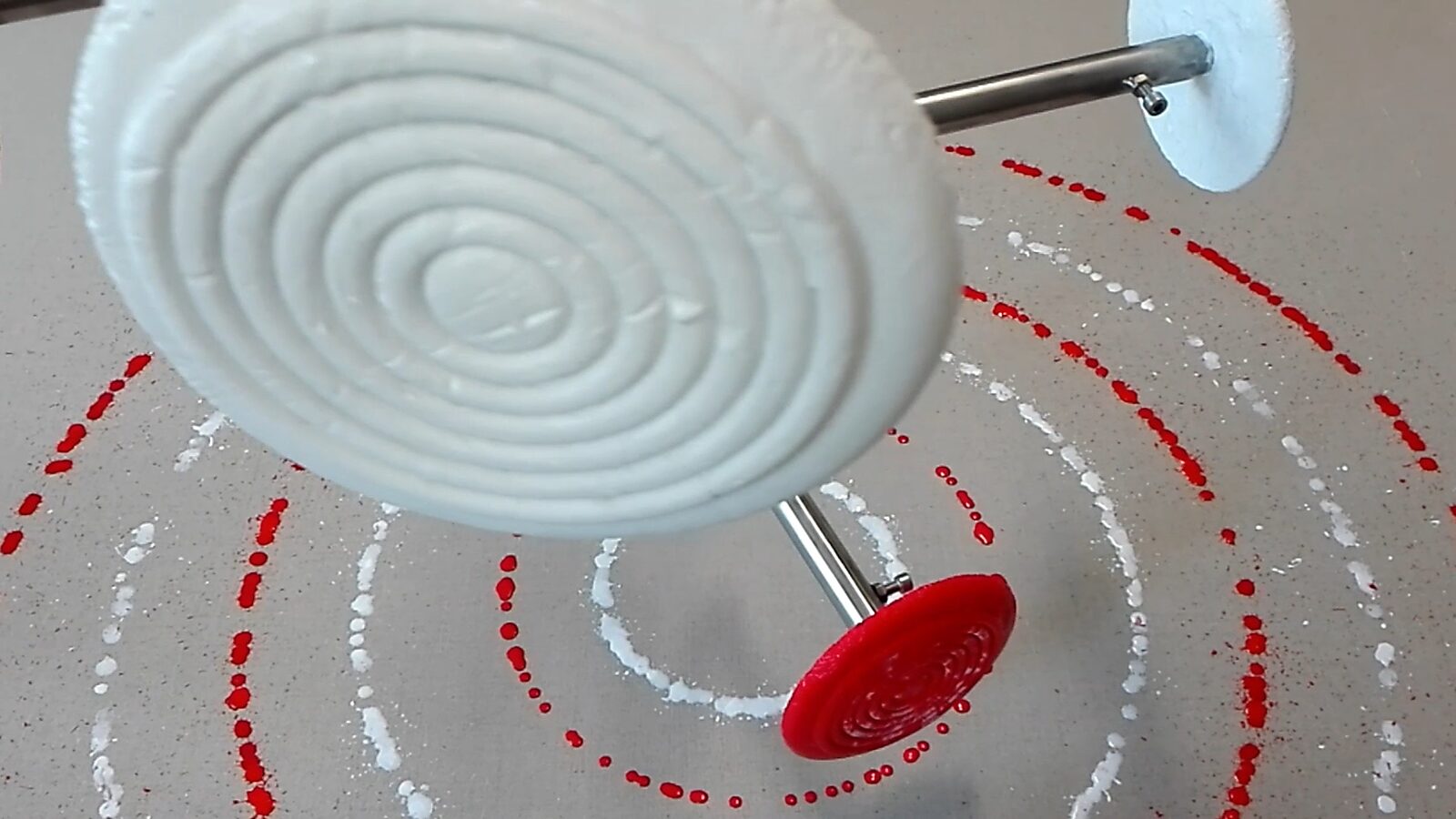
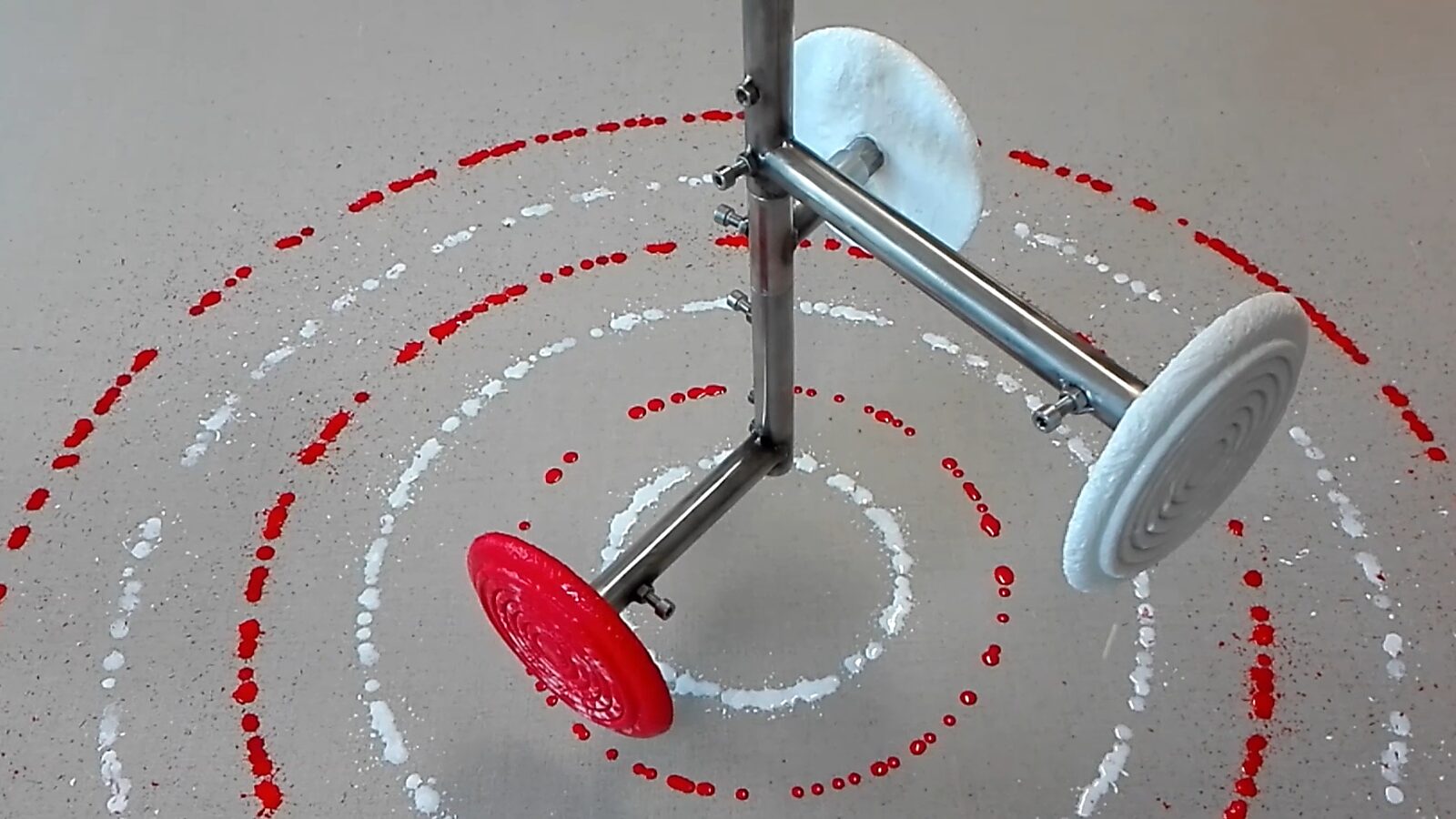
Melting Targets no. 3 evolved from the first two versions. Instead of placing a metal stand on the canvas, I attached the ice discs to a rotating metal structure suspended above it. As the discs melt and spin, they drip and form a new, larger target on the canvas.
This installation unites several domains: it generates paintings, incorporates a technical-constructive component, and involves a physical transformation of matter — ice becomes water, and water dries into traces of paint.
The setup allows for great variation: the thickness of the paint, the tilt of the canvas, the order in which the discs melt, or the height of the targets can all be adjusted. When the installation is active during an exhibition, the painting process can be experienced live.
The meaning remains related to the earlier works — a reflection on goals and their traces — but here I also include an art-historical reference to the Target paintings of Jasper Johns.





Start 2018 – Melting Targets no. 1 and no. 2



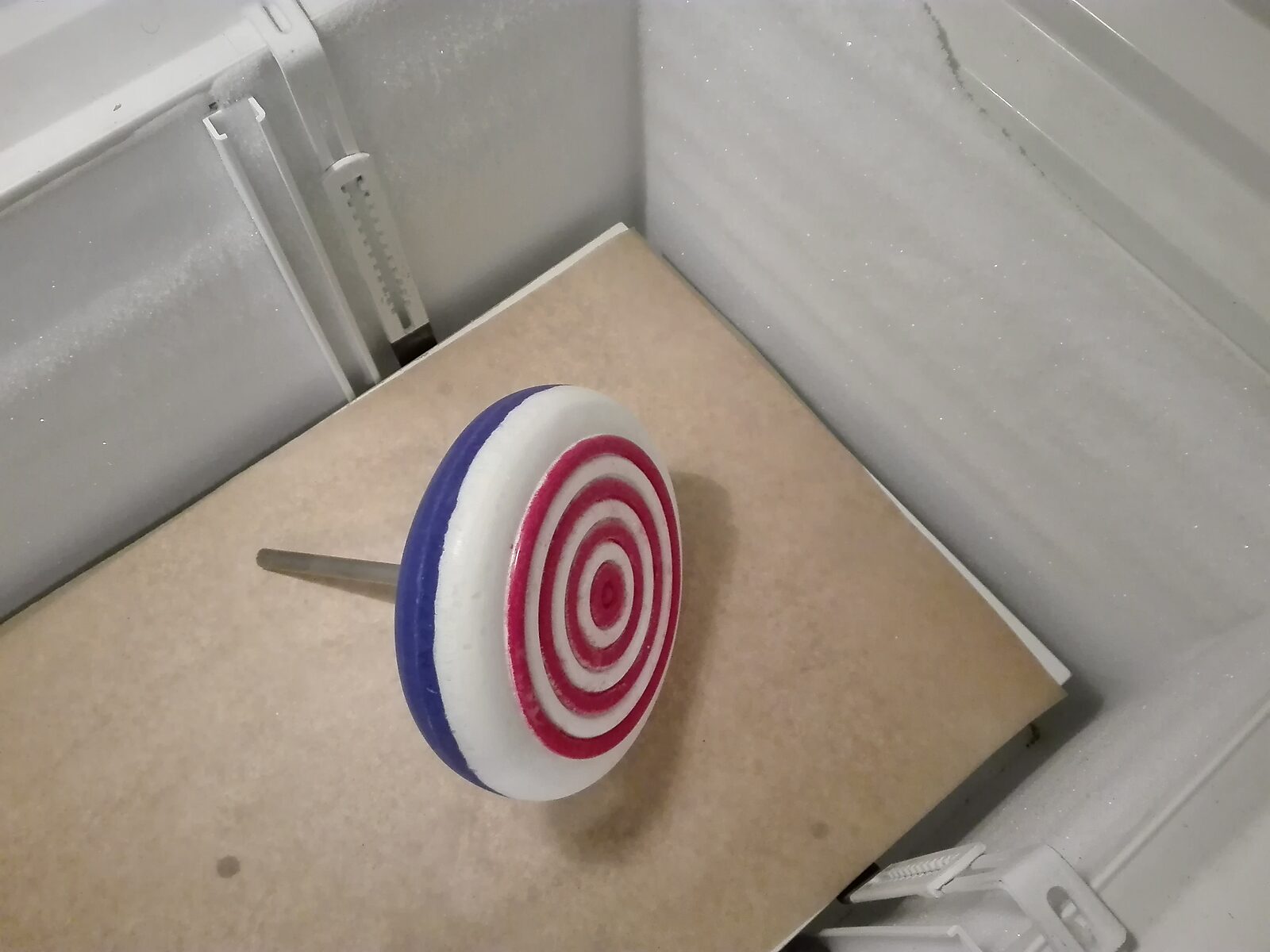


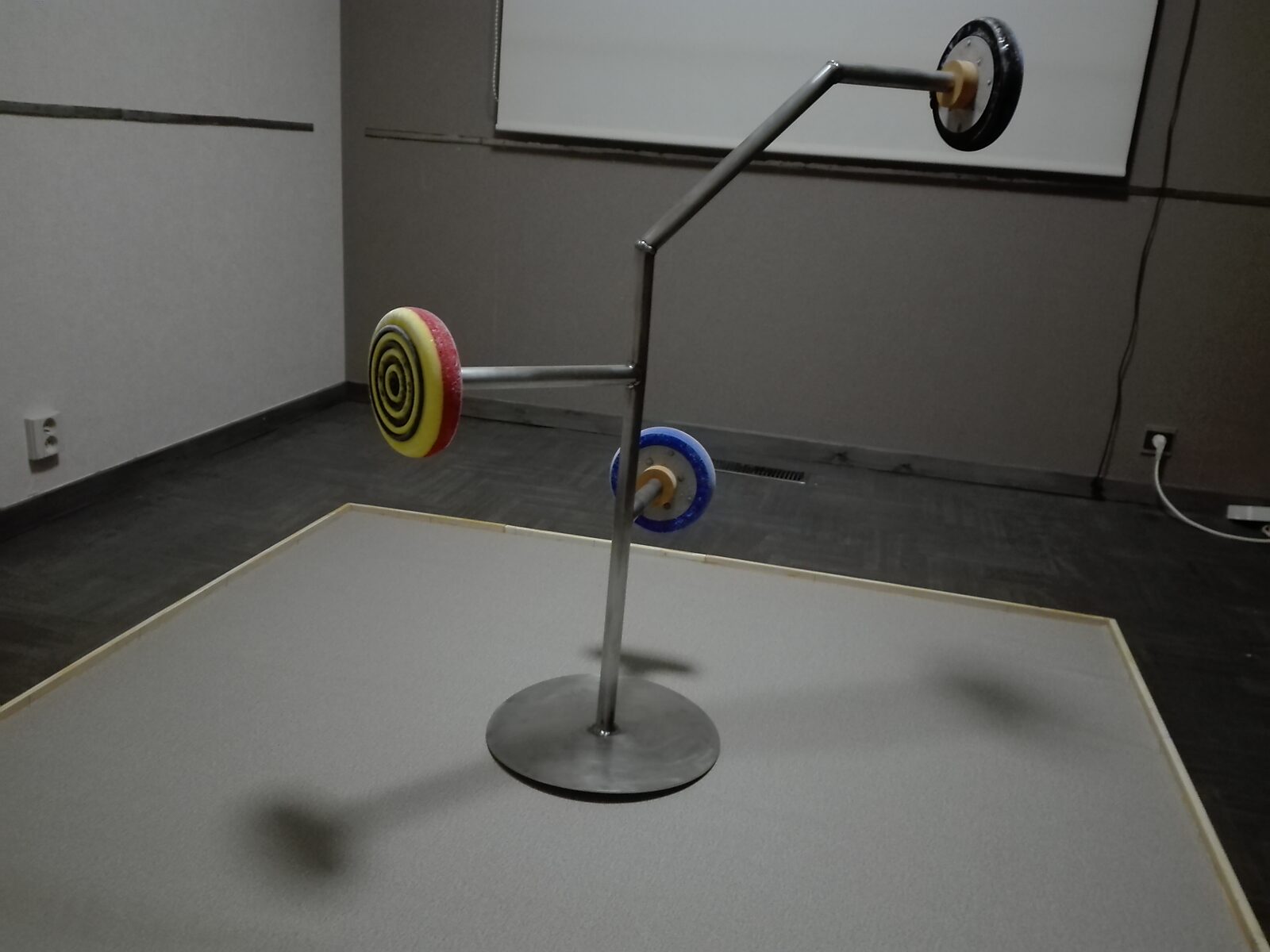
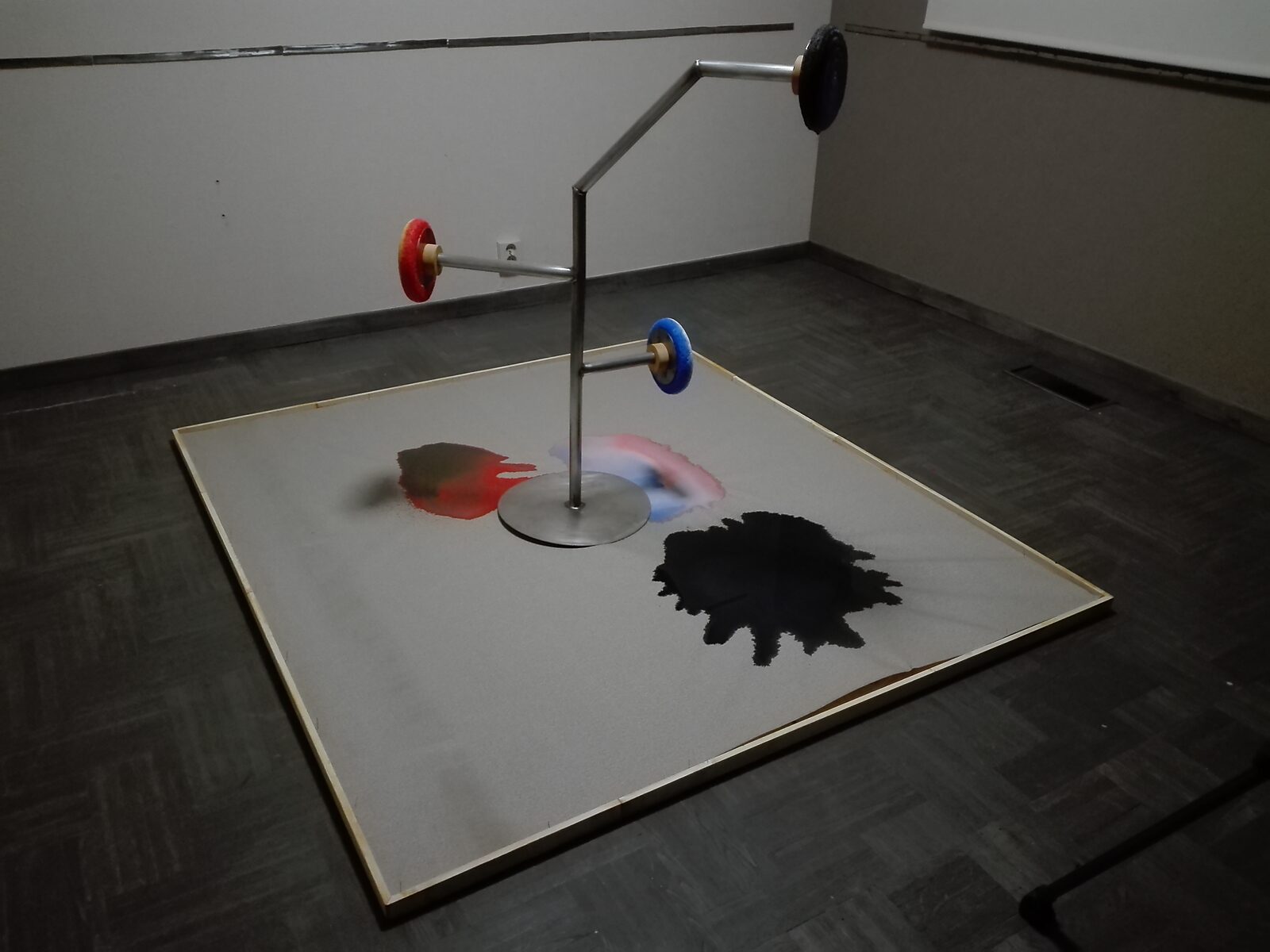


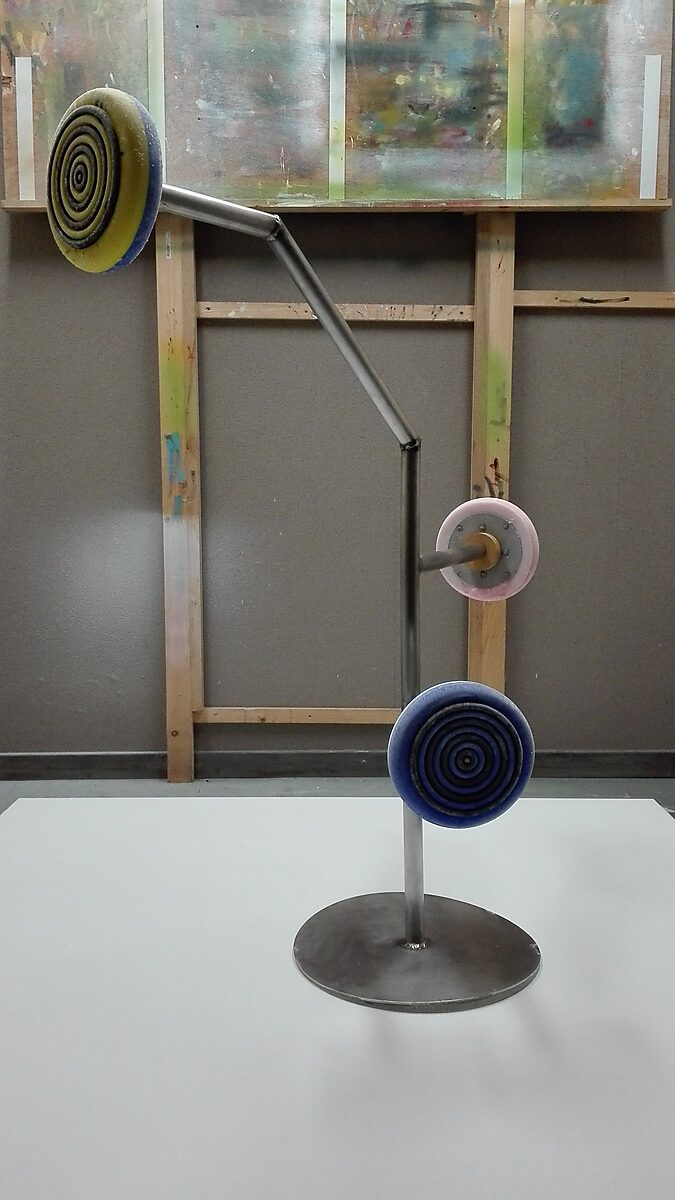


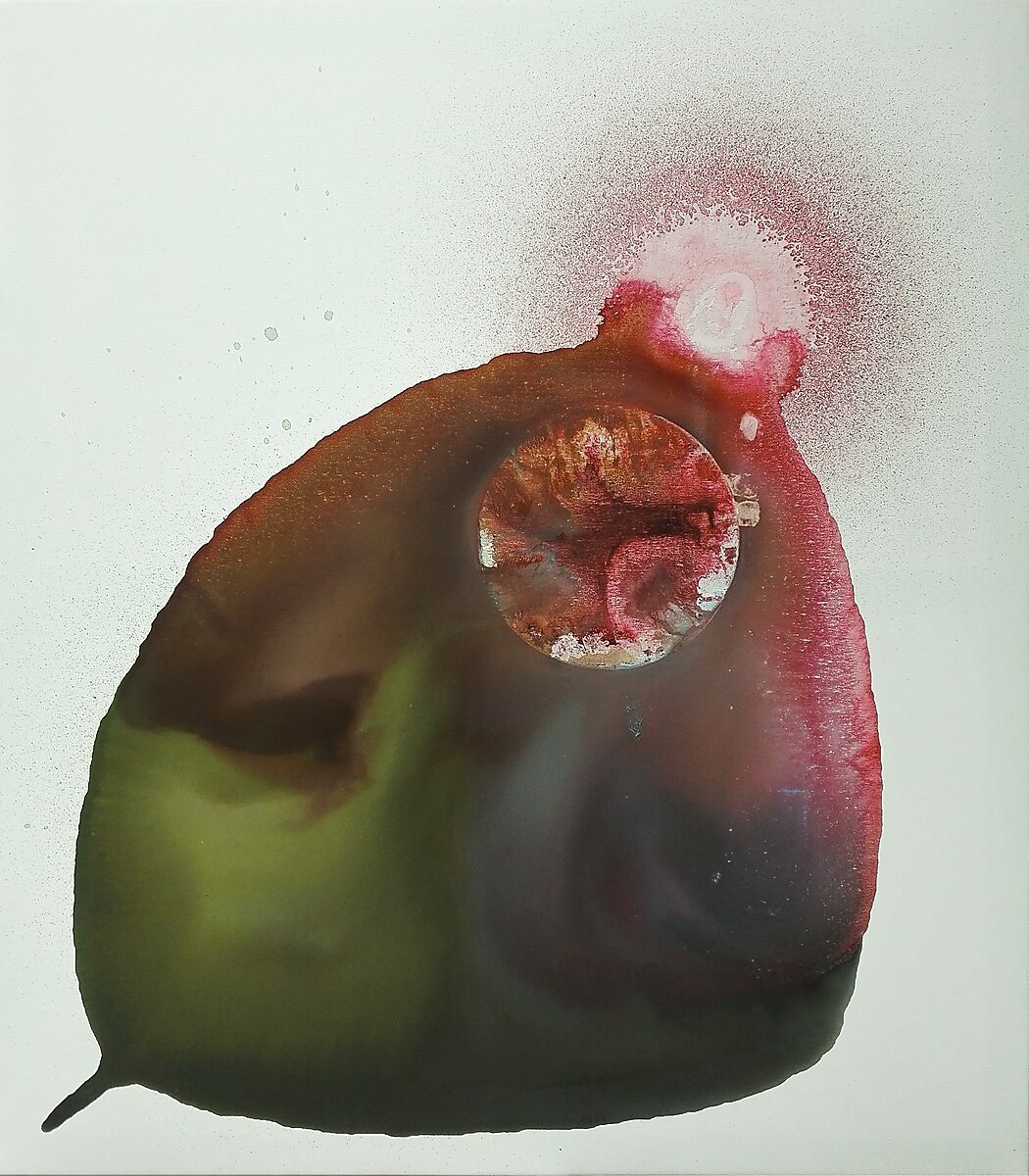


Melting Targets no. 1 and no. 2 form the first configuration in which I experimented with acrylic paint and water as materials.
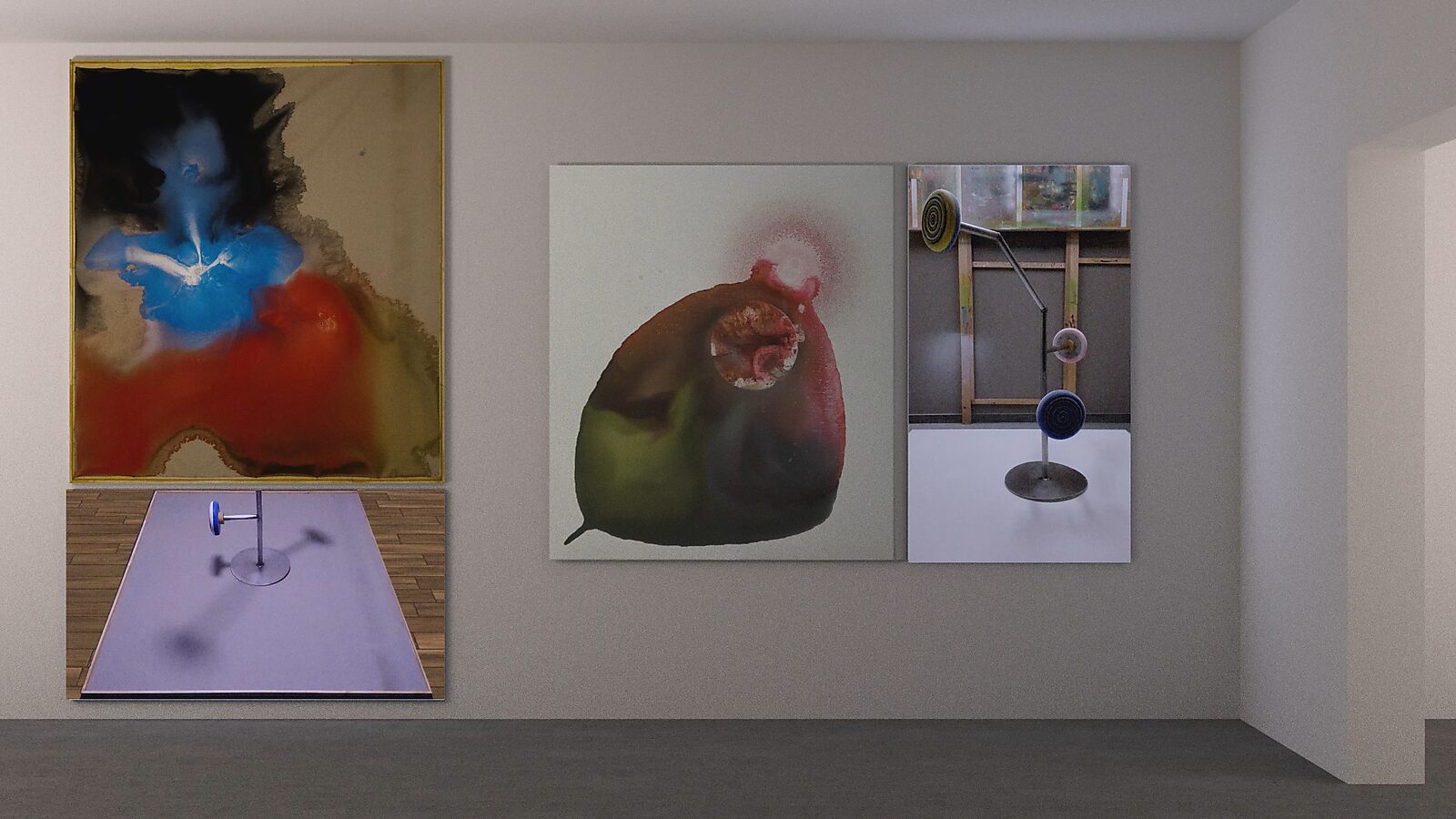
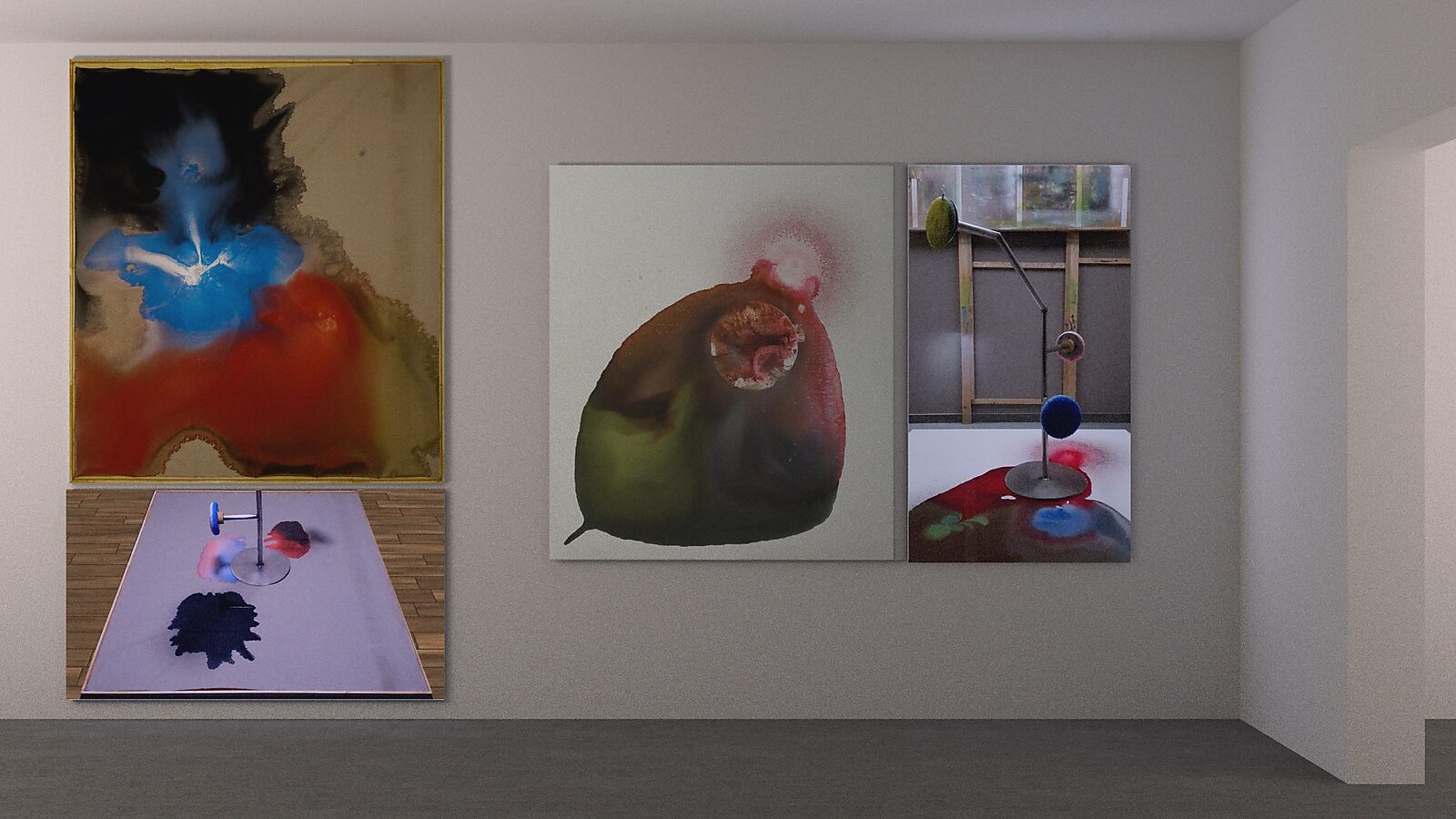
It is a performative artwork: I place a stainless-steel mould with ice discs on a canvas. As the ice melts, the coloured water drips down, evaporates, and leaves a pattern of colour behind. Depending on the mixture of pigments, the amount of paint in the ice, the ambient temperature, and the absorbency of the canvas, each work develops differentl
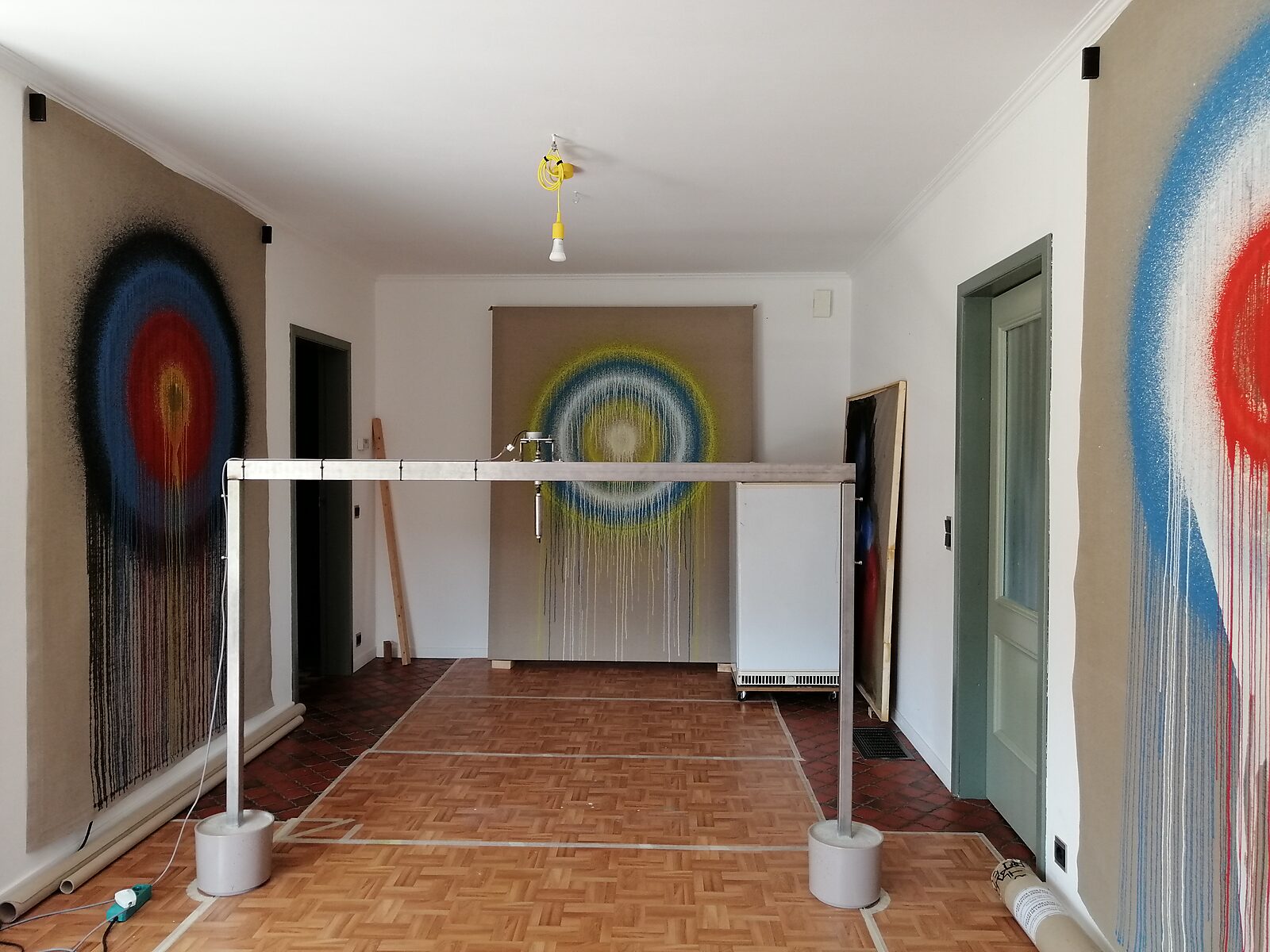
In the video work, the final results are presented as if part of an exhibition. In the upper left of the video, I placed a canvas on a wooden base, intending to reuse the base later for a new painting. However, during the process, the paint seeped underneath and into the base, binding both together irreversibly. What was initially meant as a temporary support thus transformed into a permanent part of the painting.
The right-hand canvas in the centre was reused in 2025 in the installation Melting Targets no. 4. The other two panels are flatscreens displaying the process.