Back to Nature with Piet Mondrian
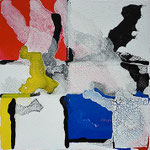
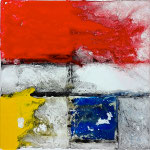
In Back to Nature with Piet Mondrian, I explore the tension between control and surrender, between geometric order and natural processes. Drawing on my experiences from the project Melting Compositions (2018) and taking Piet Mondrian’s Composition C (No. III) (1935) as a point of departure, I bring his pursuit of purity back into contact with the materiality of nature.
Transformations
2025 - Stretcher Frames and Eyelets
For the paintings still in my possession, the stretcher frames were removed. Around the edges of each canvas, metal eyelets were attached.
2019_2020 – Back to Nature with Piet Mondrian No. 2 and No. 3
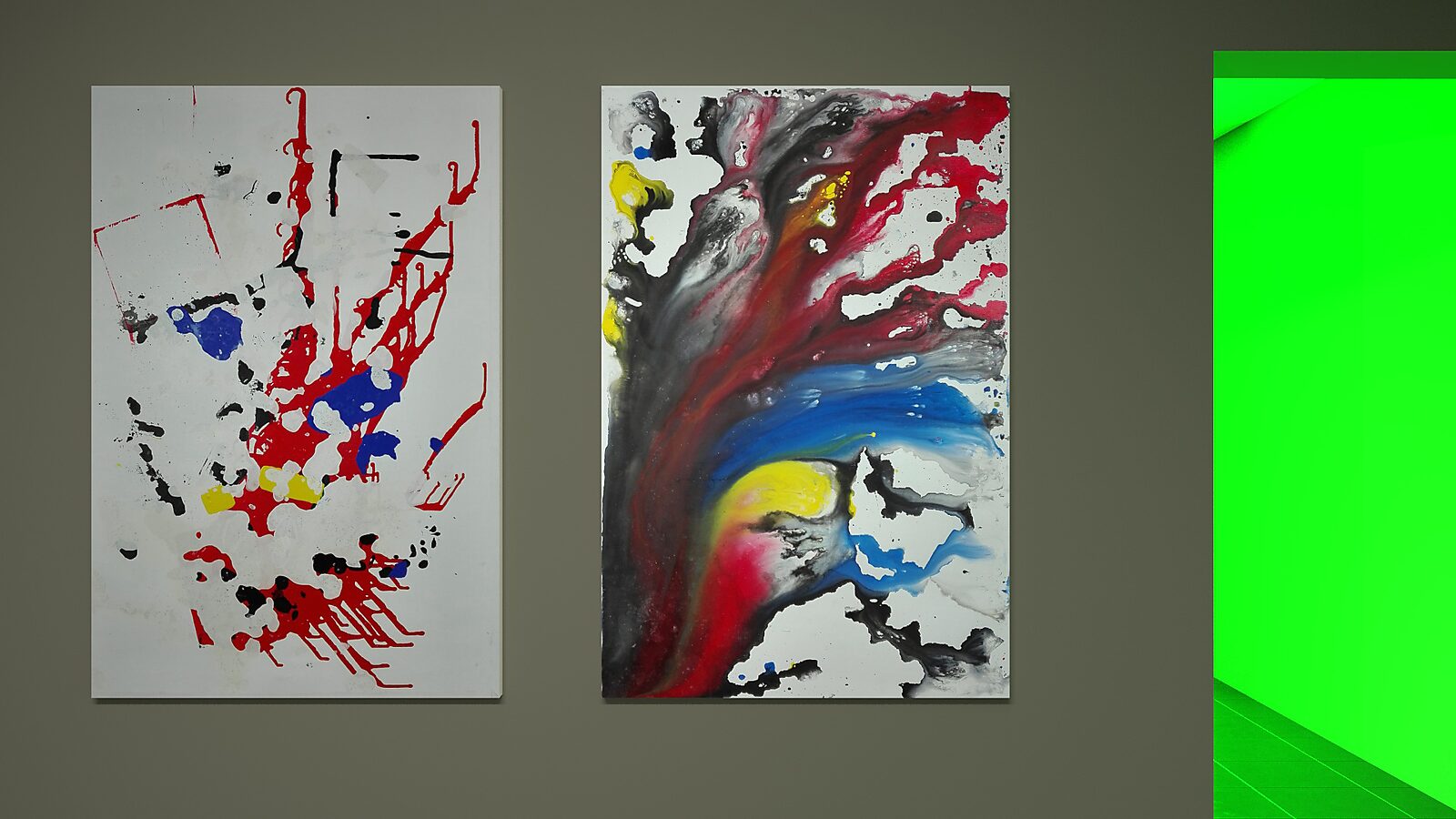
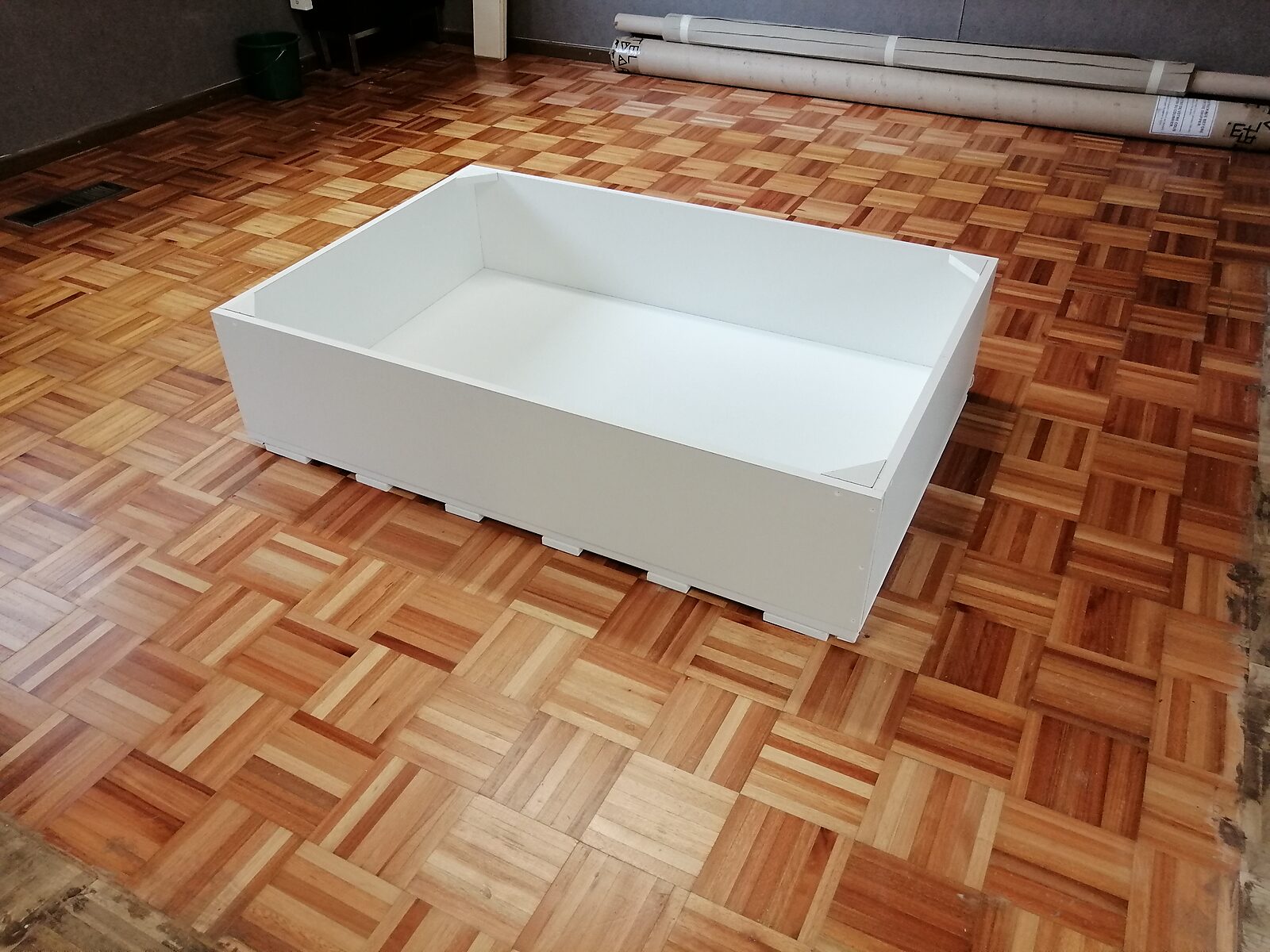
For these series, I built a new setup in which stone plates were placed beneath the canvas, close to its surface. Around the work, I constructed a high frame to contain the fragments of ice within the boundaries of the piece. The working method again originated from the same silicone mould used in no. 1, filled with the same coloured water.
Whereas in no. 1 I carefully positioned the coloured ice blocks, in no. 2 and no. 3 I adopted the opposite approach: the pieces of ice were thrown forcefully onto the canvas. As a result, the melting process became more erratic and fragmented. This created a sharp contrast between Mondrian’s ordered planes and the unpredictable flow of matter — between his pursuit of absolute abstraction and the resurgence of a natural, organic process.
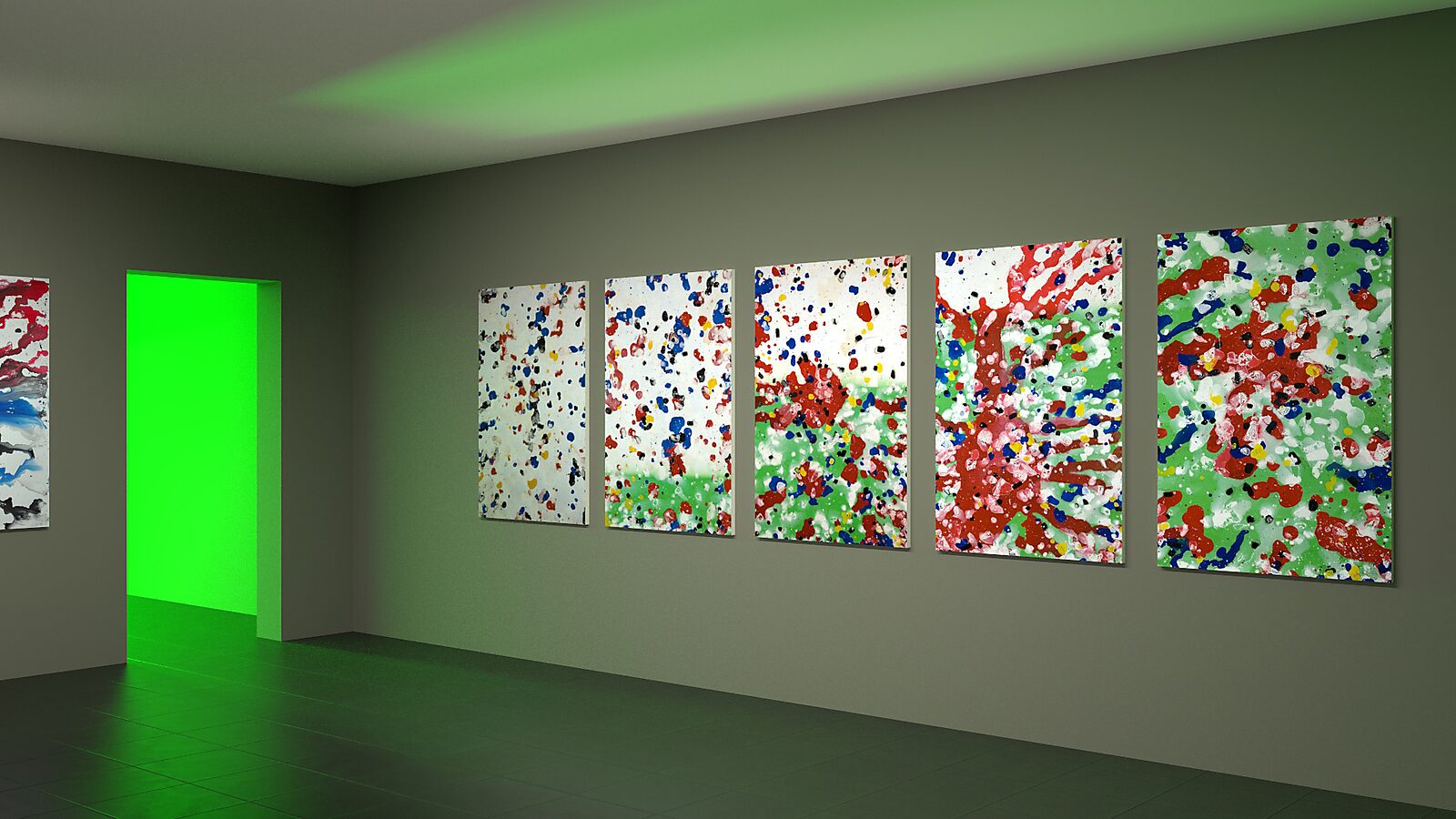
In no. 3, I prepared five canvases ranging from entirely white to completely green. On each one, I shattered a full ‘ice version’ of Mondrian’s composition.




2019 – Exhibition Concept
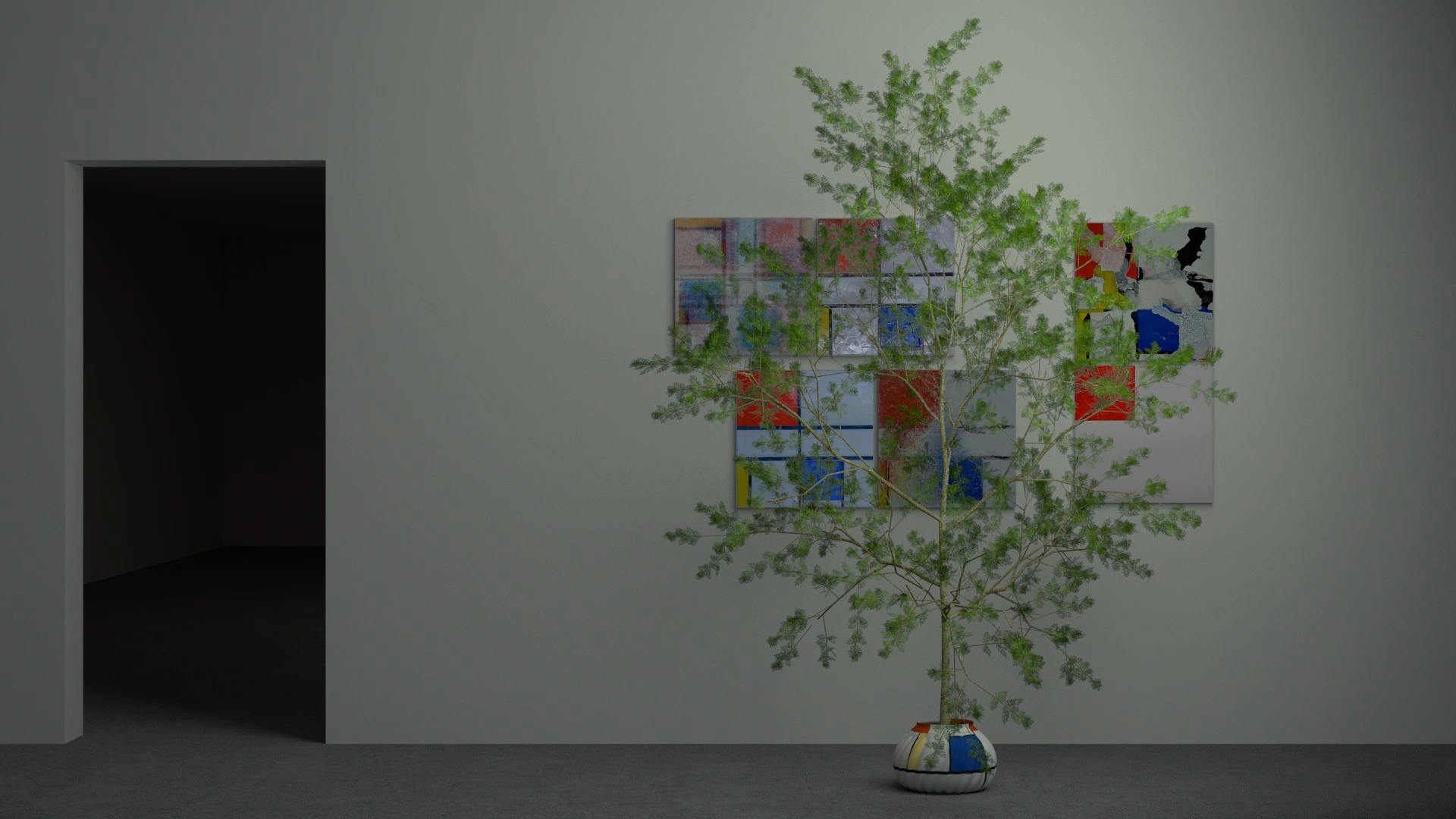
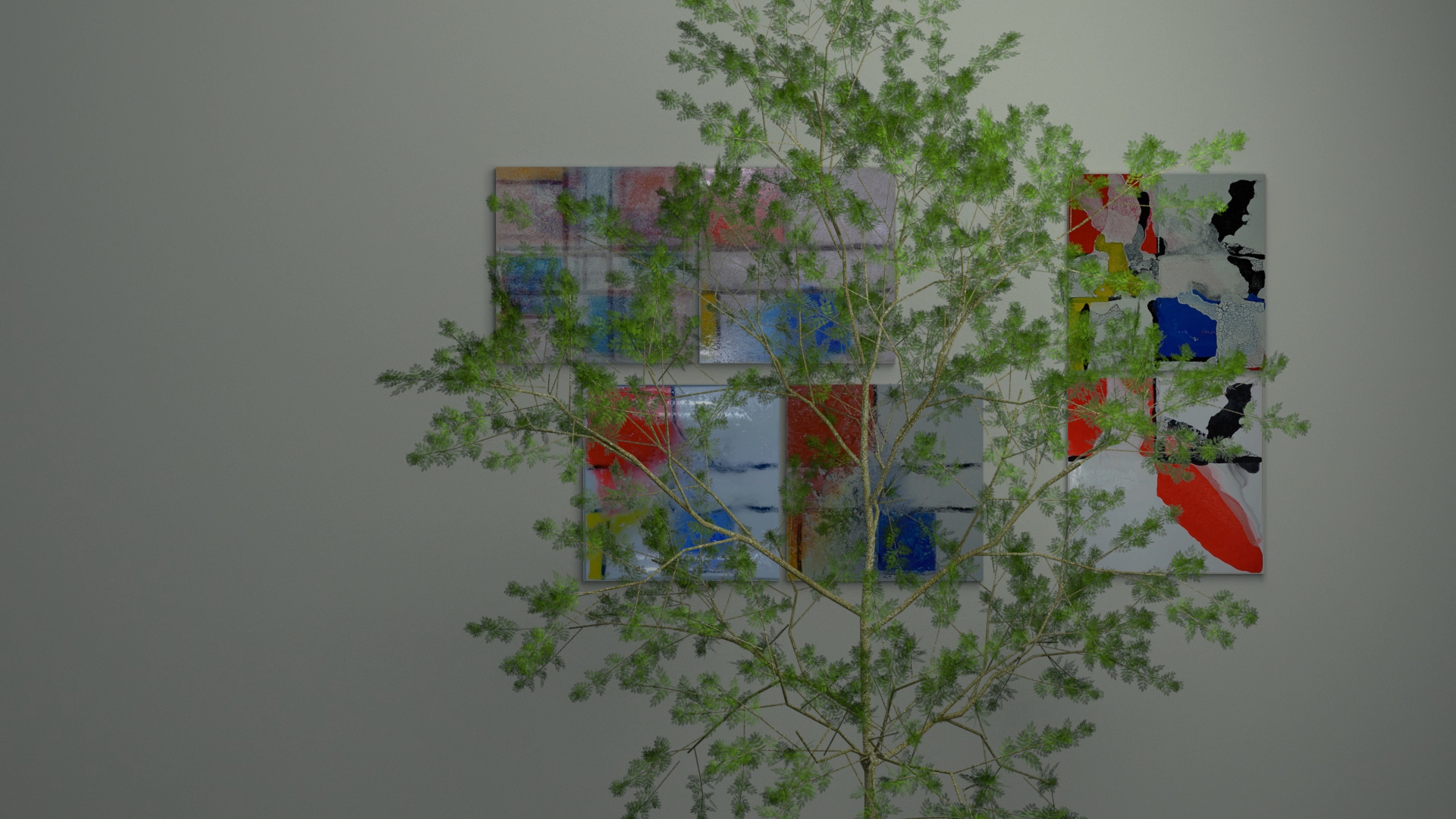


For the presentation of the Mondrian works, I devised an exhibition concept in which the paintings are shown alongside process videos. The television screens are exactly the same size as the paintings. In the video, a single tree appears, but the idea is that visitors must first pass through — or, metaphorically, look through — a fragment of nature in order to view the works.
2018_2019 – Back to Nature with Piet Mondrian No. 1
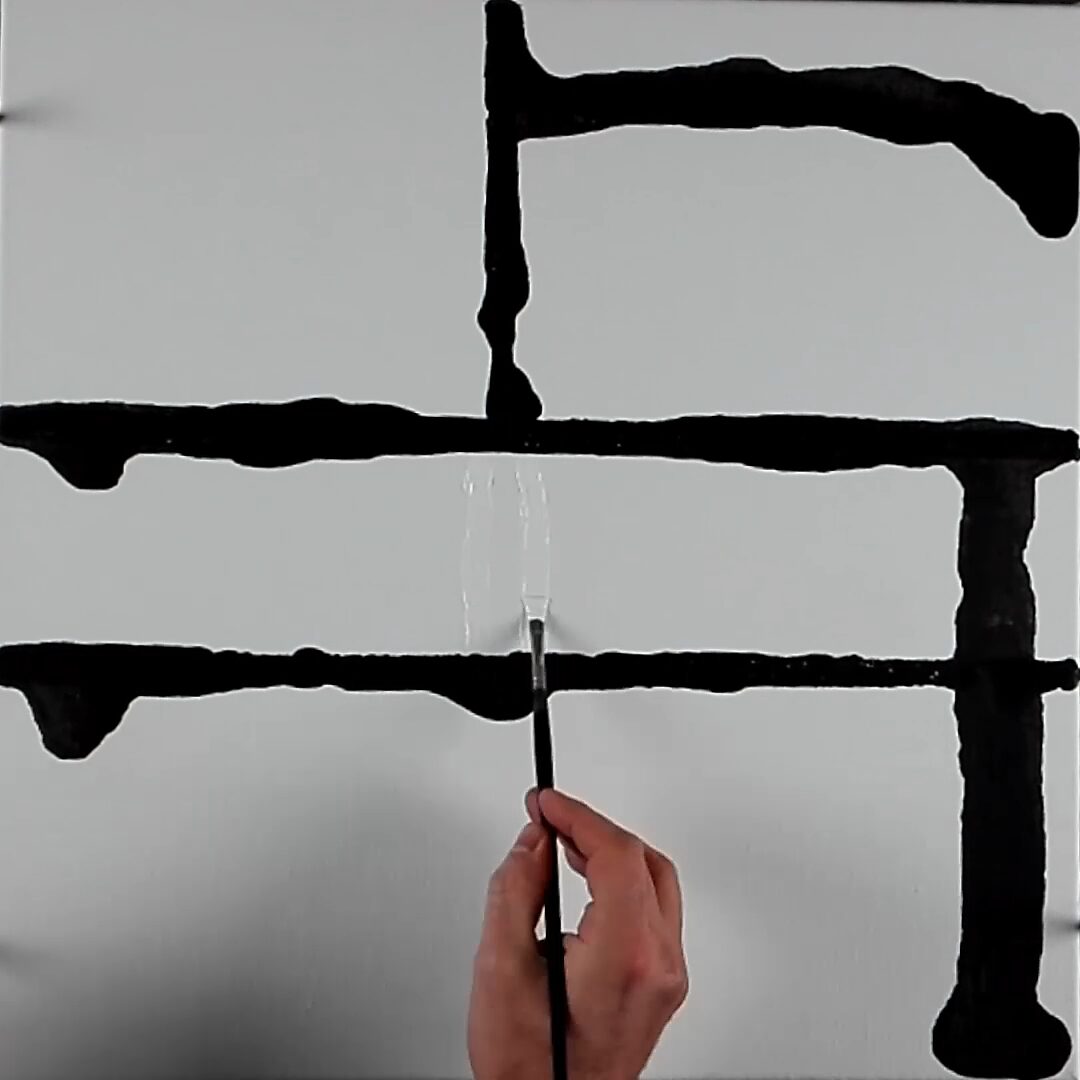
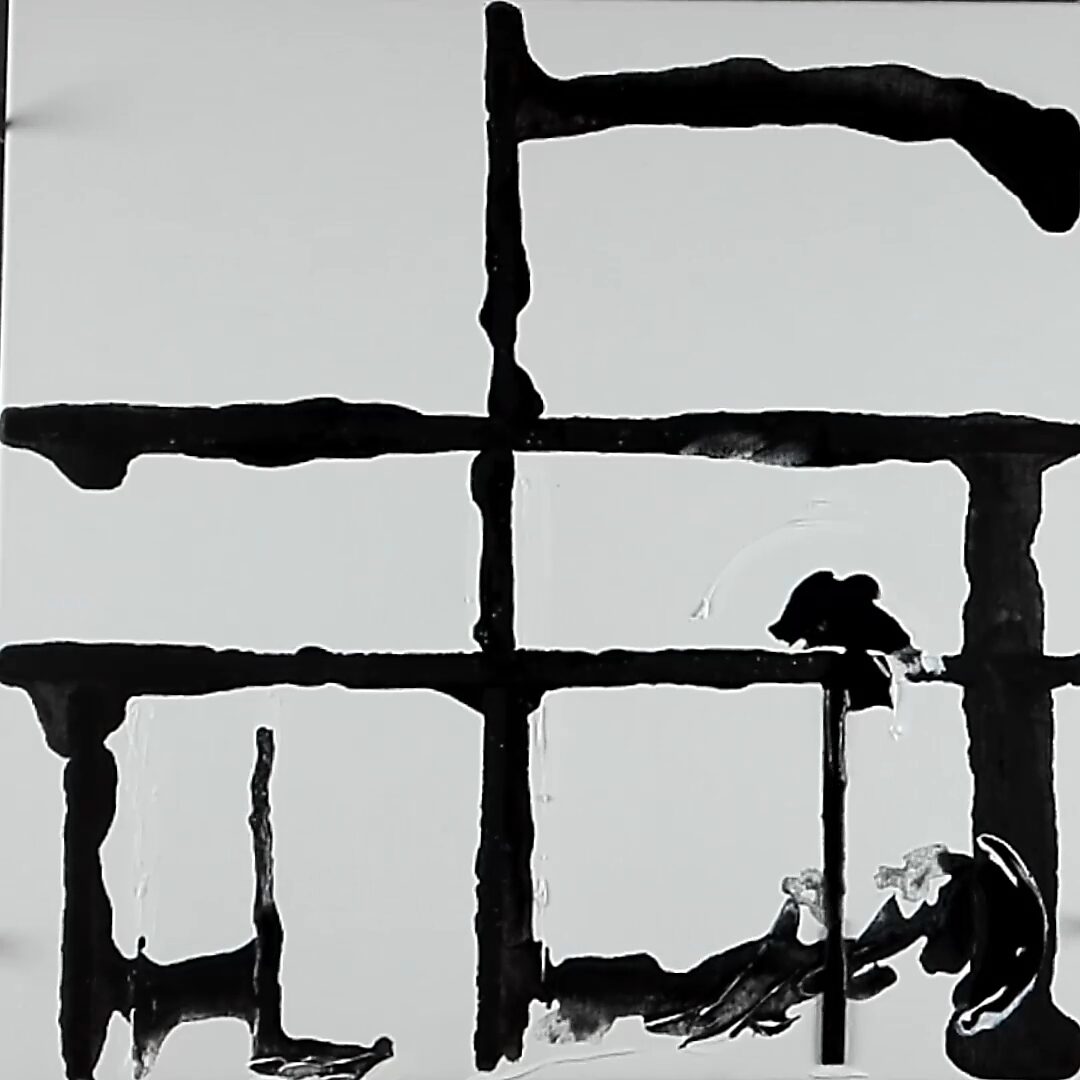
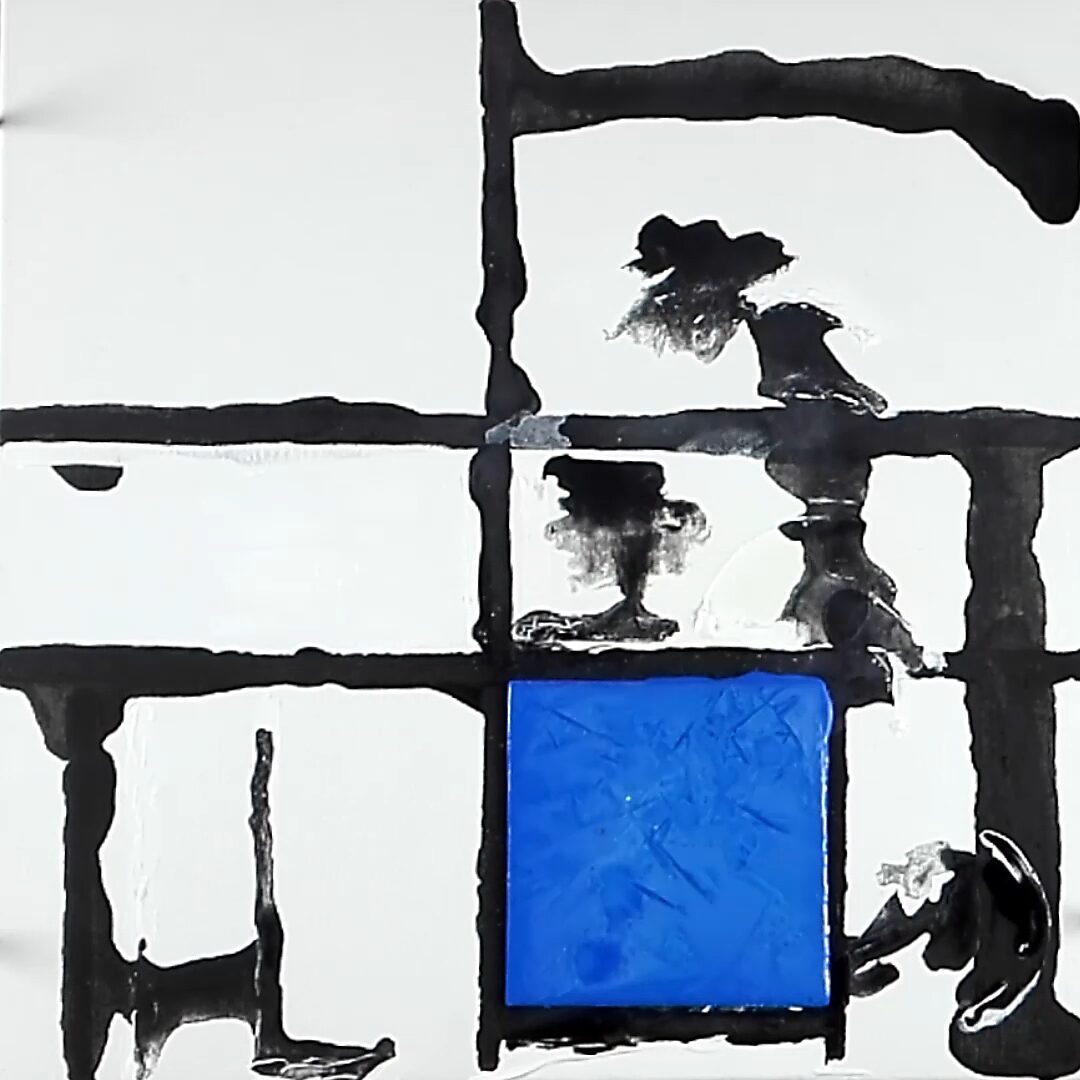
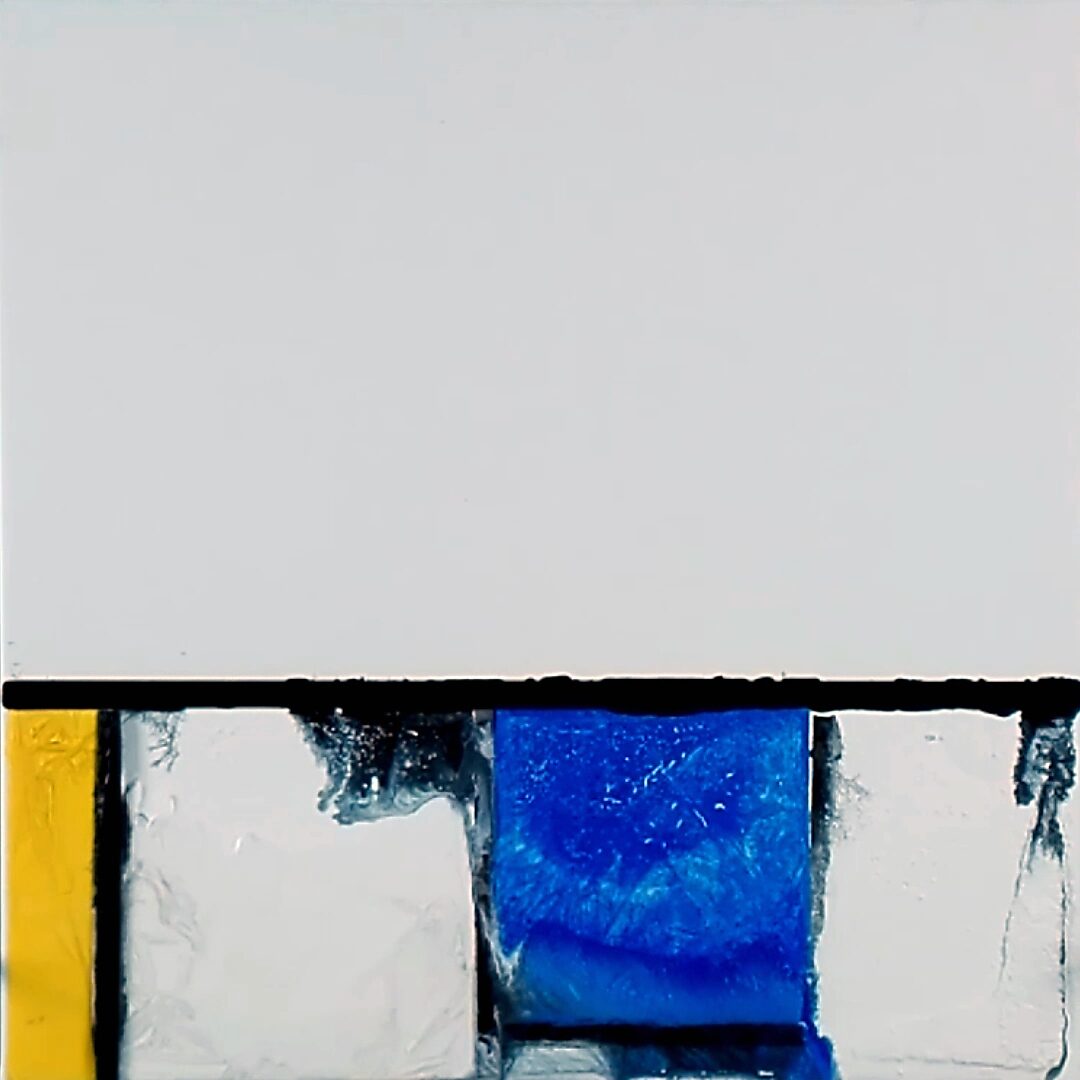
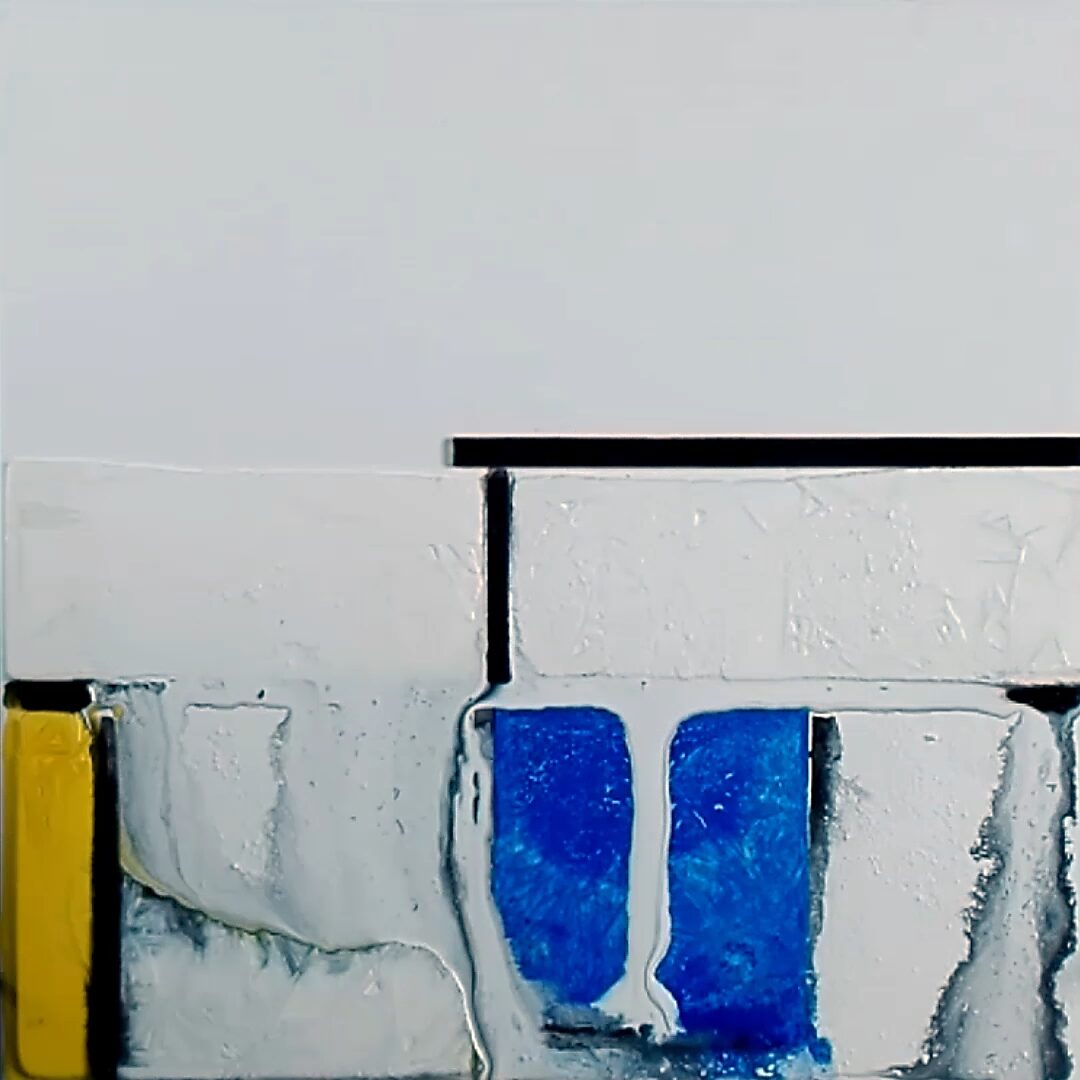
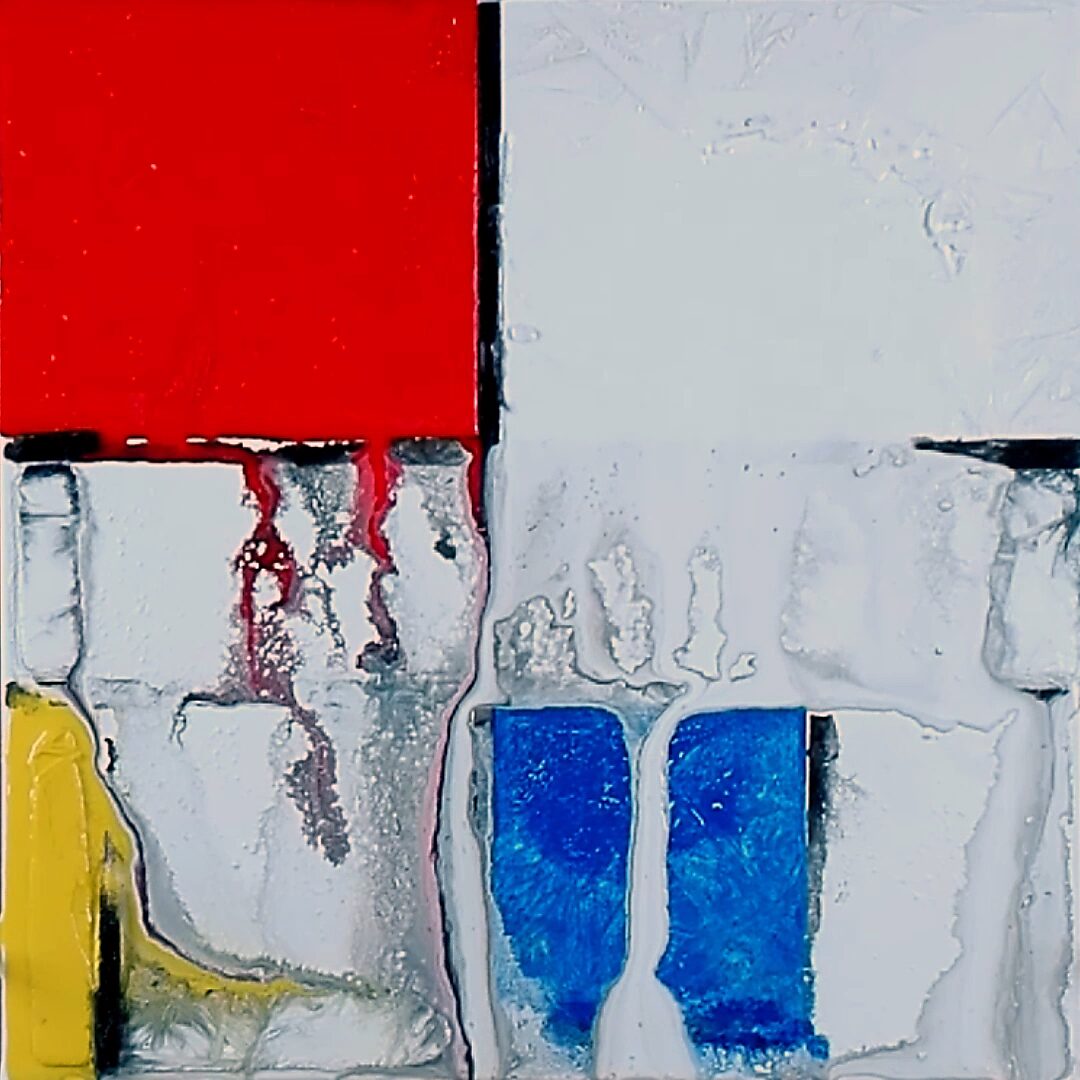
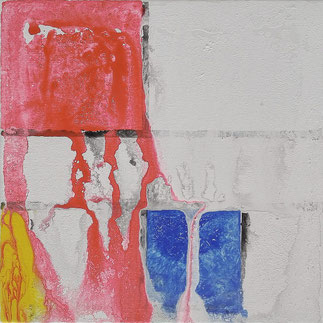
In Back to Nature with Piet Mondrian no. 1, I created an exact silicone mould of Piet Mondrian’s Composition C (No. III) (1935). I filled the colour fields with water in identical hues and froze them. The resulting pieces of coloured ice were carefully placed on the canvas. As the ice melted, the colours spread out and traced their own paths in a completely natural way. In total, I created six versions.
Mondrian evolved from Impressionism through Symbolism to pure abstraction. With his compositions of primary colours, he sought to transcend nature and achieve an ‘absolute beauty’. Movement, depth, and naturalism gradually disappeared from his work.
With Back to Nature with Piet Mondrian, I offer a counter-movement: Mondrian’s purified compositions regain a sense of natural character through their transformation into coloured ice, undergoing organic processes of change.
Back to Nature with Piet Mondrian No. 1.1
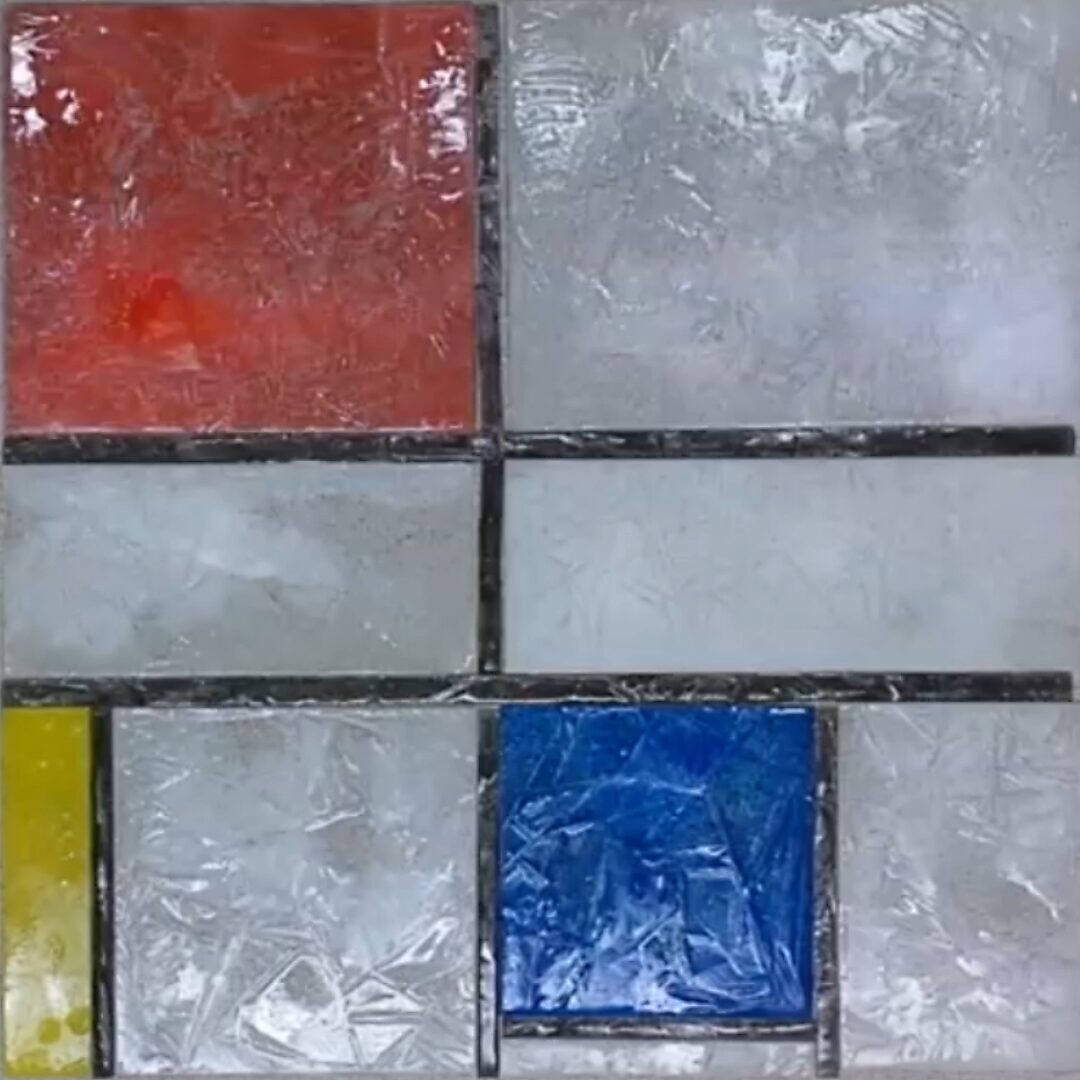
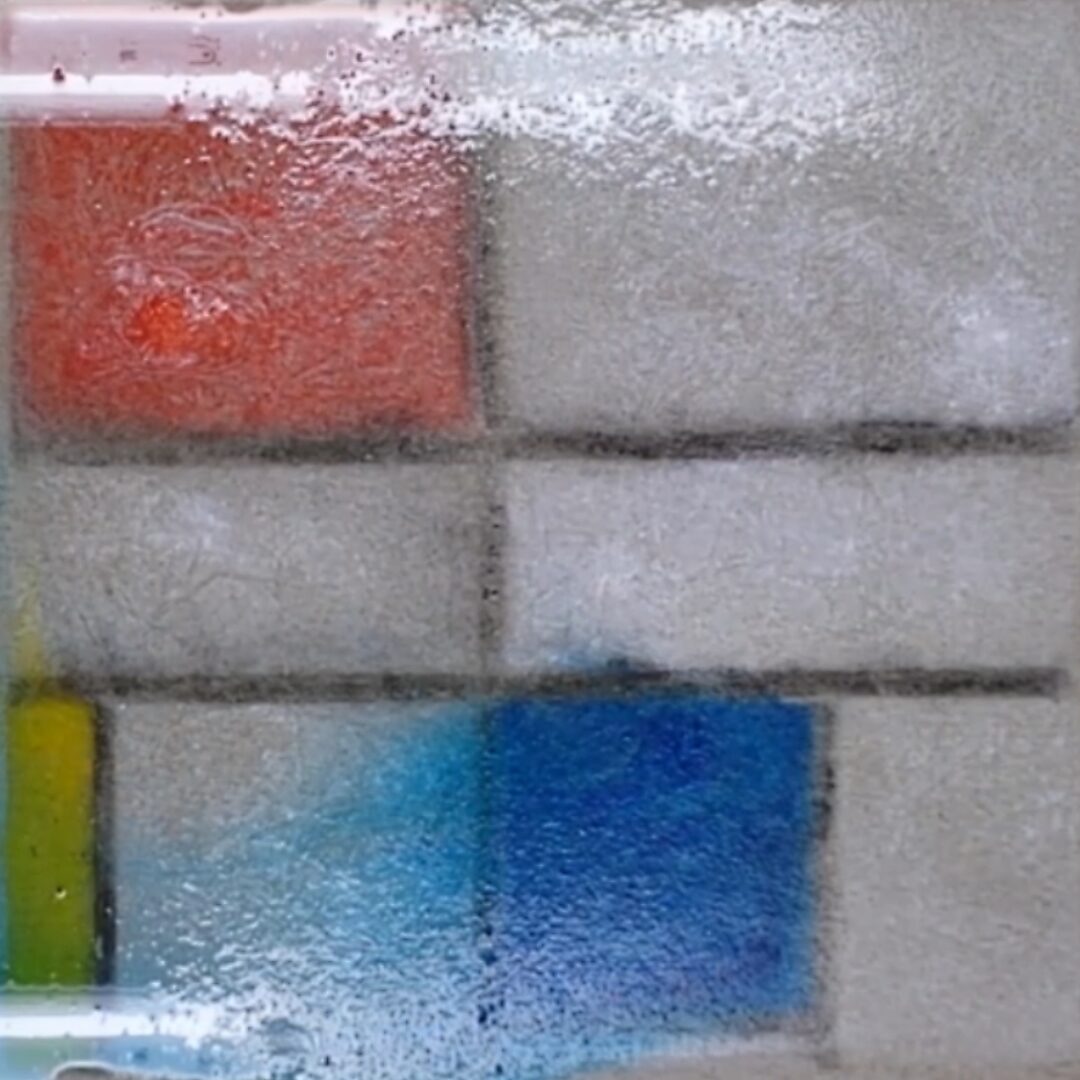
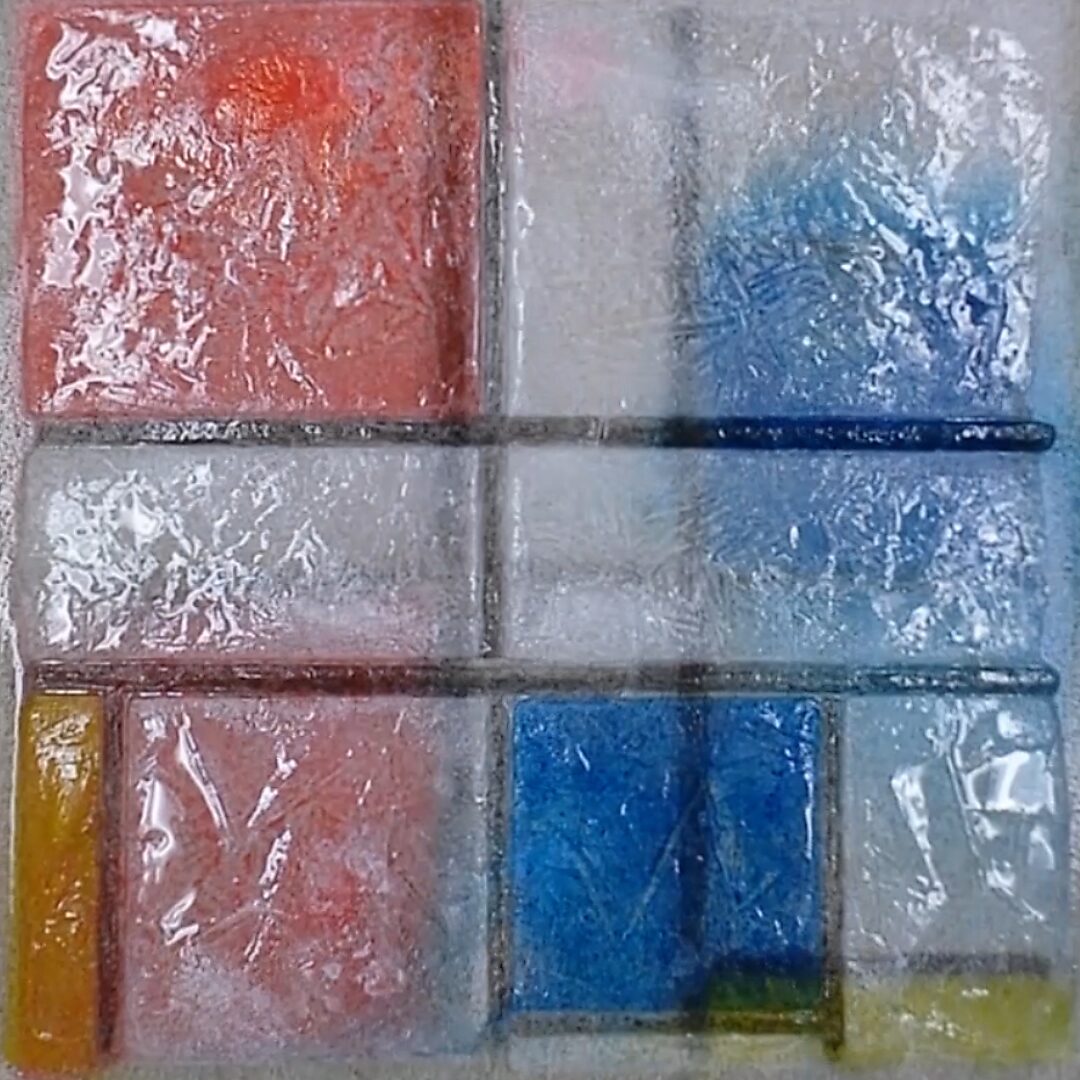


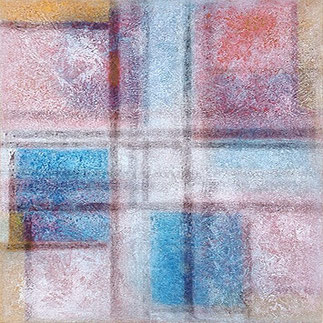
Back to Nature with Piet Mondrian No. 1.2
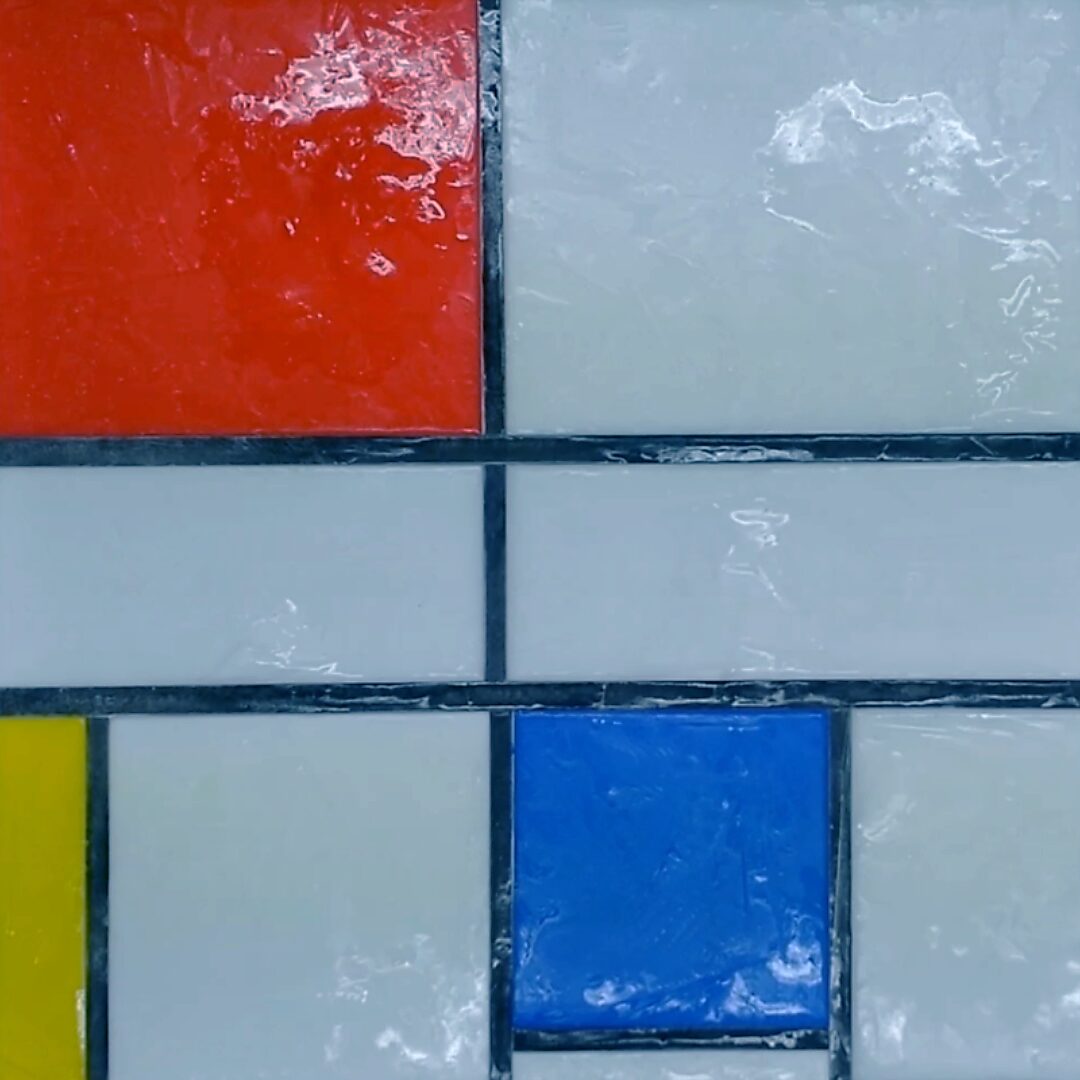
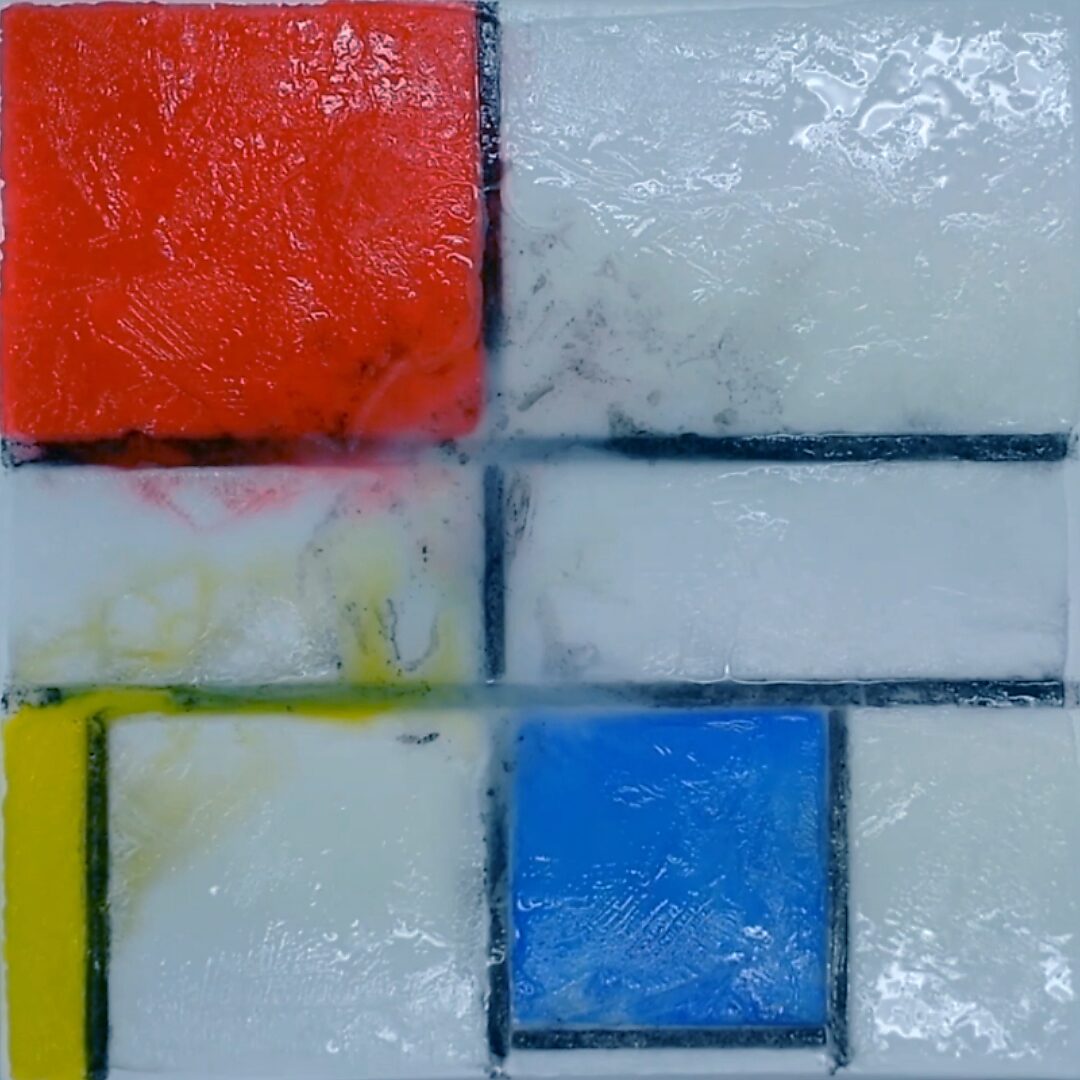
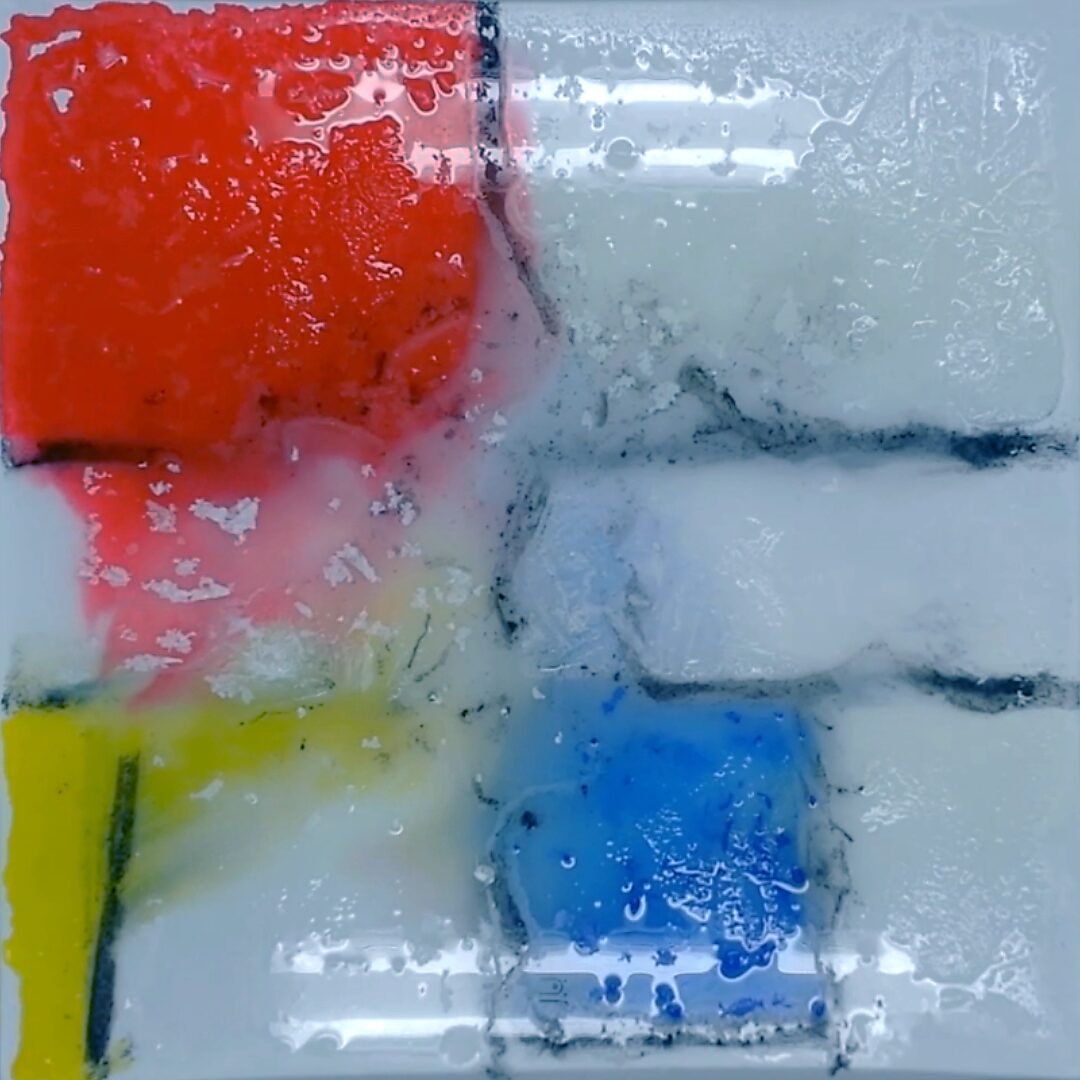
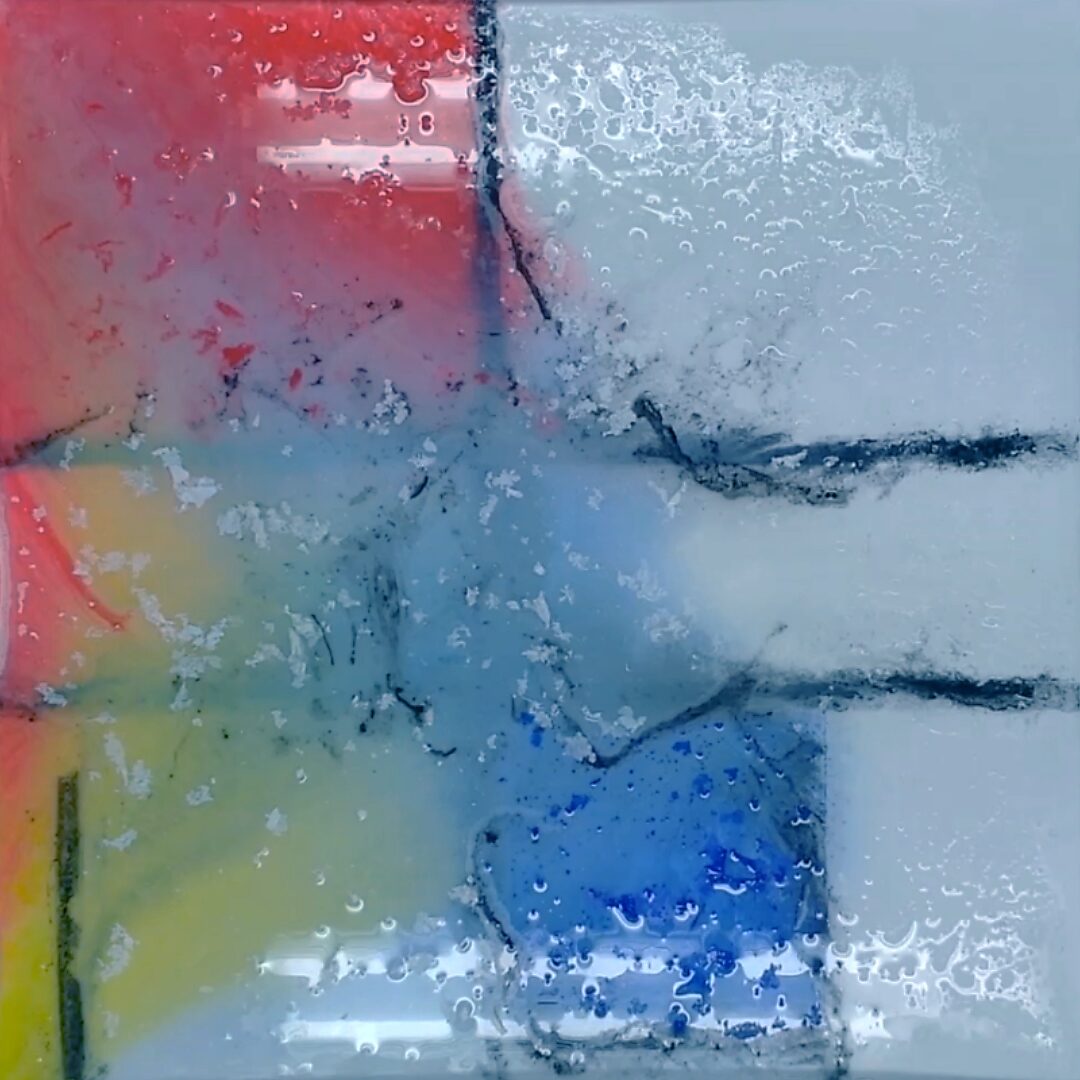
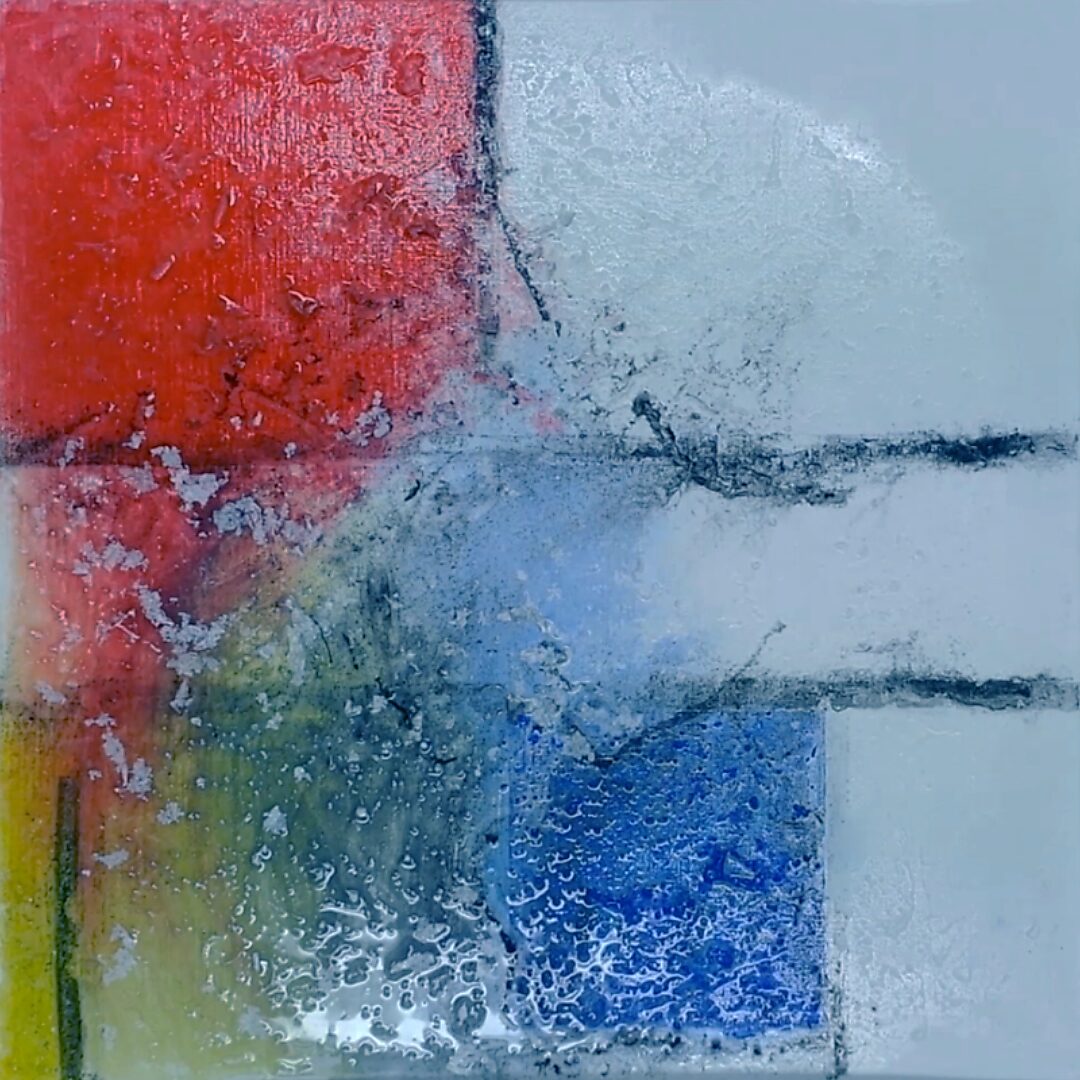


Back to Nature with Piet Mondrian No. 1.4


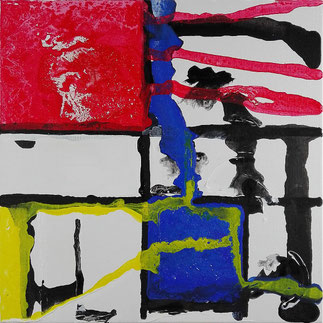
Back to Nature with Piet Mondrian No. 1.5




The works Back to Nature with Piet Mondrian No. 1.3 and No. 1.6 are part of a private collection.